How Do We Look At Contemporary Sculpture: Victoria Rotaru

<< Back to AccessArt & Saatchi Learning <<

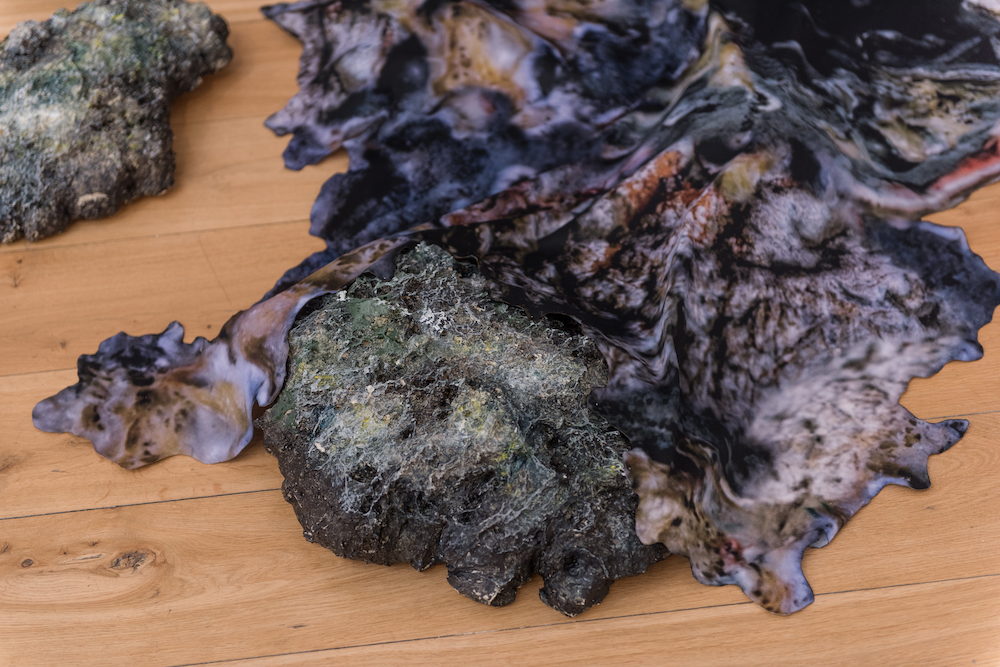
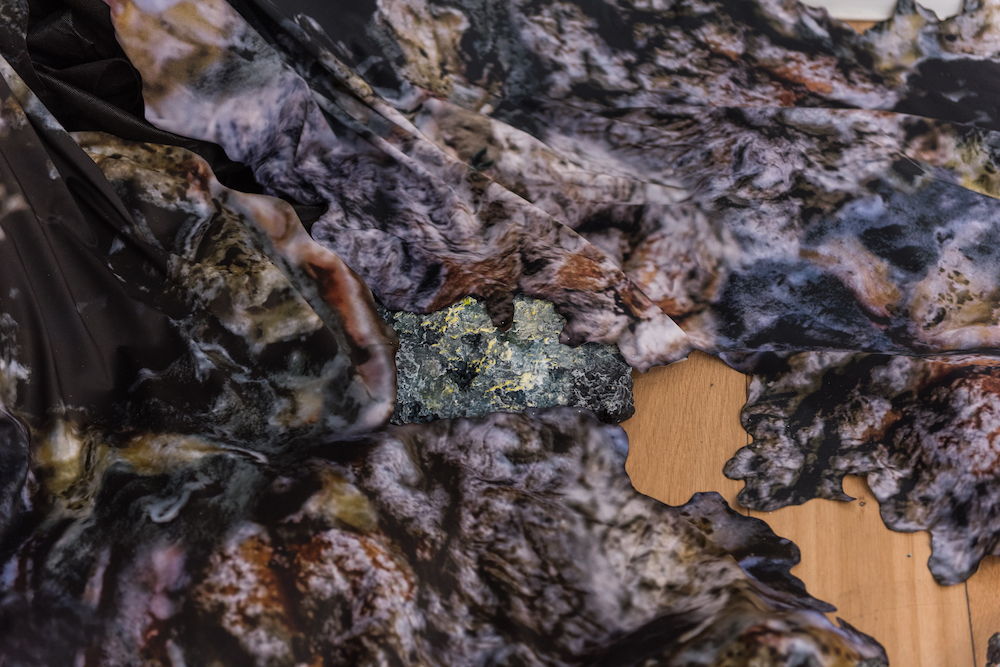
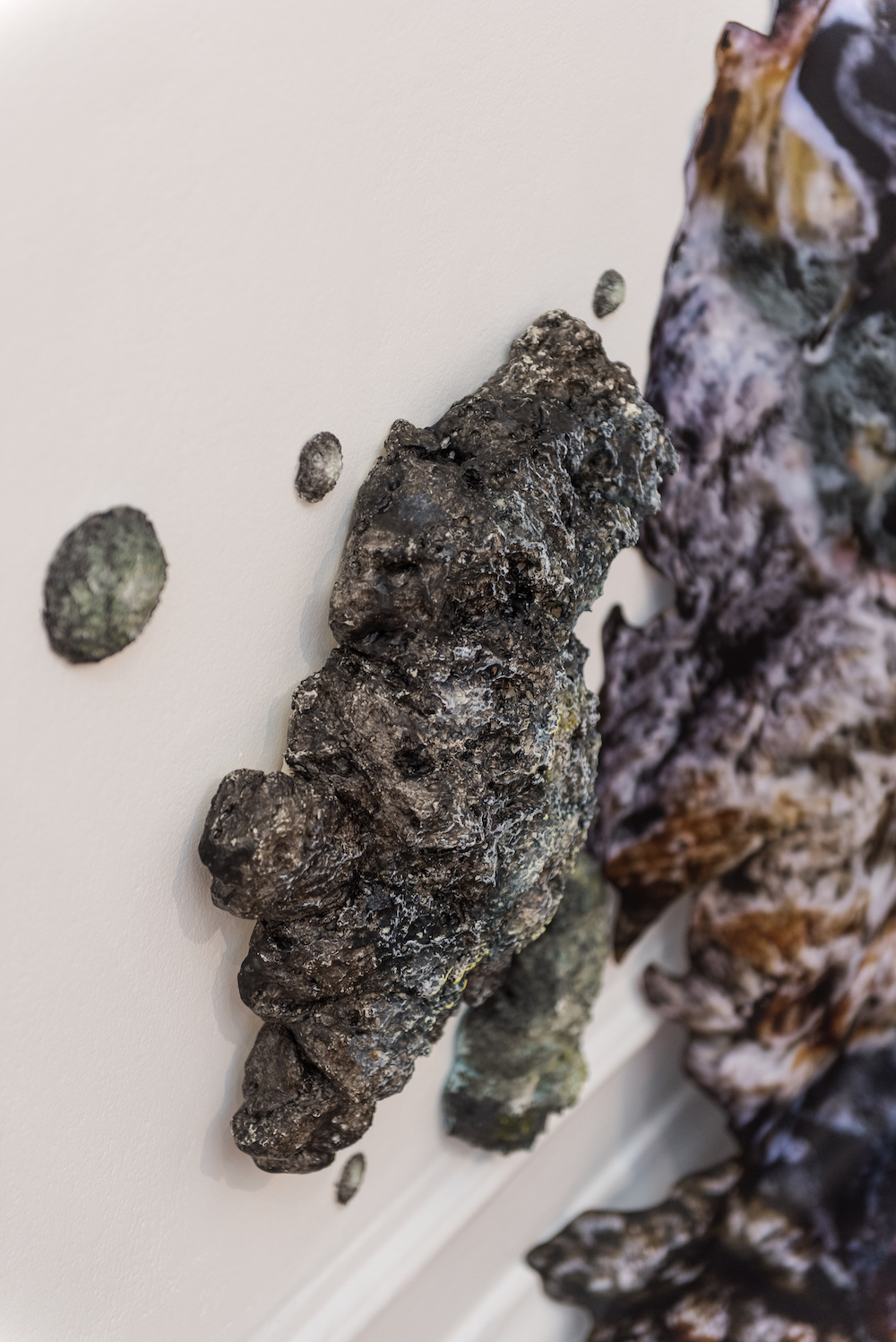
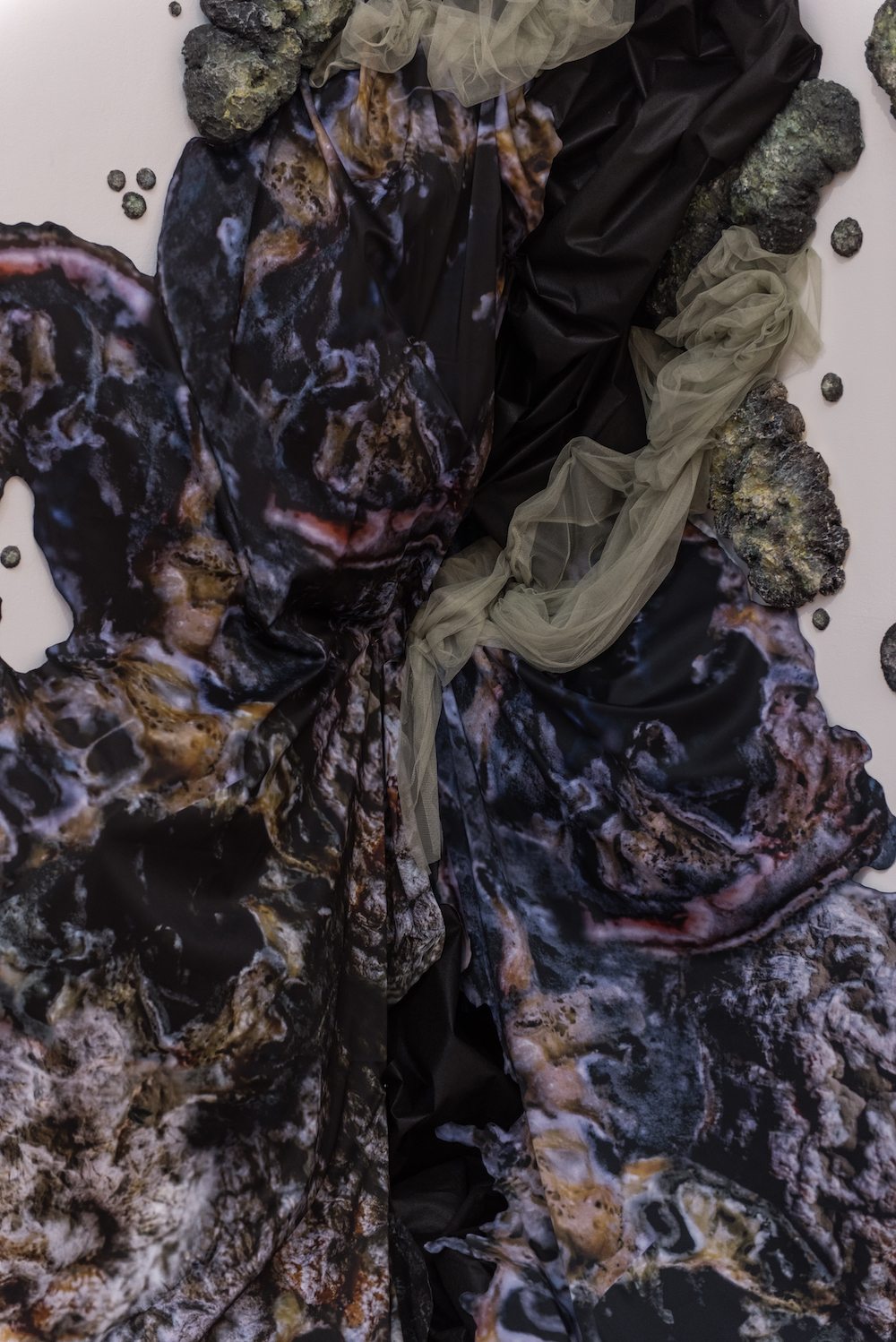
We are pleased to share the work of Victoria Rotaru, a recent MA Fine Art Photography graduate from the University of Arts London and an exhibitor at London Grads Now.21. This sculpture was inspired by Victoria’s interest in close up photography of microscopic images. Moving away from photographs to sculpture has given Victoria’s work a tactility and brought it closer to the public.
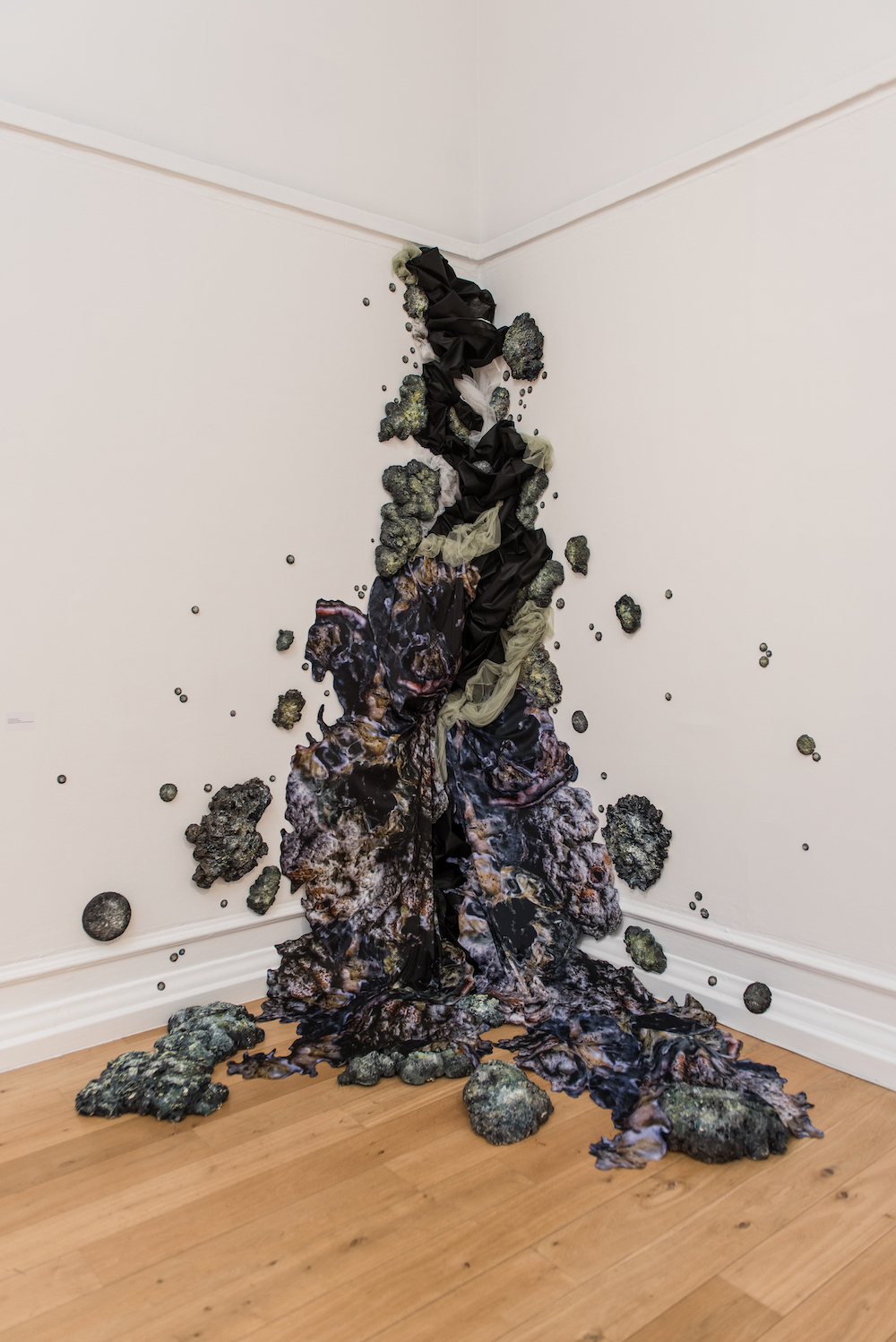
Perpetual Decomposer Saatchi London Grad Exhibition Installation Victoria Rotaru Image By John Sachpazis

‘Perpetual Decomposer’ by Victoria Rotaru (All images by John Sachpazis)


Begin to interpret the artwork using these questions…

Try asking the following questions when looking at the above artwork, either as a group or as an individual. Remember that there is no wrong or right response.

  • What do you see? First of all, let’s make sure we have really looked at the artwork. Keep it simple. Tell it as it is: Can you tell what it’s made from? How big is it? What can you see? Ask these questions as a group and you’ll find the hive mind helps individuals with the group see things they wouldn’t have seen before.
  • What do you like? What does it make you think about?
  • What do you see that makes you curious?
  • What do you struggle with? Are there things which don’t make sense to you?
  • Can you find out anything about the artist or artwork? Does the title help? Does the artist share why they made the piece and what they were thinking?
  • Have your feelings changed towards the artwork since we started exploring it by asking questions?
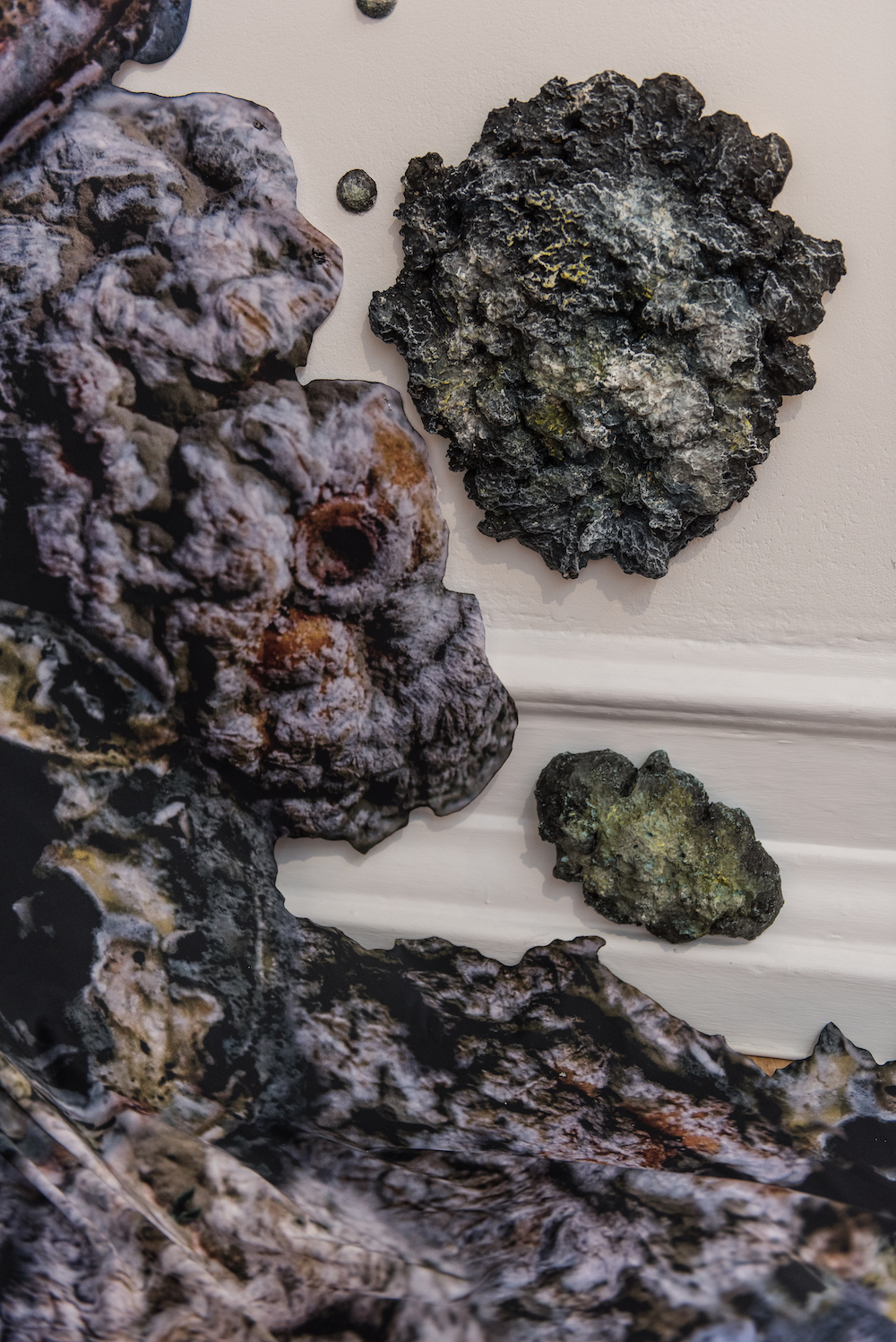
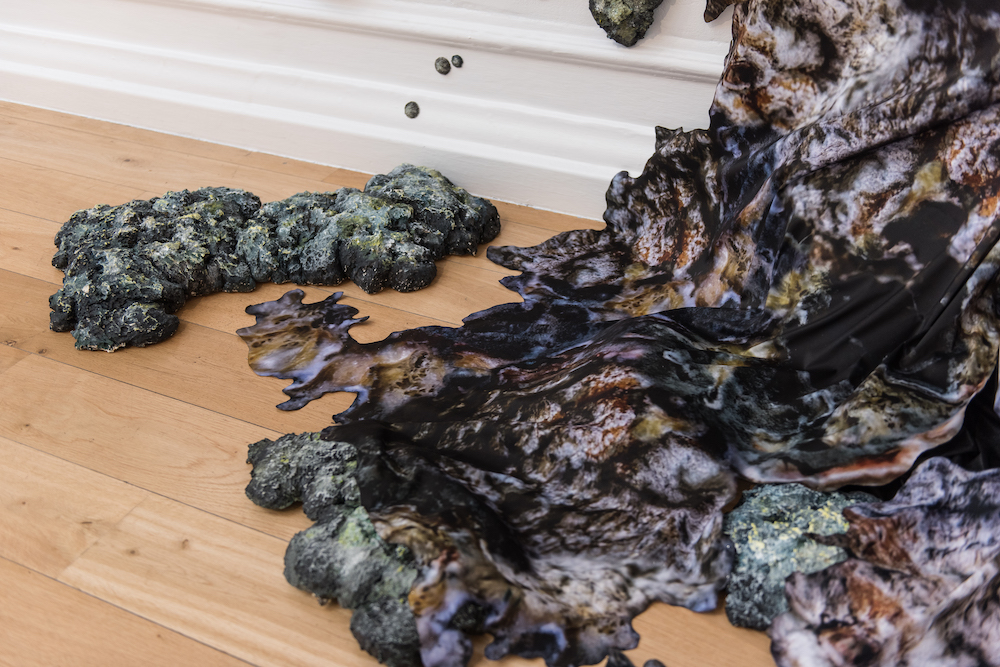
Perpetual Decomposer Saatchi London Grad Exhibition Installation Victoria Rotaru Image By John SachpazisPerpetual Decomposer Saatchi London Grad Exhibition Installation Victoria Rotaru Image By John SachpazisPerpetual Decomposer Saatchi London Grad Exhibition Installation Victoria Rotaru Image By John SachpazisPerpetual Decomposer Saatchi London Grad Exhibition Installation Victoria Rotaru Image By John Sachpazis Perpetual Decomposer Saatchi London Grad Exhibition Installation Victoria Rotaru Image By John SachpazisPerpetual Decomposer Saatchi London Grad Exhibition Installation Victoria Rotaru Image By John Sachpazis


This is a sample of a resource created by UK Charity AccessArt. We have over 1500 resources to help develop and inspire your creative thinking, practice and teaching.

AccessArt welcomes artists, educators, teachers and parents both in the UK and overseas.

We believe everyone has the right to be creative and by working together and sharing ideas we can enable everyone to reach their creative potential.


What Is The Purpose of Drawing?


What Is Drawing?


Which Artists: The Life & Works of Madge Gill

What We Like About This Resource….

“The life of Madge Gill that Sophie Dutton recounts here gives us real insight into the challenges that Madge Gill experienced, and how these challenges would have been common among women at the time. When we study the work of Artists, it adds a rich context to our experience of their work to consider their personal history, and helps us ask questions like ‘why do you think the Artist painted in this way or was inspired by this subject matter?’ If you introduce your class to Madge Gill, begin with looking back over her younger life to try and better understand her motivations as an Artist” – Rachel, AccessArt

You May Also Like….

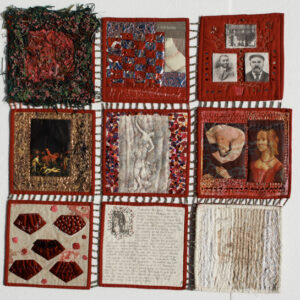
I am AccessArt: Ann Rippin

I am AccessArt: Ann Rippin

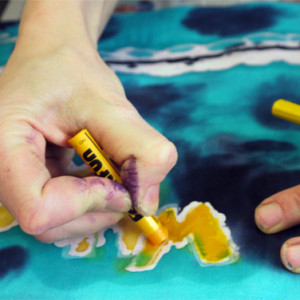
Making Batik Textiles in the Classroom

Making Batik Textiles in the Classroom

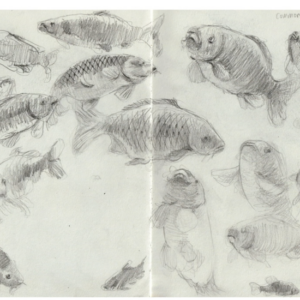
How I Use Drawing and Sketchbooks

How I Use Drawing and Sketchbooks


Henry Moore’s Shelter Drawings

You May Also Like…

Pathway: Exploring Form Through Drawing

This is featured in the 'Exploring Form Through Drawing' pathway

This is featured in the ‘Exploring Form Through Drawing’ pathway

Watercolour Washes Inspired by the Tapestries of Henry Moore

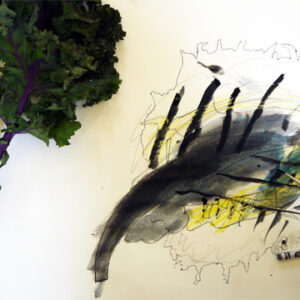
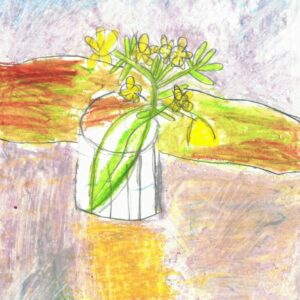
Curly kale watercolour study, by Kelly aged 7


Knowledge Organisers for Art in Primary Schools

You May Also Like

Creativity Connects

Screen Shot 2016-03-17 at 19.34.47

Permission to Make

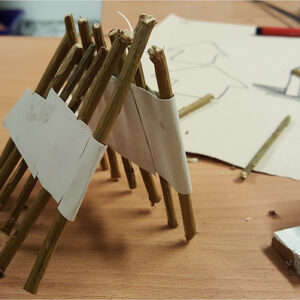
Anglo Saxon Building

What did my child make this week?

make

Visual Arts Planning: Light and Dark

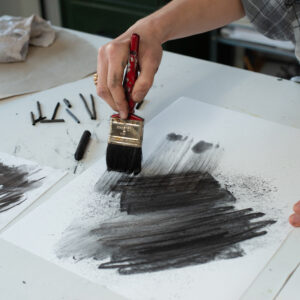
Brushing water Onto Charcoal by Laura McKendry

Offering to Teachers to ages 4-11

Year 4, Sheffield High School

Pedagogy in 250 words

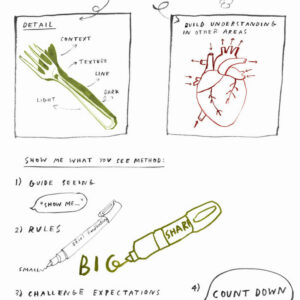
Show Me What You See Method 250 Words by Tobi Meuwissen


Raising the Profile of the Art Department


Talking Points: Faith Bebbington

A collection of sources and imagery to explore the work of sculptor, Faith Bebbington.

Please note that this page contains links to external websites and has videos from external websites embedded. At the time of creating, AccessArt checked all links to ensure content is appropriate for teachers to access. However external websites and videos are updated and that is beyond our control. 

Please let us know if you find a 404 link, or if you feel content is no longer appropriate. 

We strongly recommend as part of good teaching practice that teachers watch all videos and visit all websites before sharing with a class. On occasion there may be elements of a video you would prefer not to show to your class and it is the teacher’s responsibility to ensure content is appropriate. Many thanks. 

*If you are having issues viewing videos it may be due to your schools firewall or your cookie selection. Please check with your IT department.*

This resource is free to access and is not a part of AccessArt membership.

ages 5-8
ages 9-11
ages 11-14
free to access

Faith Bebbington

Faith Bebbington is a nationally renowned sculptor based in Liverpool. Faith has worked with a range of big name clients, from the Football Association to campaigning for endangered species. Faith is best known for her sustainable practise; her large sculptures utilise lots of waste materials, with her biggest sculpture to date re-using over 2500 deconstructed plastic milk bottles!

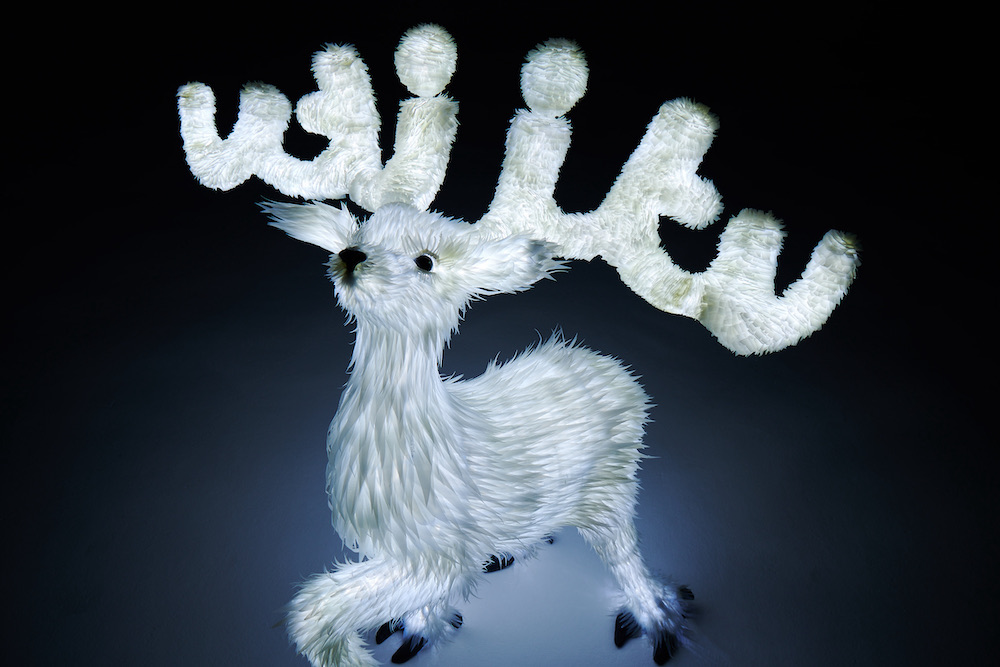
itv Reindeer For itv Creates reimagined Brand Identity by Faith Bebbington (Illuminated Plastic Milk Bottles) itv Reindeer For itv Creates reimagined Brand Identity by Faith Bebbington (Illuminated Plastic Milk Bottles)
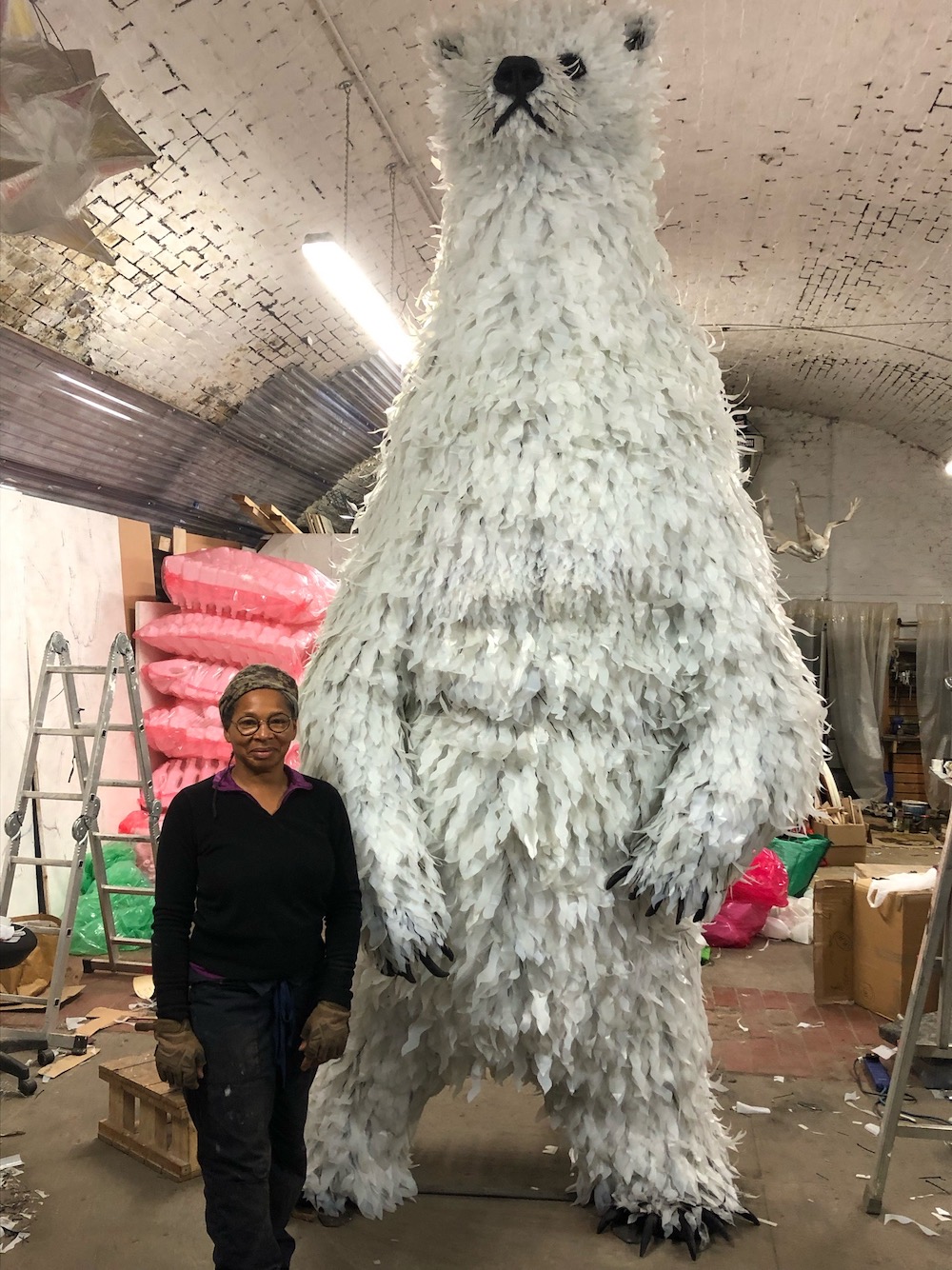
Polar Bear In The Studio (Created With 3000 Plastic Milk Bottles) by Faith Bebbington Polar Bear In The Studio (Created With 3000 Plastic Milk Bottles) by Faith Bebbington
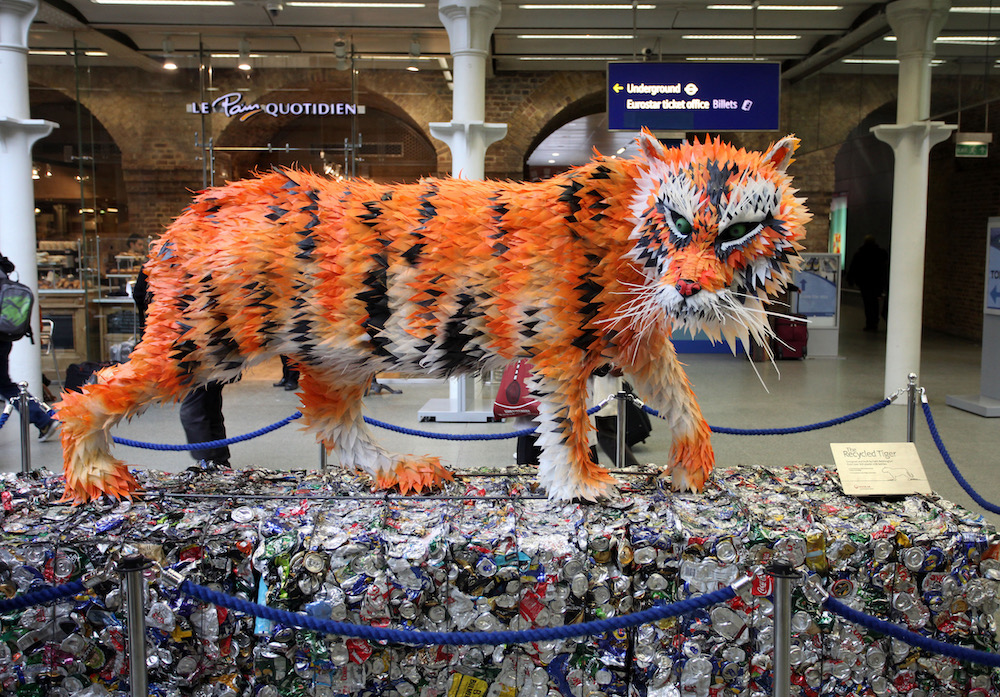
Recycled Plastic Bengal Tiger for Veolia Environment by Faith Bebbington Recycled Plastic Bengal Tiger for Veolia Environment by Faith Bebbington
Find out more about Faith Bebbington’s process in this “Which Artists?” post. 

Questions to Ask Children

What materials can you spot in the sculptures?

Why do you think that Faith has used recycled materials to make her sculptures?

How would you describe the sculptures?

Which sculpture is your favourite? Why?

This Talking Points Is Used In…

Pathway: Using Art To Explore Global Issue

This is featured in the 'Using Art To Explore Global Issue' pathway

This is featured in the ‘Using Art To Explore Global Issue’ pathway

using sketchbooks to make visual notes

Sketchbooks used for observations, research drawing and experimentation.

Show me what you see

Show Me What You See Method 250 Words by Tobi Meuwissen


Be Inspired by Flowers in a Glass Vase by Jan Davidsz de Heem


Inspired! Making at Linton Heights Junior School


Talking Points: Hormazd Narielwalla

How might we re-imagine discarded items and give them a new purpose?

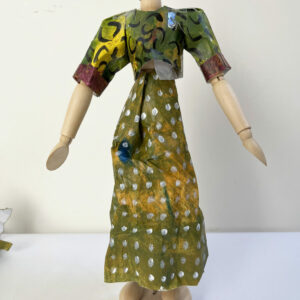
Hormazd Narielwalla is an Indian-born British artist. Repurposing discarded garment patterns in his work, he explores how previously unwanted materials and objects can be made into something new, and in turn change our relationship with things we might once have dismissed as no longer needed. 

Watch the videos below and answer the questions to explore Narielwalla’s work further.

Please Note:

This page includes links and videos from external sites, verified at publication but subject to change.

Teachers should review all content for classroom suitability.

Report any issues, and check school firewall settings if videos don’t play.

ages 9-11
ages 11-14
ages 14-16
free to access

Hormazd Narielwalla

Hormazd Narielwalla works across a number of artistic disciplines including printmaking, sculpture and artist’s books but he is best known for his intricate paper collages and assemblages, which are made on the surfaces of antique, vintage and bespoke tailoring patterns. – Hormazd Narielwalla

Explore more of Hormazd’s  figure work on his website including his Diamond Dolls.

Questions to Ask Children

What do you like/dislike about Hormazd’s work?

Why do you think that Hormazd works on brown paper/used patterns?

Are there any collaged designs that stood out to you? Which ones and why?

This Talking Points Is Used In…

Pathway: Fashion Design

This is featured in the 'Fashion Design' pathway

This is featured in the ‘Fashion Design’ pathway

using sketchbooks to make visual notes

Sketchbooks used for observations, research drawing and experimentation.

Show me what you see

Show Me What You See Method 250 Words by Tobi Meuwissen


Talking Points: The Art of Nature

A collection of sources and imagery to explore artist Laura McKendry’s love of nature.

Please note that this page contains links to external websites and has videos from external websites embedded. At the time of creating, AccessArt checked all links to ensure content is appropriate for teachers to access. However external websites and videos are updated and that is beyond our control. 

Please let us know if you find a 404 link, or if you feel content is no longer appropriate. 

We strongly recommend as part of good teaching practice that teachers watch all videos and visit all websites before sharing with a class. On occasion there may be elements of a video you would prefer not to show to your class and it is the teacher’s responsibility to ensure content is appropriate. Many thanks. 

ages 5-8
ages 9-11
ages 11-14
ages 14-16

Laura McKendry

Laura McKendry is an artist who lives and works in London. She takes her inspiration from wildlife and nature.

Explore more of Laura’s work on her website.

In this video Laura McKendry explains how the natural world inspires every aspect of her work – from the art itself to the materials with which she works.

Questions to Ask Children

Which season is your favourite? Why?

Is there a space in your local area where you would like to sit and draw?

How do you think sitting in nature whilst drawing differs to working in a studio?


Talking Points: Shaun Tan

How can small ideas in a sketchbook grow into something much bigger?

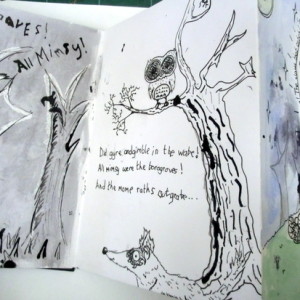
Shaun Tan uses his sketchbooks as a space for exploring ideas. Starting small, he works without pressure, drawing and writing down any idea that comes to mind. From there, he selects the strongest ones and gradually develops them into fully fledged stories, graphic novels, and animations. 

Watch the videos below and discuss the questions that follow to build a deeper understanding of Shaun Tan’s work.

Please Note:

This page includes links and videos from external sites, verified at publication but subject to change.

Teachers should review all content for classroom suitability.

Report any issues, and check school firewall settings if videos don’t play.

ages 9-11
ages 11-14
ages 14-16
free to access

Shaun Tan

Shaun Tan grew up in Perth and works as an artist, writer and film-maker in Melbourne. He is best known for illustrated books that deal with social and historical subjects through dream-like imagery, widely translated throughout the world and enjoyed by readers of all ages. –Shaun Tan

See more of Shaun Tan’s work on his website.

Shaun Tan’s Sketchbook Work

Watch the film below to hear how Shaun approaches his early sketchbook work, and how he then develops this into more finished artwork. 

Stop the video at various points so that you can have a discussion with the children to help them think through what Shaun might mean by his various working practices.

The Arrival

Watch the trailer for ‘The Arrival’ by Shaun Tan.

Watch the video above to see the full animation of Shaun Tan’s graphic novel. 

Questions to Ask Children

Do you like Shaun Tans work? Why?

How do his drawings make you feel?

What kind of atmosphere did you pick up on in ‘The Arrival?’ How do you think he achieved this?

Do you think that Shaun Tan was successful in capturing the story without any writing or text? Why?

This Talking Points Is Used In…

Pathway: Storytelling through drawing

This is featured in the 'Storytelling Through Drawing' pathway

This is featured in the ‘Storytelling Through Drawing’ pathway

Additional Pathway: Drawing and Making Inspired by Illustrators

This is featured in the 'Drawing and Making Inspired by Illustrators' pathway

This is featured in the ‘Drawing and Making Inspired by Illustrators’ pathway

using sketchbooks to make visual notes

Sketchbooks used for observations, research drawing and experimentation.

Show me what you see

Show Me What You See Method 250 Words by Tobi Meuwissen


Talking Points: Laura Carlin

How can the materials we use when drawing help us tell a story?

When illustrating a children’s story, Laura Carlin incorporates a variety of techniques, from the materials she uses to their scale and colour. The way she chooses to represent the words on the page goes beyond illustrating the obvious, bringing greater depth and life to the story.

Watch the video below and answer the following questions to begin exploring Laura Carlin’s work.

Please Note:

This page includes links and videos from external sites, verified at publication but subject to change.

Teachers should review all content for classroom suitability.

Report any issues, and check school firewall settings if videos don’t play.

ages 5-8
ages 9-11
ages 11-14
ages 14-16
free to access

Laura Carlin

Primarily known for her work as an illustrator, Laura Carlin’s ambitious and emotionally resonant work has led to some of the most striking contemporary books for children, including her award-winning illustrations for The Iron Man, The Promise and for her solo project A World of Your Own. – Waterstones

Explore all of the books that Laura Carlin has illustrated here.

Questions to Ask Children

Do you like the illustrations in The King of the Sky? Why?

How do they make you feel?

What colours might you feature in an illustration if the story was about being hopeful? Fearful? Lonely? Happy?

How has Laura’s use of materials and composition helped with the storyline? 

This Talking Points Is Used In…

Pathway: Storytelling through drawing

This is featured in the 'Storytelling Through Drawing' pathway

This is featured in the ‘Storytelling Through Drawing’ pathway

using sketchbooks to make visual notes

Sketchbooks used for observations, research drawing and experimentation.

Show me what you see

Show Me What You See Method 250 Words by Tobi Meuwissen


Talking Points: Paper Cut Outs

A collection of sources and imagery to explore the paper cut outs.

Please note that this page contains links to external websites and has videos from external websites embedded. At the time of creating, AccessArt checked all links to ensure content is appropriate for teachers to access. However external websites and videos are updated and that is beyond our control. 

Please let us know if you find a 404 link, or if you feel content is no longer appropriate. 

We strongly recommend as part of good teaching practice that teachers watch all videos and visit all websites before sharing with a class. On occasion there may be elements of a video you would prefer not to show to your class and it is the teacher’s responsibility to ensure content is appropriate. Many thanks. 

*If you are having issues viewing videos it may be due to your schools firewall or your cookie selection. Please check with your IT department.*

This resource is free to access and is not a part of AccessArt membership.

ages 9-11
ages 11-14
ages 14-16
free to access

Phillipp Otto Runge

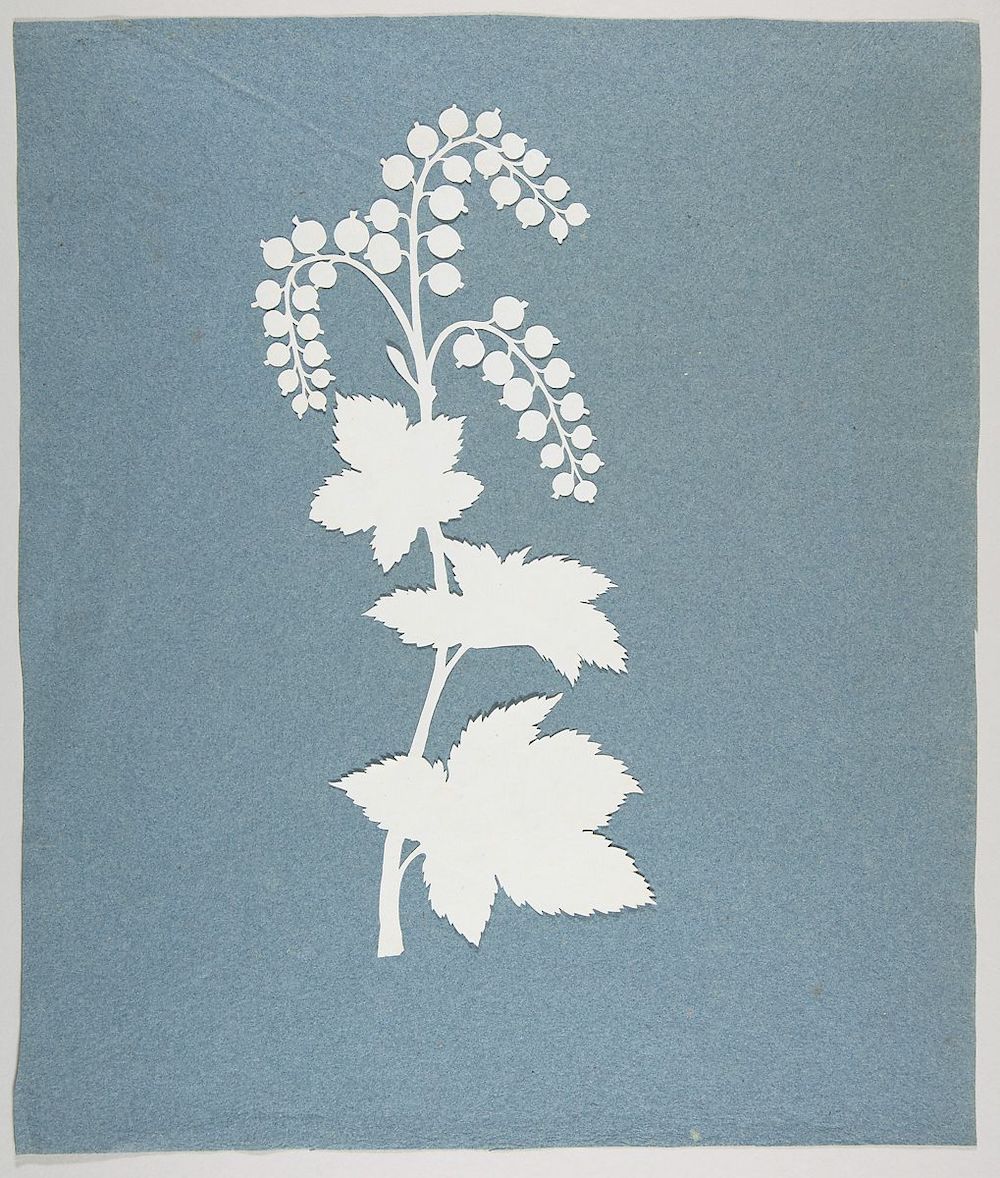
Red Currant , Philipp Otto Runge (German, Wolgast 1777–1810 Hamburg) Late 18th–Early 19th century Medium: Silhouette Dimensions: sheet: 13 9/16 x 11 5/8 in. (34.5 x 29.5 cm) Classification: Cut Paper Credit Line: Janet Lee Kadesky Ruttenberg Fund, in honor of Colta Ives, and Mary Martin Fund, 2010

Red Currant, Philipp Otto Runge (German, Wolgast 1777–1810 Hamburg) Late 18th–Early 19th century, Silhouette, sheet: 13 9/16 x 11 5/8 in. (34.5 x 29.5 cm), Janet Lee Kadesky Ruttenberg Fund, in honor of Colta Ives, and Mary Martin Fund, 2010


Questions to Ask Children

Describe what you can see.

Describe the different types of edges that you can see.

Henri Matisse Cut Outs

Questions to Ask Children

Describe what you can see.

What do the cut outs remind you off?

Pippa Dyrlaga

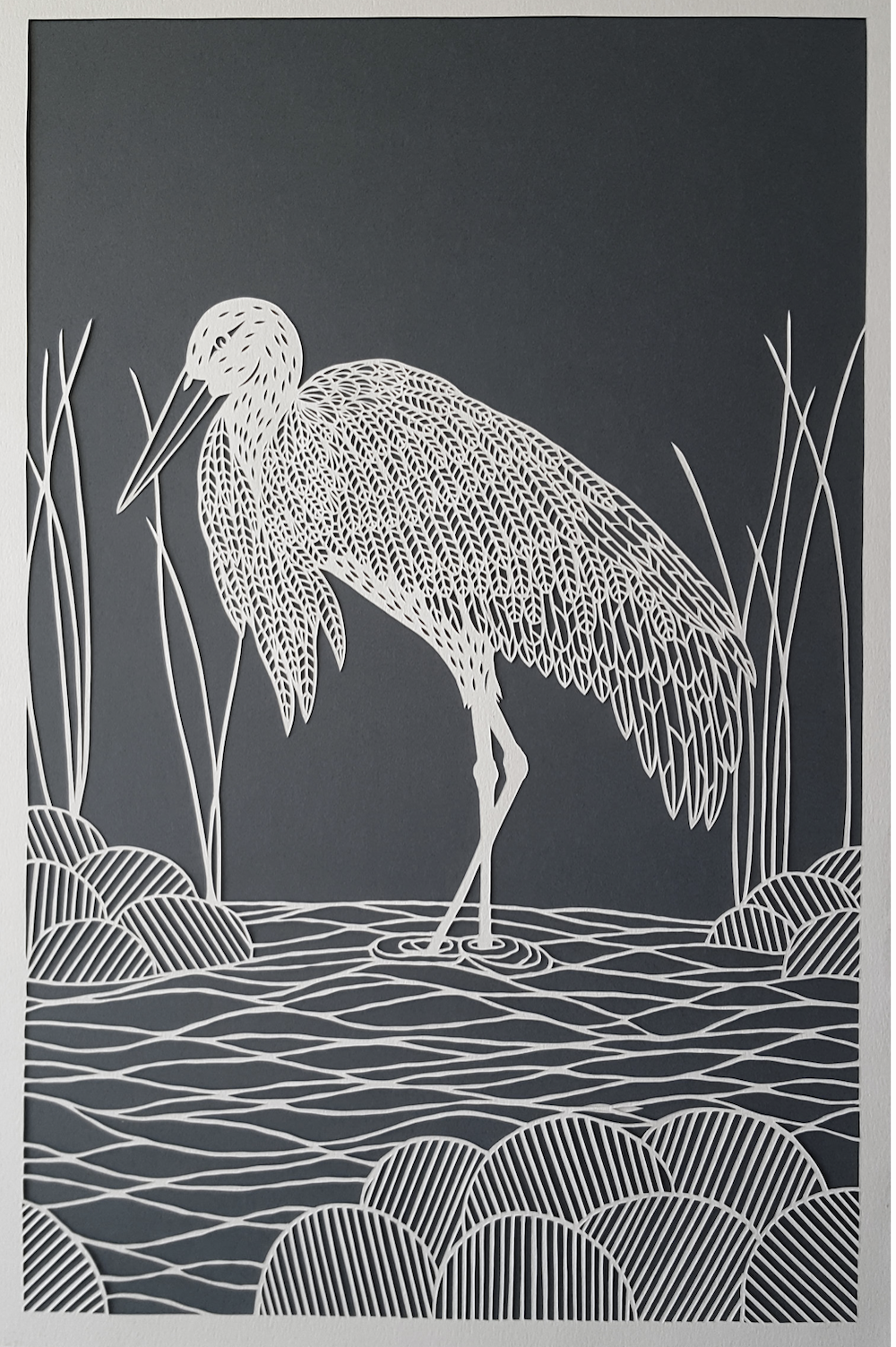
Paper Cut Out Bird by Pippa Dyrlaga

Questions to Ask Children

Describe what you can see.

How do you think the artist has created this?

How has the artist used negative space?

See more of Pippa’s cut outs on her website.

Thomas Witte

Questions to Ask Children

Describe what you can see.

How has the artist used negative space?

How does Thomas’ work make you feel?

What do you like/dislike about his work?

Visit Thomas’ website to find more of his work.

This Talking Points Is Used In…

Pathway: Shadow Puppets

This is featured in the 'Shadow Puppets' pathway

This is featured in the ‘Shadow Puppets’ pathway

using sketchbooks to make visual notes

Sketchbooks used for observations, research drawing and experimentation.

Show me what you see

Show Me What You See Method 250 Words by Tobi Meuwissen


Talking Points: Studio McGuire

A collection of sources and imagery to explore the work of Davy and Kristin McGuire.

Please note that this page contains links to external websites and has videos from external websites embedded. At the time of creating, AccessArt checked all links to ensure content is appropriate for teachers to access. However external websites and videos are updated and that is beyond our control. 

Please let us know if you find a 404 link, or if you feel content is no longer appropriate. 

We strongly recommend as part of good teaching practice that teachers watch all videos and visit all websites before sharing with a class. On occasion there may be elements of a video you would prefer not to show to your class and it is the teacher’s responsibility to ensure content is appropriate. Many thanks. 

This resource is free to access and is not a part of AccessArt membership.

ages 9-11
ages 11-14
ages 14-16
free to access

The Paper Architect

The Paper Architect is a play combining paper-craft, animation, projection mapping and performance. It tells the story of an old model-maker who uses his paper creations as vessels for his imagination.

The show features tiny, accurately mapped animations playing across intricate paper sets. 

See more of their work on their here.

Questions to Ask Children

How do the Paper Architect make you feel?

How would you describe the atmosphere of The Paper Architect?

Do you like it? Why?

If you could cut a paper structure and make it come to life what you it be? Why?

The Icebook

The Icebook – the world’s first projection mapped pop-up book. An exquisite experience of fragile paper cutouts and video projections that sweep you right into the heart of a fantasy world. It is an intimate and immersive experience of animation, book art and performance.

This Talking Points Is Used In…

using sketchbooks to make visual notes

Find out how pupils can respond to artists work in sketchbooks

Find out how pupils can respond to artists work in sketchbooks

Show me what you see

Enable close looking and drawing with this exercise

Enable close looking and drawing with this exercise


Talking Points: Nicole Dyer

A collection of imagery and sources designed to explore the work of Nicole Dyer.

Please note that this page contains links to external websites and has videos from external websites embedded. At the time of creating, AccessArt checked all links to ensure content is appropriate for teachers to access. However external websites and videos are updated and that is beyond our control. 

Please let us know if you find a 404 link, or if you feel content is no longer appropriate. 

We strongly recommend as part of good teaching practice that teachers watch all videos and visit all websites before sharing with a class. On occasion there may be elements of a video you would prefer not to show to your class and it is the teacher’s responsibility to ensure content is appropriate. Many thanks. 

*If you are having issues viewing videos it may be due to your schools firewall or your cookie selection. Please check with your IT department.*


This resource is free to access and is not a part of AccessArt membership.


ages 5-8
ages 9-11
ages 11-14
free to access

Nicole Dyer

Like the 14th-century Dutch still-life painters who depicted tabletops piled high with edible symbols of wealth, power, and mortality, Dyer, a 2013 BFA graduate of the Maryland Institute College of Art, compulsively catalogs the objects that attract their attention with the allure of satiety and wholeness and packs them into dense tableaus of excess. –BMoreArt

Explore more work by Nicole Dyer here.

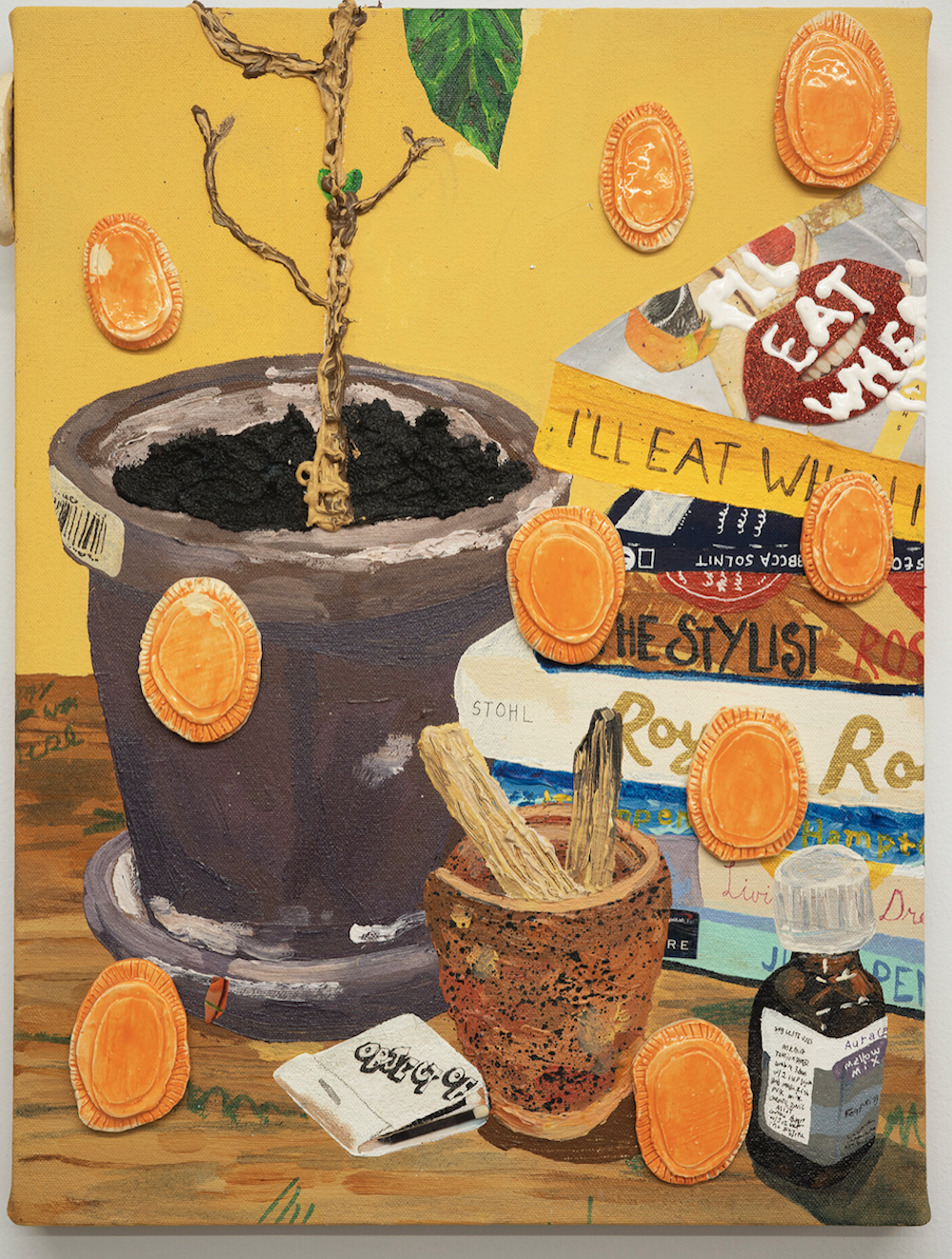
Still Life by Nicole Dyer

Ladies, Ladies, Ladies, 2018 Acrylic, ink, collage, and ceramic on canvas 16” x 12”

Questions to Ask Children

Describe what you see in the paintings.

How does it make you feel?

What do you think the artist is trying to say with this work?

Describe the colour palette. How does the colour effect the mood of the painting?

If you were to include some of your favourite books in a still life painting, what would they be? Why?

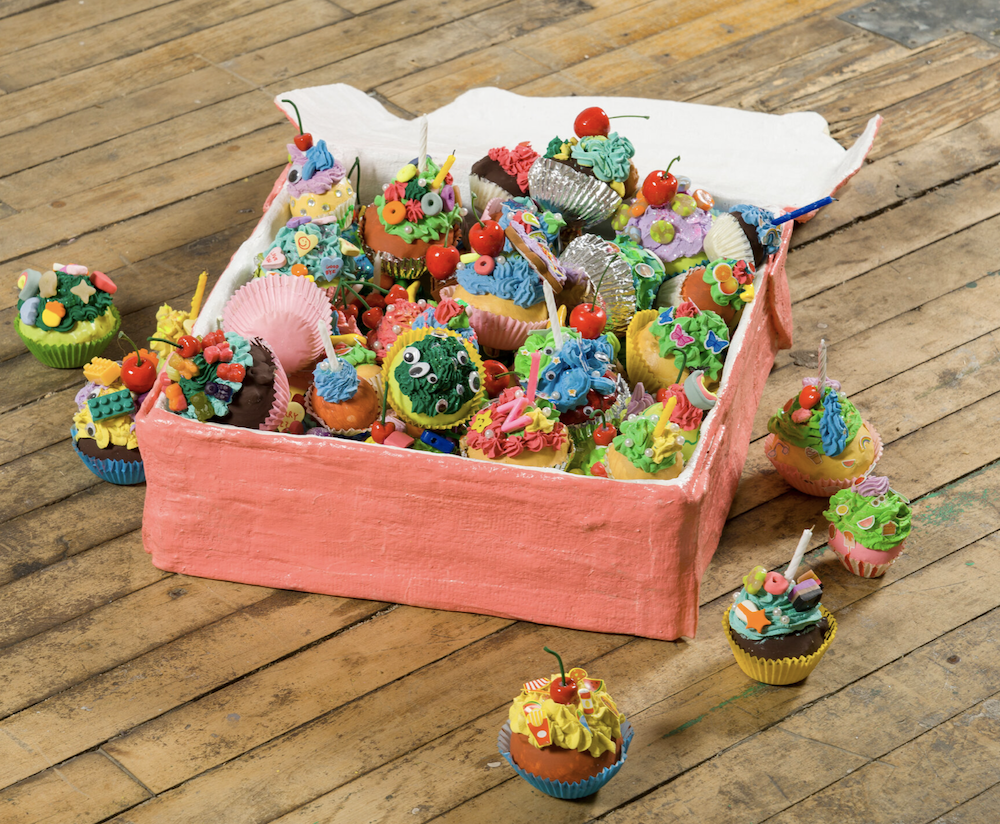
Cupcake Sculpture by Nicole Dyer
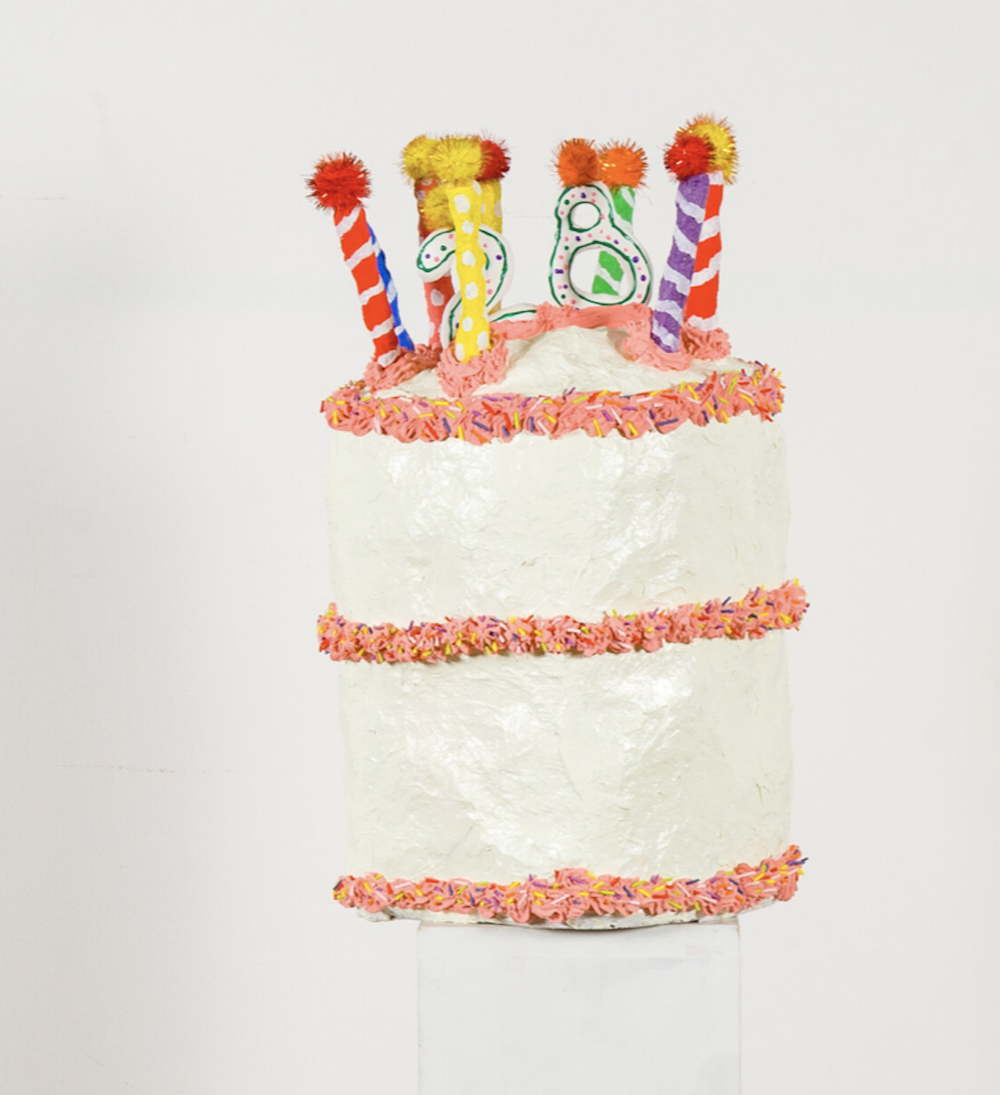
Cake Sculpture by Nicole Dyer
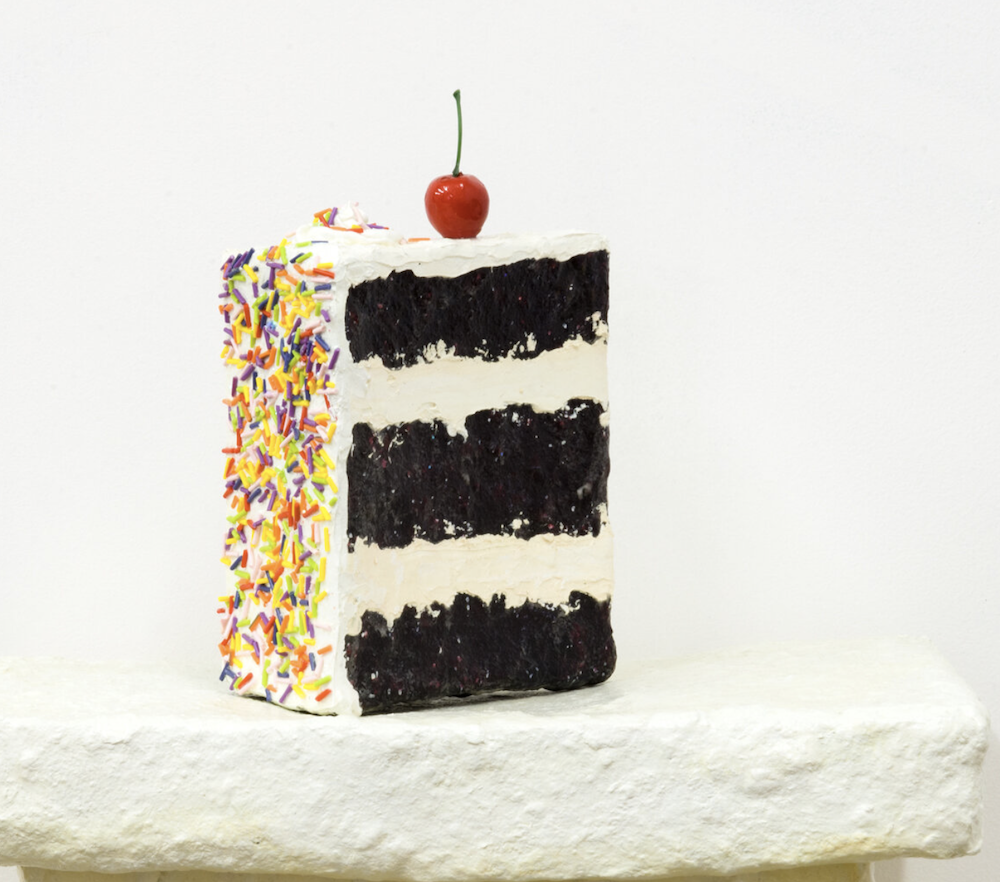
Cake Slice Sculpture by Nicole Dyer

Questions to Ask Children

Describe what you see.

How does it make you feel?

What materials do you think were used to make these food sculptures?

Which sculpture is your favourite? Why?

This Talking Points Is Used In…

Pathway: Festival Feasts

This is featured in the 'Festival Feasts' pathway

This is featured in the ‘Festival Feasts’ pathway

using sketchbooks to make visual notes

Sketchbooks used for observations, research drawing and experimentation.

Show me what you see

Show Me What You See Method 250 Words by Tobi Meuwissen


Talking Points: Olafur Eliasson

How can installation art transform a space and change our relationship with the environment?

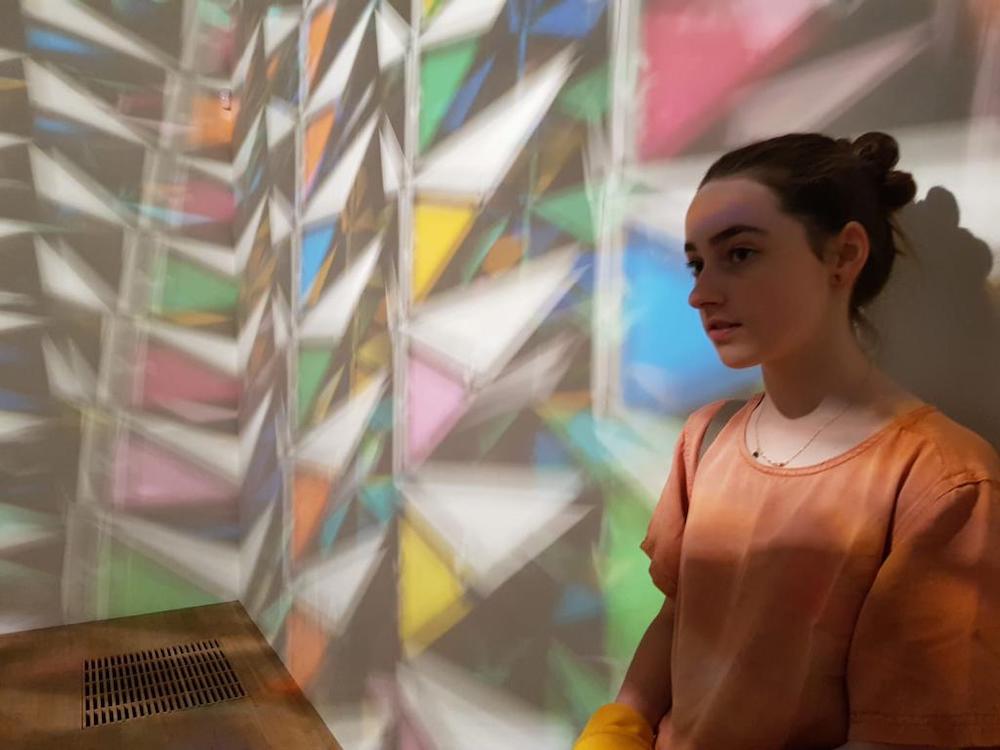
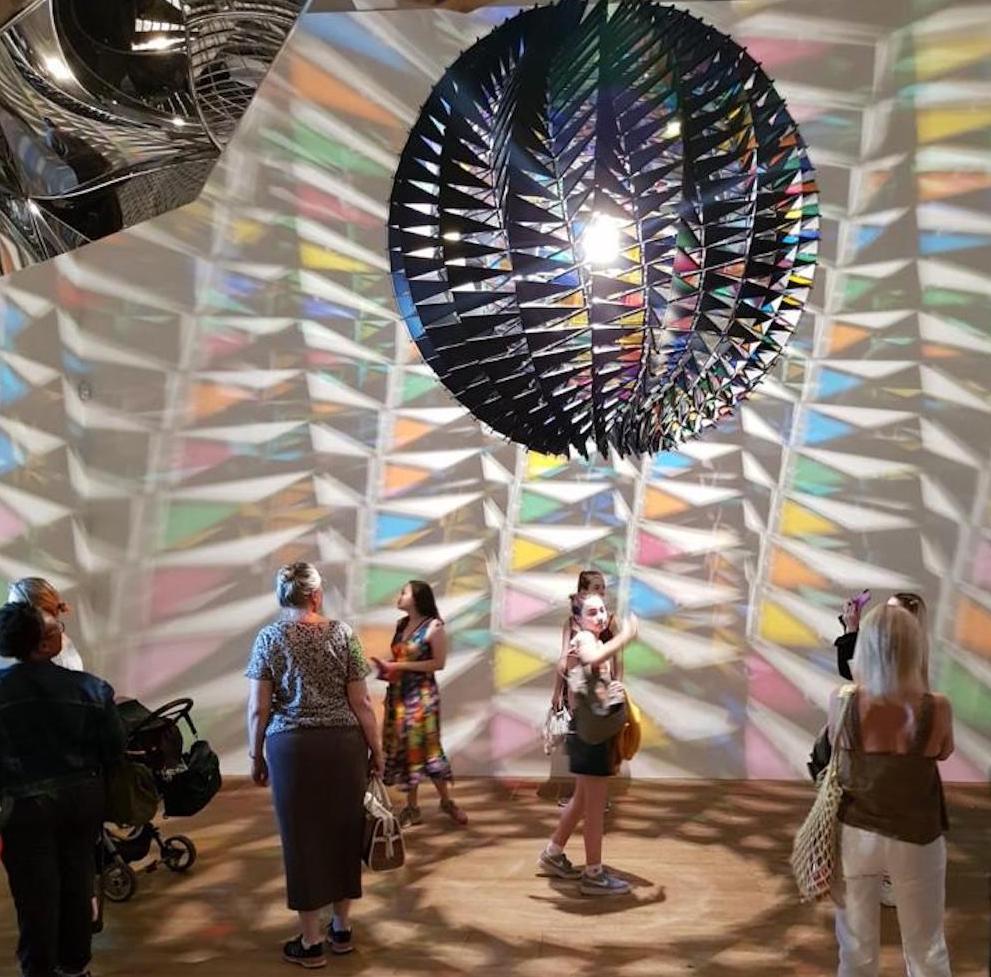
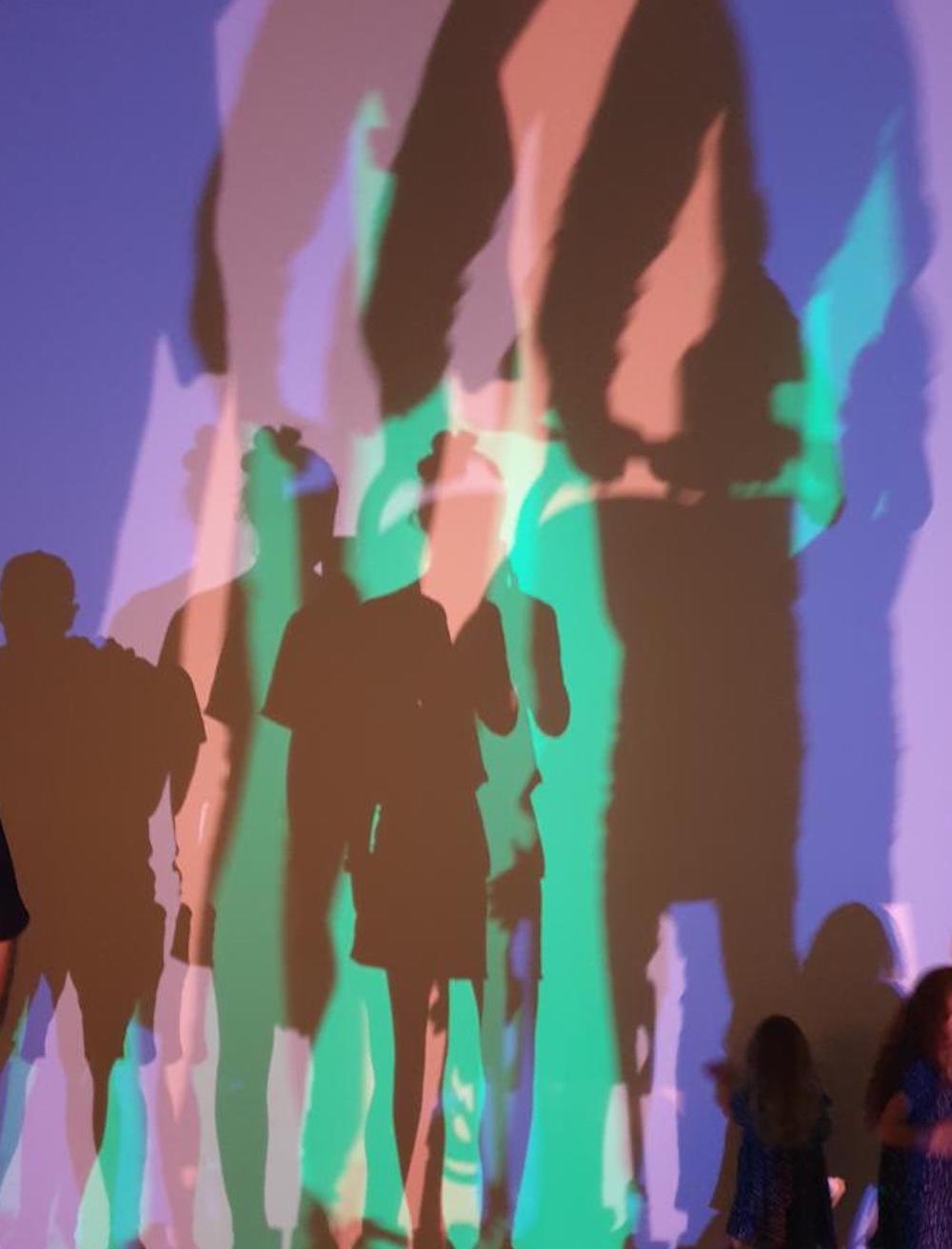
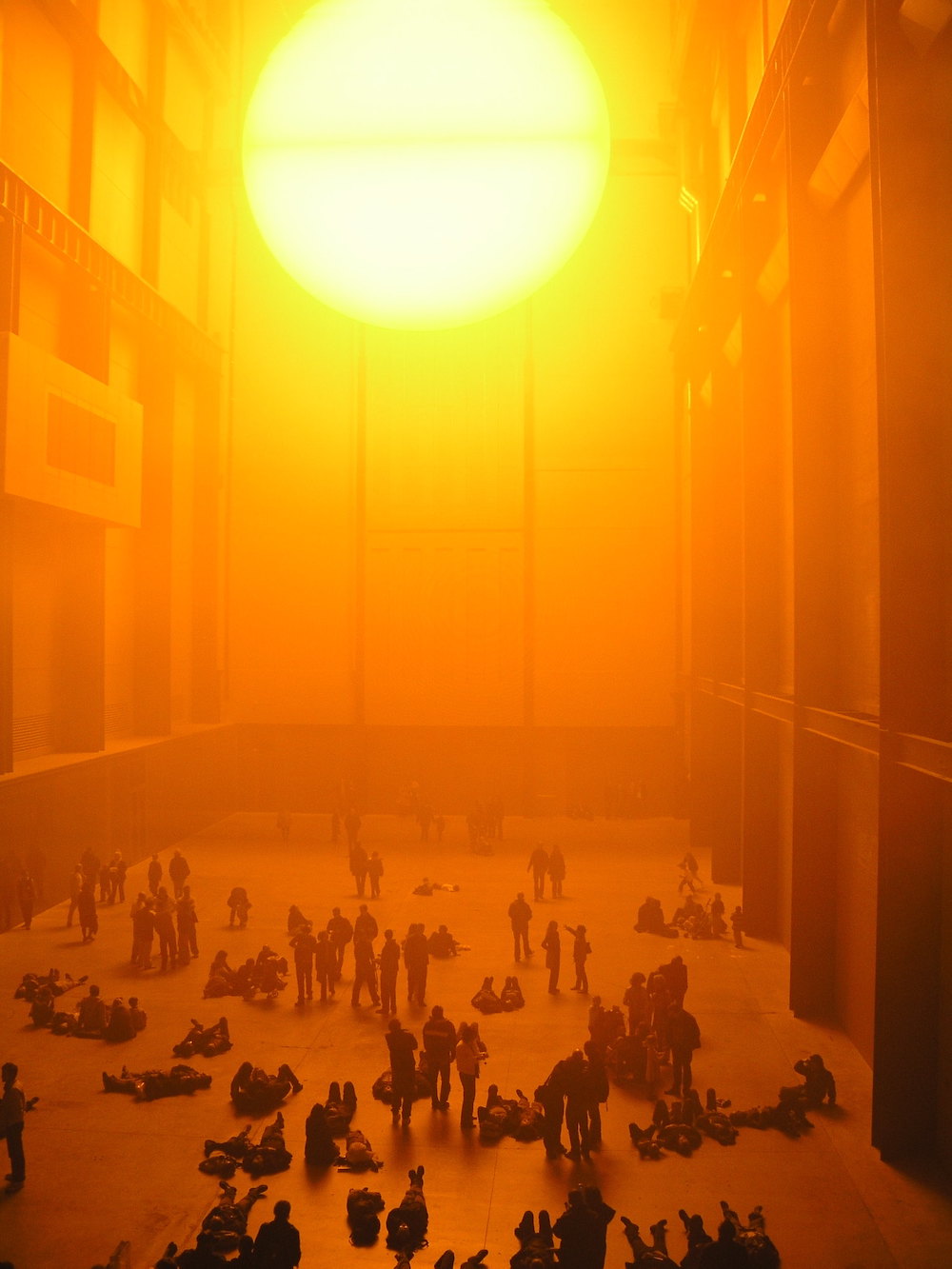
Olafur Eliasson creates large-scale installations that immerse audiences in experiences of light, colour, reflection, and shadow. Using projections, film, photography, and sculpture, he encourages us to think about how we connect with nature and the wider world. His work invites reflection on both everyday changes in our environment and larger issues such as climate change. 

Watch the videos below and use the following questions to begin a discussion about Olafur Eliasson’s work.

Please Note:

This page includes links and videos from external sites, verified at publication but subject to change.

Teachers should review all content for classroom suitability.

Report any issues, and check school firewall settings if videos don’t play.

ages 9-11
ages 11-14
ages 14-16
free to access

Olafur Eliasson

Olafur Eliasson’s interest in light came from growing up in Iceland, where for half of the year the country is in darkness. 

Olafur is known for sculpture and large-scale installation art employing elemental materials such as light, water, and air temperature to enhance the viewer’s experience.

Explore more of Olafur’s work here.

Questions to Ask Children

Describe what you see.

How does this make you feel?

How would it feel to be in that space, interacting with the light?

How do you think the artist creates these playful light installations?

Olafur Eliasson Exhibition at The Tate by Paula Briggs

Questions to Ask Children

Describe what you see.

How do you think it would feel to interact with the light installations?

Does it make you think about space and colour in different ways?

This Talking Points Is Used In…

Pathway: Brave Colour

This is featured in the 'Brave colour' pathway

This is featured in the ‘Brave colour’ pathway

using sketchbooks to make visual notes

Find out how pupils can respond to artists work in sketchbooks

Find out how pupils can respond to artists work in sketchbooks

Show me what you see

Enable close looking and drawing with this exercise

Enable close looking and drawing with this exercise


Talking Points: Carnovsky

How can changing an element of our environment make what we see or feel seem different?

Artist duo Carnovsky manipulate light within the environment to change the appearance of flat images. As the light changes, different drawings are revealed, unveiling previously unseen images and allowing a sense of narrative to emerge. New forms appear and then disappear, creating a sense of depth on a 2D surface. 

Watch the videos below and use the following questions to begin a discussion about Carnovsky’s RGB project. 

Please Note:

This page includes links and videos from external sites, verified at publication but subject to change.

Teachers should review all content for classroom suitability.

Report any issues, and check school firewall settings if videos don’t play.

ages 9-11
ages 11-14
ages 14-16
free to access

Carnovsky

Carnovsky is a Milan-based art and design duo comprised of Francesco Rugi and Silvia Quintanilla.

RGB is a work about the exploration of the “surface’s deepness”. 

RGB designs create surfaces that mutate and interact with different chromatic stimulus.

Carnovsky’s RGB is an ongoing project that experiments with the interaction between printed and light colours. The resulting images are unexpected and disorienting. Colors mix, lines and shapes entwine and not completely clear. Through a coloured filter (a light or a transparent material) it is possible to see clearly the layers in which the image is composed. The filter’s colours are red, green and blue, each one of them serves to reveal one of the three layers. Carnovsky

Questions to Ask Children

Describe what you see.

How does it make you feel when you see the image change before your eyes?

How would it feel to be in that space, interacting with the sculpture?

What do you think the artists are trying to do through the artwork?

Why do you think that light has an effect of specific colours?

This Talking Points Is Used In…

Pathway: Brave Colour

This is featured in the 'Brave colour' pathway

This is featured in the ‘Brave colour’ pathway

using sketchbooks to make visual notes

Find out how pupils can respond to artists work in sketchbooks

Find out how pupils can respond to artists work in sketchbooks

Show me what you see

Enable close looking and drawing with this exercise

Enable close looking and drawing with this exercise


Talking Points: Njideka Akunyili Crosby

A collection of sources and imagery to explore the work of Njideka Akunyili Crosby.

Please note that this page contains links to external websites and has videos from external websites embedded. At the time of creating, AccessArt checked all links to ensure content is appropriate for teachers to access. However external websites and videos are updated and that is beyond our control. 

Please let us know if you find a 404 link, or if you feel content is no longer appropriate. 

We strongly recommend as part of good teaching practice that teachers watch all videos and visit all websites before sharing with a class. On occasion there may be elements of a video you would prefer not to show to your class and it is the teacher’s responsibility to ensure content is appropriate. Many thanks. 

*If you are having issues viewing videos it may be due to your schools firewall or your cookie selection. Please check with your IT department.*

This resource is free to access and is not a part of AccessArt membership.

ages 9-11
ages 11-14
ages 14-16
free to access

Njideka Akunyili Crosby

Njideka is originally from Nigeria but trained as an artist is America, which is where she now lives. This duality of experience has given Njideka a fresh perspective on the places and cultures that she has experienced.

Njideka’s paintings draw on art historical, political and personal references, Njideka Akunyili Crosby creates densely layered figurative compositions that express the complexity of contemporary experience.

Many of Akunyili Crosby’s images feature figures – images of family and friends – in scenarios derived from familiar domestic experiences: eating, drinking, watching TV.

While the artist’s formative years in Nigeria are a constant source of inspiration, Akunyili Crosby’s grounding in Western art history adds further layers of reference.  – Victoria Miro Gallery

Watch the videos below to find out more. 

Apologies if you cannot watch one of the videos because your school has blocked YouTube. 

Questions to Ask Children

Pause the video at various points where you can see details of Njideka’s paintings, or find an image on Njideka’s website and discuss the following questions…

Describe what you think is happening in this painting/this detail. 

What do you think the person in the painting could be thinking about?

How does Njideka use layers in her work to help her create imagery. 

How does this painting make you feel?

How might the painting reflect Njideka’s identity?

This Talking Points Is Used In…

Pathway: Exploring Identity

This is featured in the 'Exploring Identity' pathway

This is featured in the ‘Exploring Identity’ pathway

using sketchbooks to make visual notes

Sketchbooks used for observations, research drawing and experimentation.

Show me what you see

Show Me What You See Method 250 Words by Tobi Meuwissen