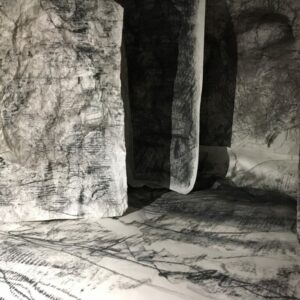
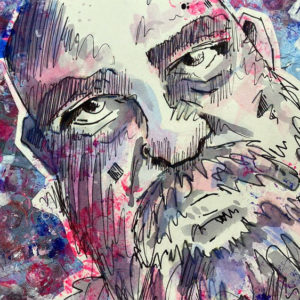
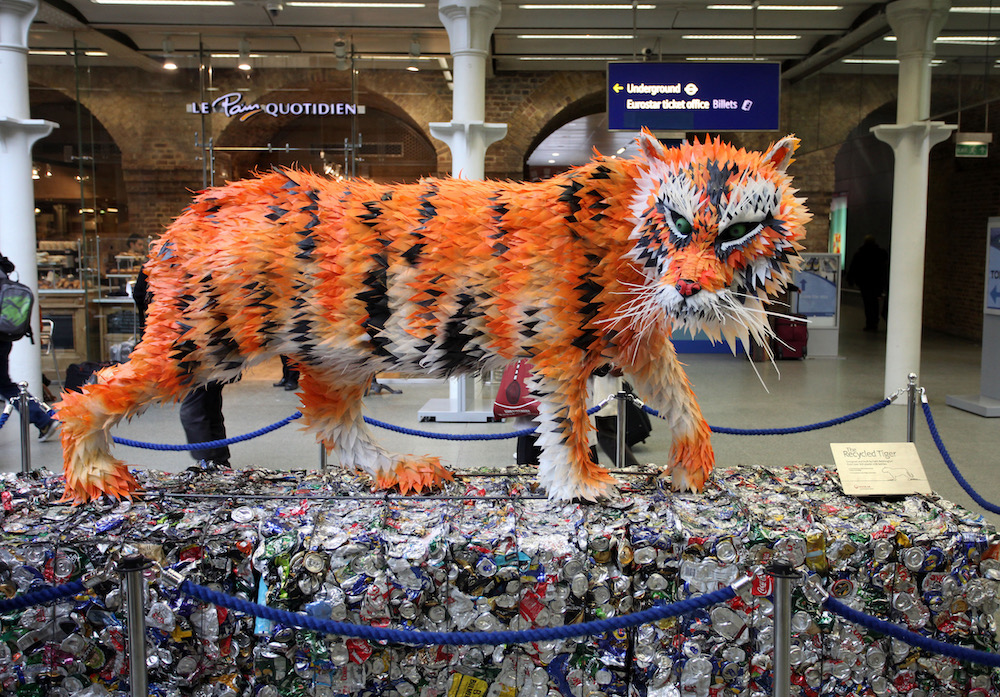
Laura McKendry is an artist who uses a range of materials to capture animals, making considered choices about material and movement to convey energy and reflect her subject. Her interests lie in exploring the relationship between humans and animals.
Watch the below video and begin a discussion around the questions posed to explore further how Laura McKendry makes her work.
Please Note:
This page includes links and videos from external sites, verified at publication but subject to change.
Teachers should review all content for classroom suitability.
Report any issues, and check school firewall settings if videos don’t play.
Laura McKendry
Laura McKendry is an artist who lives and works in London. She takes her inspiration from nature – plants, animals, insects…
In the video above Laura shares why she likes drawing dogs, and why she likes using charcoal to help her make big gestural drawings.
A collection of imagery and sources designed to stimulate conversation around the work of Shaheen Ahmed.
Please note that this page contains links to external websites and has videos from external websites embedded. At the time of creating, AccessArt checked all links to ensure content is appropriate for teachers to access. However external websites and videos are updated and that is beyond our control.
Please let us know if you find a 404 link, or if you feel content is no longer appropriate.
We strongly recommend as part of good teaching practice that teachers watch all videos and visit all websites before sharing with a class. On occasion there may be elements of a video you would prefer not to show to your class and it is the teacher’s responsibility to ensure content is appropriate. Many thanks.
*If you are having issues viewing videos it may be due to your schools firewall or your cookie selection. Please check with your IT department.*
This resource is free to access and is not a part of AccessArt membership.
Shaheen Ahmed
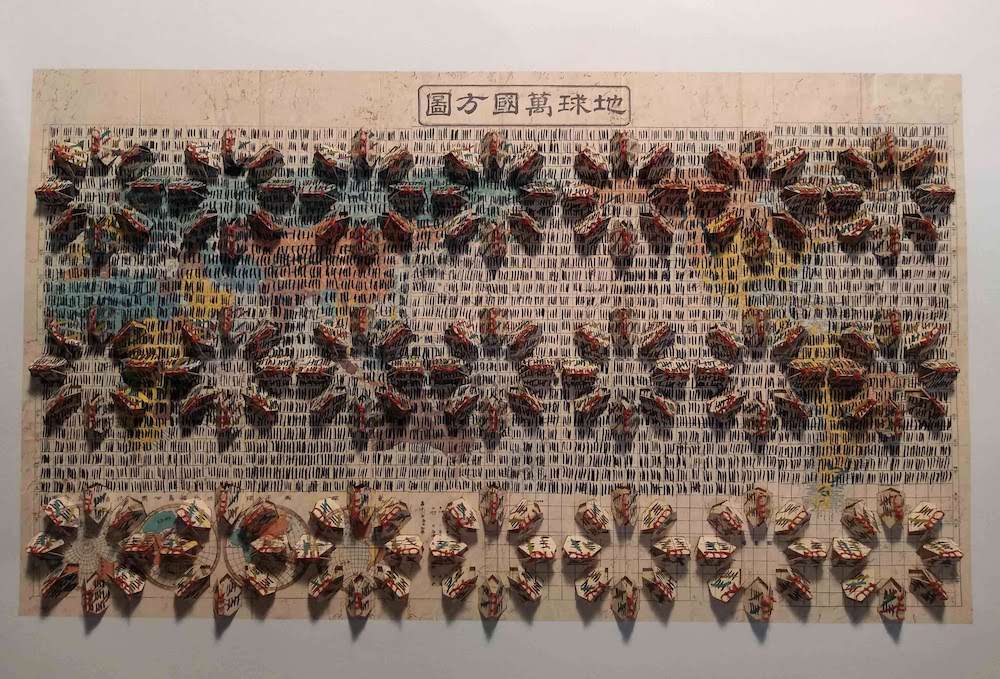
Primordial Sanctuary by Shaheen Ahmed
“When countries are at war, when people are suffering, that is the time to reach out. The very least we should do is empathise.”
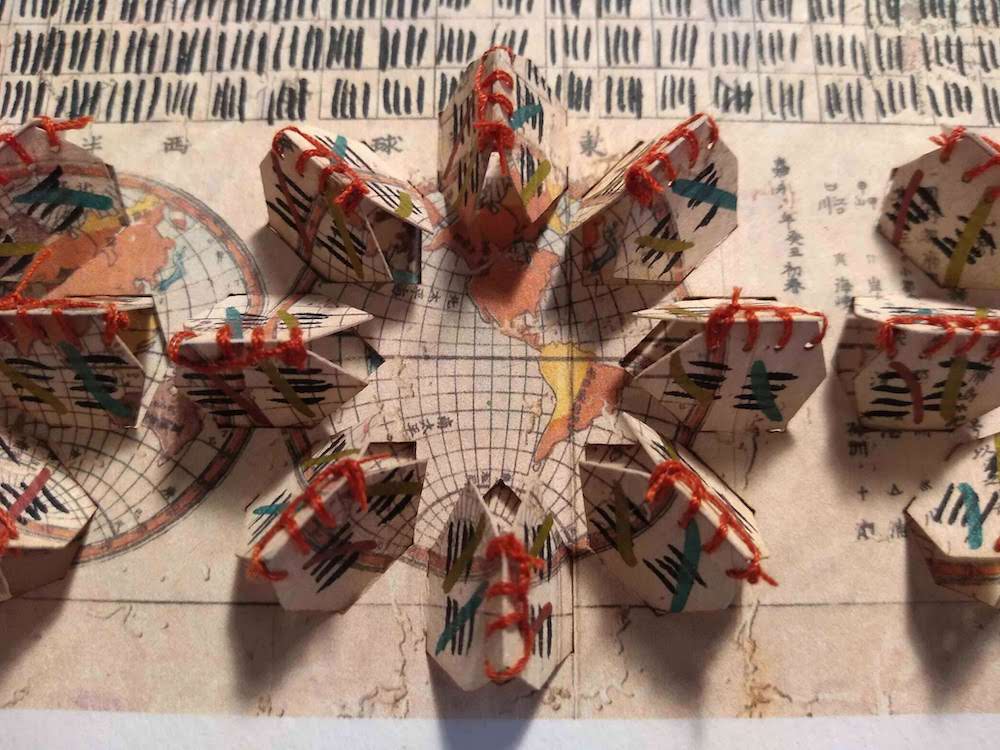
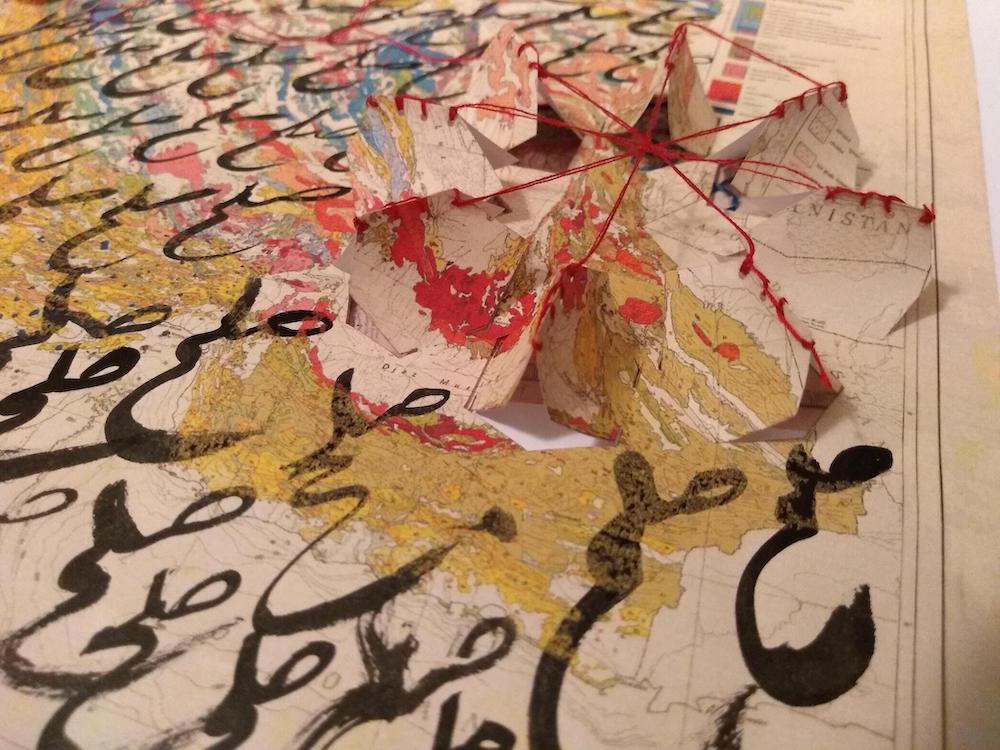
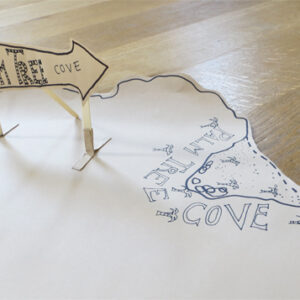
“Craftivist” Shaheen Ahmed lives and works in the West Midlands where she manipulates maps and paper using Kirigami to connect her passion for Islamic art, and exploration of social justice.
The concept of empathy is central to Shaheen’s work. Her manipulation of maps, over-writing with pattern and marks, is Shaheen’s way of commenting upon and mending the destruction and fear caused by boundaries and borders. The meditative actions she performs become Shaheen’s blessings outwards for a better world.
Look carefully at Shaheen’s artwork. How would you describe it to someone who couldn’t see it?
Do you think the processes Shaheen uses and the final outcome contribute to Shaheen’s wellbeing?
How do you feel when you look at the artwork? Are you thinking about the painstaking processes Shaheen uses, or the final outcome? Or are you thinking about the people in the places she makes art about? Or something else?
Shaheen describes herself as a “Craftivist”. What do you think that means?
A collection of imagery and sources designed to stimulate conversation around the work of Andy Gilmore.
Please note that this page contains links to external websites and has videos from external websites embedded. At the time of creating, AccessArt checked all links to ensure content is appropriate for teachers to access. However external websites and videos are updated and that is beyond our control.
Please let us know if you find a 404 link, or if you feel content is no longer appropriate.
We strongly recommend as part of good teaching practice that teachers watch all videos and visit all websites before sharing with a class. On occasion there may be elements of a video you would prefer not to show to your class and it is the teacher’s responsibility to ensure content is appropriate. Many thanks.
*If you are having issues viewing videos it may be due to your schools firewall or your cookie selection. Please check with your IT department.*
This resource is free to access and is not a part of AccessArt membership.
Andy Gilmore
“A master of colour and geometric composition, Andy Gilmore’s work is often characterised as kaleidoscopic and hypnotic, though it could just as well be described as visually acoustic, his often complex arrangements referencing the scales and melodies in music.”
Do we need to know the outcome of the work we make before we start?
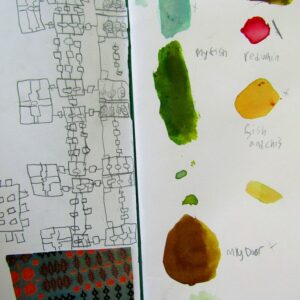
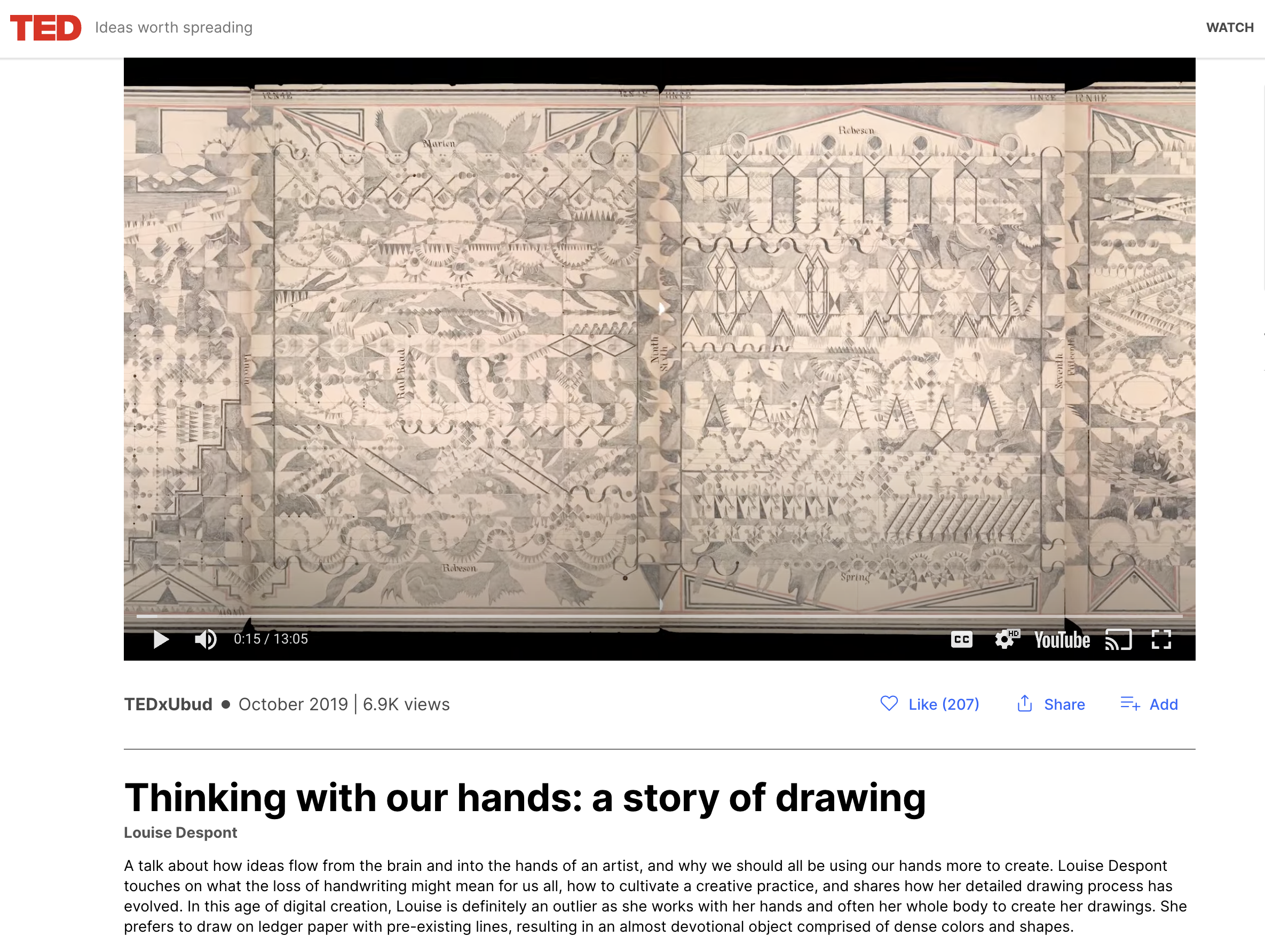
Louise Despont works intuitively, allowing her drawings to develop as she creates them. Using pencils, rulers, stencils, and compasses, she produces dense, colourful, large-scale, meditative works that aim to capture energy or feeling rather than something we can see or touch.
Use the below videos and questions to build up an understanding of Louise Despont’s drawings and see how you can bring her methods into making your own work.
Please Note:
This page includes links and videos from external sites, verified at publication but subject to change.
Teachers should review all content for classroom suitability.
Report any issues, and check school firewall settings if videos don’t play.
Louise Despont
“[In drawing] the downshift in speed is what opened the door for information and inspiration to step through”
Louise Despont is an artist whose practice focuses on drawing. Her works comprise of detailed geometric drawings which evolve organically. The making of the artwork, and the outcomes, are powerful, meditative and mindful.
In the TedTalk below, Louise Despont shares why she thinks drawing is so important both to herself and to us all as human beings.
How and where Louise finds inspiration…
Questions to Ask Children
Do you think Louise has a clear idea of the outcome before she starts each piece?
How long do you imagine she works on each piece? How does she know when a piece is finished? Is a piece ever finished?
How do the drawings make you feel?
How would it feel to make drawings like that?
Louise gives advice:
Look at your work upside down for a new perspective.
Reorganise your pages to see if there isn’t an entirely different story inside the one you had.
What do you think she means by this advice, and can you apply it to your own work?
Look around you. Could you begin to collect images or objects, using your instinct, that you are attracted to. Could you use them as a starting point to draw? What tools could you use to help you draw?
Videos and activities to help you explore Typography.
Please note that this page contains links to external websites and has videos from external websites embedded. At the time of creating, AccessArt checked all links to ensure content is appropriate for teachers to access. However external websites and videos are updated and that is beyond our control.
Please let us know if you find a 404 link, or if you feel content is no longer appropriate.
We strongly recommend as part of good teaching practice that teachers watch all videos and visit all websites before sharing with a class. On occasion there may be elements of a video you would prefer not to show to your class and it is the teacher’s responsibility to ensure content is appropriate. Many thanks.
*If you are having issues viewing videos it may be due to your schools firewall or your cookie selection. Please check with your IT department.*
This resource is free to access and is not a part of accessArt membership.
What is Typography?
Typography is the art of creating and arranging letters in a way which is visually appealing and which makes the letters legible.
The videos below explore different aspects of typography.
A Introduction to Typography…
Questions to Ask Children
Did you expect to see the artwork at the end? Was it a surprise?
How much practise do you think this took?
Do you think Pramod made lots of mistakes along the way? How much would he have learnt from his mistakes?
Questions to Ask Children
How do you feel when you watch the videos?
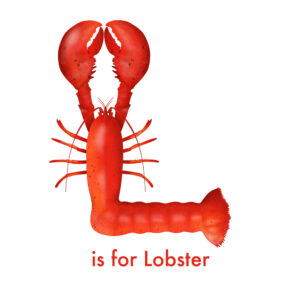
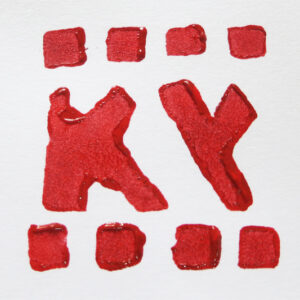
What could you make letters out of?
Can you ever guess how the next letters might be made?
What is Kinetic Typography?
Kinetic Typography is the technical name for “moving text”.
Questions to Ask Children
What do you think the designers are trying to say through the font they use?
Questions to Ask Children
How do you feel when you watch the videos?
Can you think of other examples you have seen of kinetic typography?
Logos
Logos can tell you a lot about what a brand is about and what it does. Next time you see a Logo, consider the message behind it.
Questions to Ask Children
What is Disney trying to convey through the Disney font/logo?
In the animation what do you think the designers are trying to convey with the typography?
How can artists use their work to show shared or personal experiences?
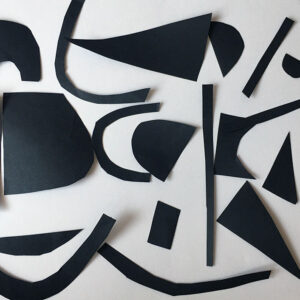
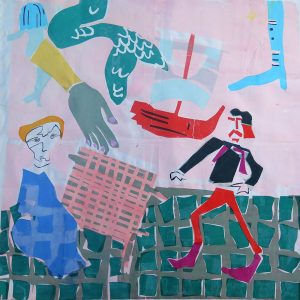
Romare Bearden was an influential artist in the 20th Century. He used collage as a way to tell stories about his personal experience, as well as celebrate the African-American cultural experience, by cutting up old artworks, magazines and photos, and building a composition with them.
Explore his collages using the sources below, then discuss the questions provided.
Please Note:
This page includes links and videos from external sites, verified at publication but subject to change.
Teachers should review all content for classroom suitability.
Report any issues, and check school firewall settings if videos don’t play.
Romare Bearden
Romare Bearden’s artwork includes poetic memories from his childhood, powerful and thought-provoking statements about African American culture, and reinterpretations of biblical stories from an African American perspective.
In the work below, we see Bearden’s collages of Homers Odyssey, influenced by the quilting craft from African-American slaves and by post modern artists such as of Henri Matisse.
Can you see any other artistic influences in his work?
What do you think the benefits of collage are?
“You sing on the canvas. You improvise, you find the rhythm, and catch it good, and structure it as you go along, then the song is you.” – Romare Bearden.
Knowing that music was a big influence in Bearden’s artwork, what do you think he meant by the quote above?
Videos and sources to help you explore the work of Printmaker Claire Willberg.
Please note that this page contains links to external websites and has videos from external websites embedded. At the time of creating, AccessArt checked all links to ensure content is appropriate for teachers to access. However external websites and videos are updated and that is beyond our control.
Please let us know if you find a 404 link, or if you feel content is no longer appropriate.
We strongly recommend as part of good teaching practice that teachers watch all videos and visit all websites before sharing with a class. On occasion there may be elements of a video you would prefer not to show to your class and it is the teacher’s responsibility to ensure content is appropriate. Many thanks.
*If you are having issues viewing videos it may be due to your schools firewall or your cookie selection. Please check with your IT department.*
This resource is free to access and is not a part of AccessArt membership.
Claire Willberg
Claire Willberg graduated as a sculptor at the Royal College of Art in 1989. Subsequently she completed an MA in Printmaking at Camberwell College of Art. Since 2010 she has been based at the Slaughterhaus Print Studio in South London.
Her current practice combines traditional intaglio and relief printmaking techniques. She takes inspiration from discarded objects found on the streets of London and gives them a new existence through her work.
In the videos above Claire uses the shapes inspired by the objects she finds to make animations.
When you watch Claire’s animations, what do you think?
What kind of a world is Claire creating for us?
Look around you and find items which have been discarded. Look at packaging too – open out cartons and boxes and look at the shapes. What kind of shapes would they inspire you to make out of paper, and what could they become in an animation?
Do you have particular colours you are drawn to using?
Do you think you have to know “what you are doing” or can you “play” with shapes and see what happens? Do the shapes give you ideas for stories?
How do the colours and shapes in an artwork change the way you feel about it?
Henri Matisse was a highly influential figure in modern art, celebrated for his bold and playful use of colour and form. A painter and sculptor, he later created paper cut-outs, transforming the practice of collage.
Explore his cut outs using the sources below, then discuss the questions provided.
Please Note:
This page includes links and videos from external sites, verified at publication but subject to change.
Teachers should review all content for classroom suitability.
Report any issues, and check school firewall settings if videos don’t play.
Painting with Scissors: Cut Outs by Matisse
Enjoy the videos below to understand what we Matisse meant by “Painting with Scissors” and to understand how revolutionary his cut outs were at the time.
How can art that captures past events spark our imagination and creativity?
Historical artworks and artefacts offer rich inspiration for creative exploration while supporting cross-curricular learning. Activities such as drawing, collage, and hands-on making provide engaging ways to analyse a painting, helping to develop visual literacy and critical thinking skills.
Explore the Bayeux Tapestry using the sources below, then discuss the questions provided.
Please Note:
This page includes links and videos from external sites, verified at publication but subject to change.
Teachers should review all content for classroom suitability.
Report any issues, and check school firewall settings if videos don’t play.
The Bayeux Tapestry
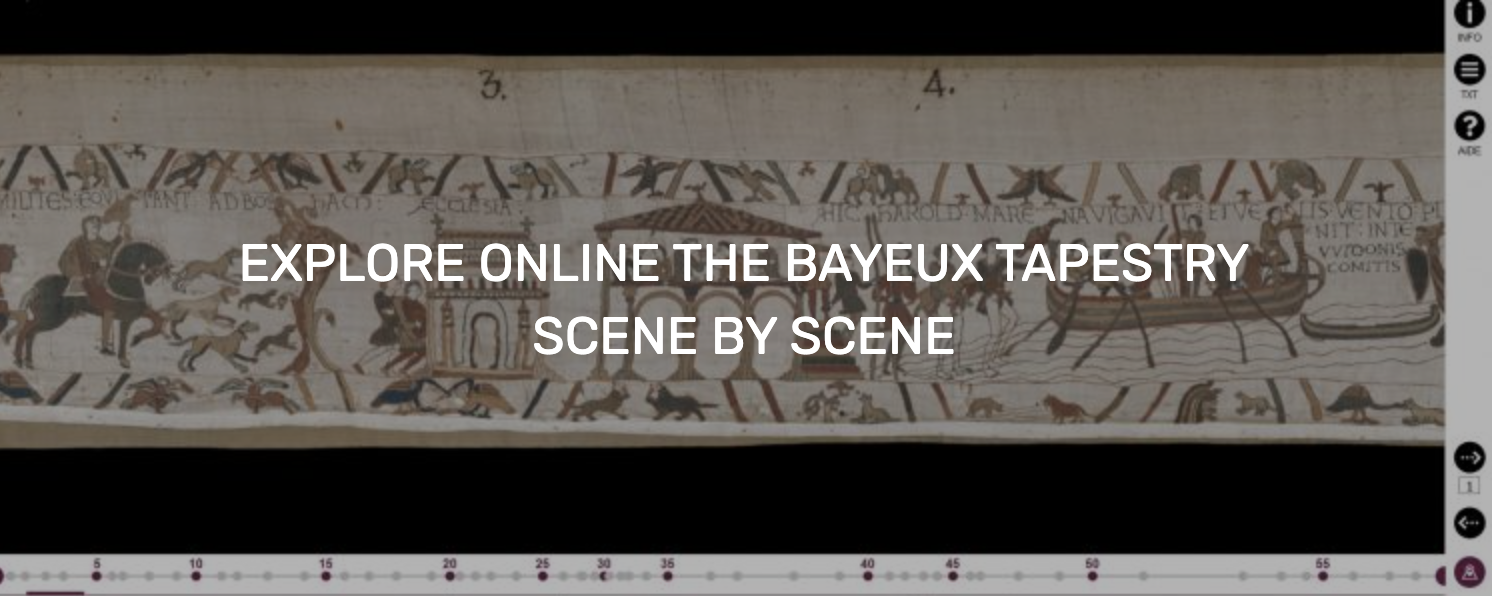
Discover the entire Bayeux Tapestry scene by scene and follow online the 70 meter-long embroidered canvas which tells the story of the conquest of England in 1066 via the official Bayeux Tapestry site.
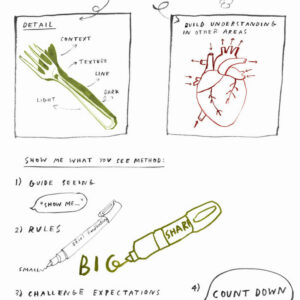
Use the above images to inspire “Show Me What You See” looking and drawing exercise.
The Animated Bayeux Tapestry was created as a student project while at Goldsmiths College. Just as the historic original embroidery does, the animation depicts the lead up to the Norman Invasion of Britain in 1066.
Animation by David Newton, Music and sound design by Marc Sylvan.
“Close Looking” Questions to Ask Children
Tell me about the clothes the people wear. What purposes do the outfits serve? What patterns can you see repeated?
What shapes and forms do you see repeated? Why do you think the artists repeated similar forms?
Tell me about the colours you see. How do they make you feel? Would we use similar colours today?
How do the artists depict ideas about strength and power?
Teacher Advisory: Please watch the video before showing it to children to ensure you are happy. You may prefer to pause the video at several key points and present them as a series of stills.
Enfant Précoce / Francis Essoua Kalu. Enfant Précoce is a painter, born in Cameroon in 1989
What do you think the artist is trying to do with his “Exposez-Moi” project? (translated as “Expose Me”)
Talking Points: Thandiwe Muriu
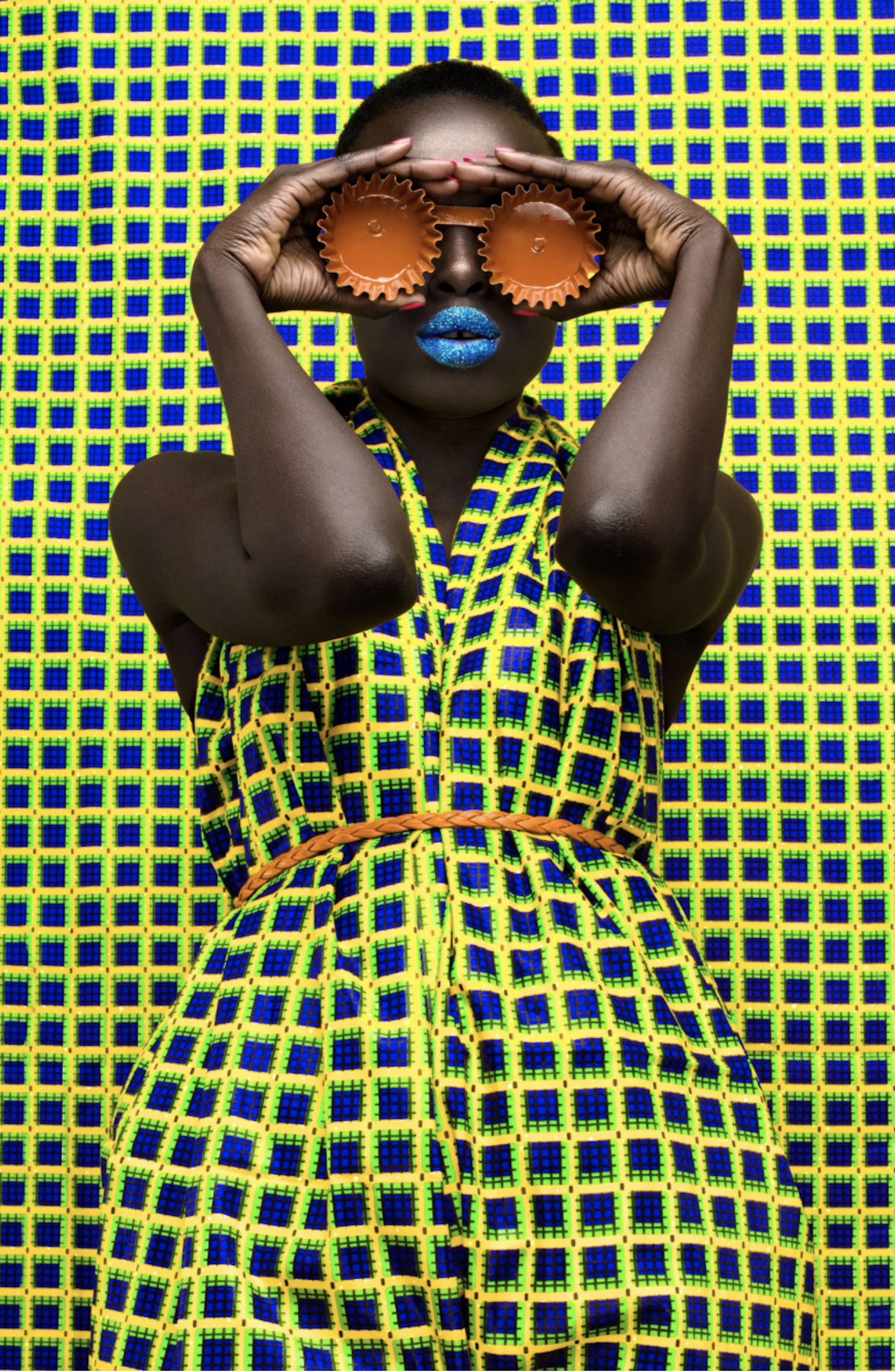
Introducing you to the work of Kenyan Photographer Thandiwe Muriu.
Please note that this page contains links to external websites and has videos from external websites embedded. At the time of creating, AccessArt checked all links to ensure content is appropriate for teachers to access. However external websites and videos are updated and that is beyond our control.
Please let us know if you find a 404 link, or if you feel content is no longer appropriate.
We strongly recommend as part of good teaching practice that teachers watch all videos and visit all websites before sharing with a class. On occasion there may be elements of a video you would prefer not to show to your class and it is the teacher’s responsibility to ensure content is appropriate. Many thanks.
*If you are having issues viewing videos it may be due to your schools firewall or your cookie selection. Please check with your IT department.*
This resource is free to access and is not a part of AccessArt membership.
A collection of imagery and sources designed to explore the idea that artists can be collectors and explorers.
Please note that this page contains links to external websites and has videos from external websites embedded. At the time of creating, AccessArt checked all links to ensure content is appropriate for teachers to access. However external websites and videos are updated and that is beyond our control.
Please let us know if you find a 404 link, or if you feel content is no longer appropriate.
We strongly recommend as part of good teaching practice that teachers watch all videos and visit all websites before sharing with a class. On occasion there may be elements of a video you would prefer not to show to your class and it is the teacher’s responsibility to ensure content is appropriate. Many thanks.
*If you are having issues viewing videos it may be due to your schools firewall or your cookie selection. Please check with your IT department.*
This resource is free to access and is not a part of AccessArt membership.
Introduction
The following videos and weblinks explore the idea that artists can be collectors and explorers.
By approaching the world with curiosity and openness, we can re-see the things around us and use them to inform and inspire our creative processes.
The following artists all venture out into the world, exploring familiar and new places and finding inspiration in the things around them. These artists then bring the things they “collect” back to their studios to make work.
Andy Goldsworthy
Andy Goldsworthy is a British Sculptor who has become know for making art from things he finds in the landscape. Sometimes he creates the artwork in the landscape itself (he calls this “land art”), but in this video he shares how he takes ice and rocks from the landscape and lets it make a “drawing” as it thaws in his studio.
The video is suitable for children, however depending upon the abilities/experience of the children in your class you may wish to watch the video yourself, then turn the sound down as you play it to the children, using your own voice to help share what the artist is doing.
TateShots: Andy Goldsworthy, Studio Visit
Questions to Ask Children
Andy Goldsworthy says: “Art has this amazing ability to show you what’s there.”
What do you think he means by that?
Do you like the artwork in the video more because you can see how it has been made?
How much control does Andy have over the artwork he makes? Does he want more control?
Joseph Cornell
Joseph Cornell was an American visual artist and film-maker, one of the pioneers and most celebrated exponents of assemblage. He was a great collector.
His images are copyright protected but the Royal Academy has created some excellent videos about his work, and there are images on the site too.
Hassan Hajjaj was born in 1961 in Larache, Morocco, and now lives and works in London, UK. He is inspired by Moroccan culture and artefacts and his work crosses many disciplines including photography and design.
What kinds of things catch Hassan’s eye when he is looking around his environment?
Do you think there is a clear distinction between “art” and “life” in Hassan’s mind?
Lorna Crane the Brush Maker
Lorna Crane is an abstract painter whose work is inspired by the Australian landscape. She makes her own artist’s brushes using diverse natural and man-made materials, many of them found at Pambula river mouth on the NSW far south coast.
Questions to Ask Children
How do you think Lorna decides which things to pick up and turn into brushes?
Do you think two brushes are ever the same?
Which part do you think Lorna likes best: the collecting, the making brushes, or the painting with her brushes?
What could you make brushes out of? What marks would they make? What challenges might you face?
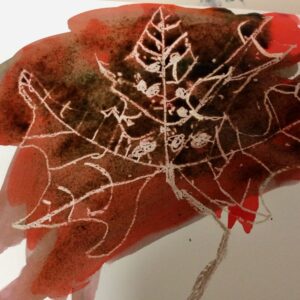
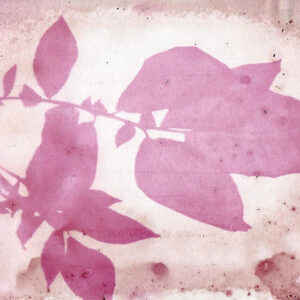
Alice Fox
Alice Fox took on an old allotment and on the allotment were a number of sheds. Alice spends time discovering the past through the things she finds and creates small, carefully crafted artworks, inspired by what she finds and natural materials.
How can abstract artwork help us use our imagination?
Paul Klee was one of the most influential artists of the 20th century, celebrated for his distinctive abstract and childlike style. His work was deeply influenced by poetry, colour theory, and music, as well as by major artistic movements such as Surrealism, Cubism, and Expressionism.
Explore his paintings using the sources below, then discuss the questions provided.
Please Note:
This page includes links and videos from external sites, verified at publication but subject to change.
Teachers should review all content for classroom suitability.
Report any issues, and check school firewall settings if videos don’t play.
Watercolour Paintings by Paul Klee
Klee was born in 1879 in Switzerland. When he was 35 he visited Tunisia in Africa, where his experience of the light and colours of the landscapes and architecture helped awaken his interest in colour.
He became less interested in painting exactly what he saw and in fact from 1915 onwards he never again worked from a model. Instead, he became interested in painting the colours around him, letting them detach themselves from the objects the colours were on. In this way his worked moved towards Abstraction.
He became interested in creating fantastical worlds, full of symbols, shapes, colour and line.
He took his inspiration from the world around him, and his imaginative response to the world, and also from poetry, music and literature.
Sometimes his work was serious and meditative, other times it was full of humour. He also loved the sounds of words and phrases and the titles of works were often very important to Klee.
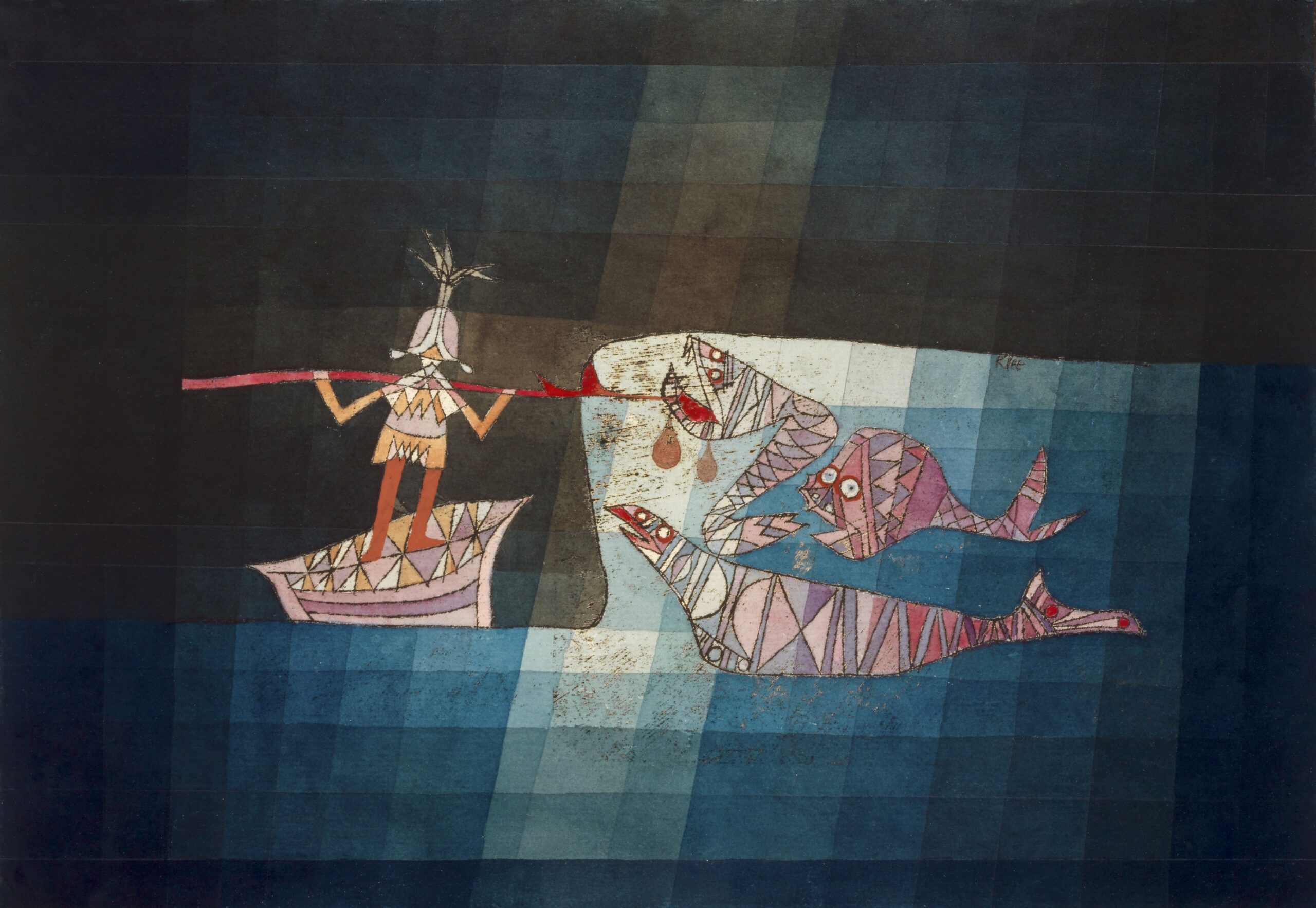
Battle scene from the funny and fantastic opera “The Seafarers” (1923). Painting by Paul Klee. Original from the Kunstmuseum Basel Museum
Questions to Ask Children
Describe what you see.
What do you think is happening?
How does the title change the painting?
Why do you think Klee painted in blocks of colour?
How does the painting make you feel?
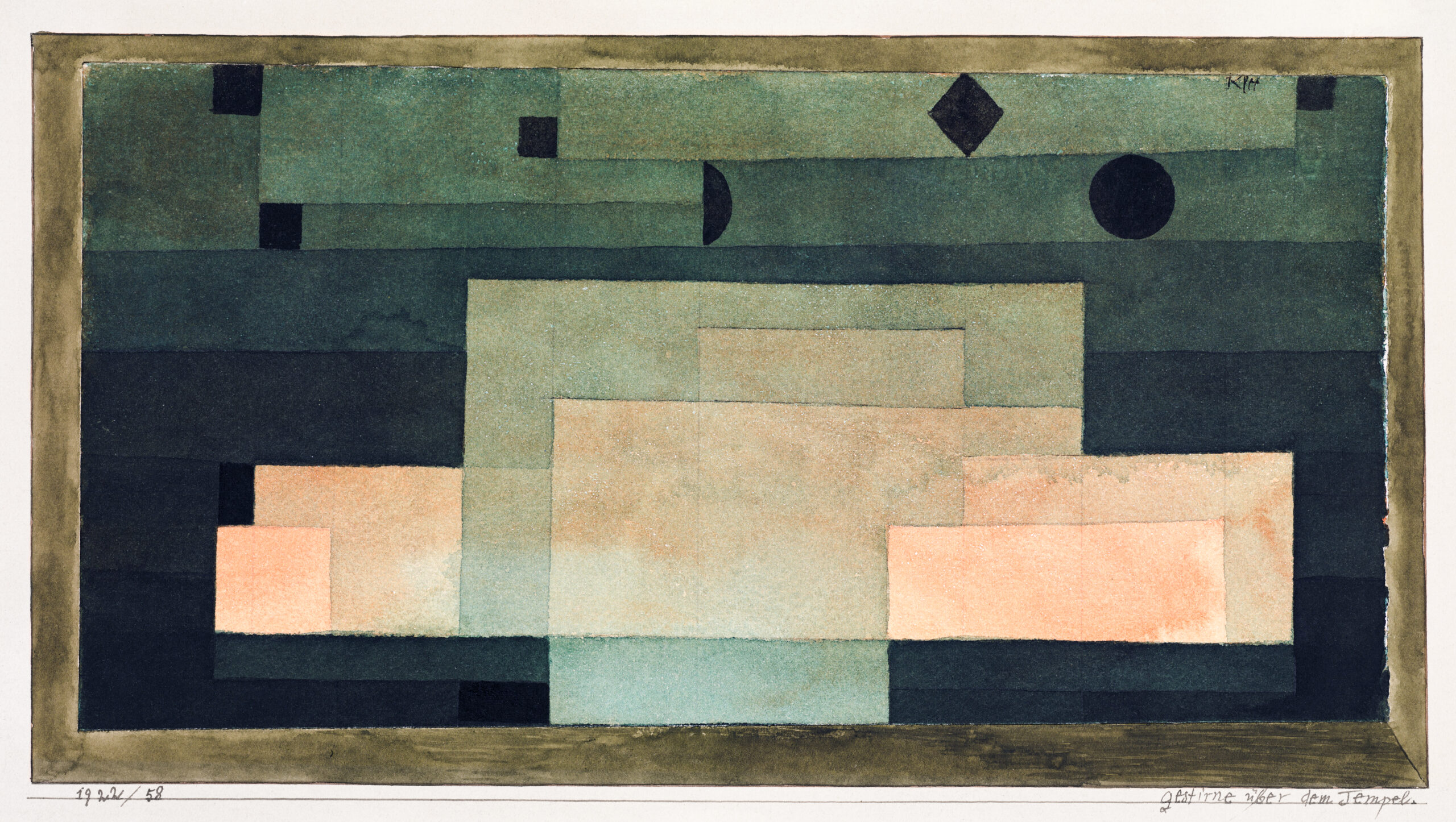
The Firmament Above the Temple (1922) by Paul Klee. Original from The MET Museum
Questions to Ask Children
Describe what you see.
Can you see the landscape and the sky? How has Klee painted them?
How does the painting make you feel?
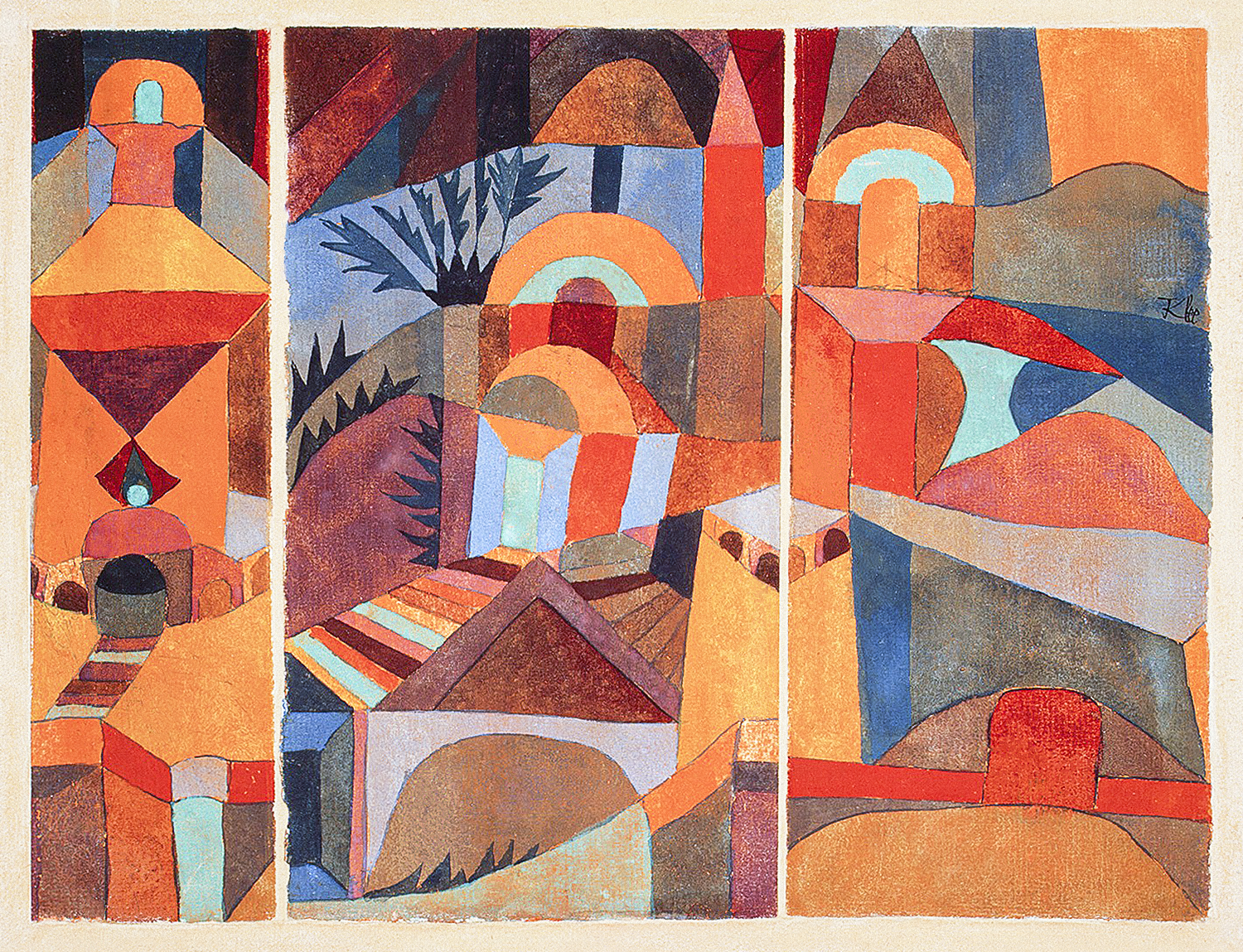
Temple Gardens (1920) by Paul Klee. Original from The MET Museum
Questions to Ask Children
Describe what you see.
How does this landscape make you feel?
If you were there, in the painting, how would you feel?
Tell me about the colours. Why do you think Klee choose these colours?
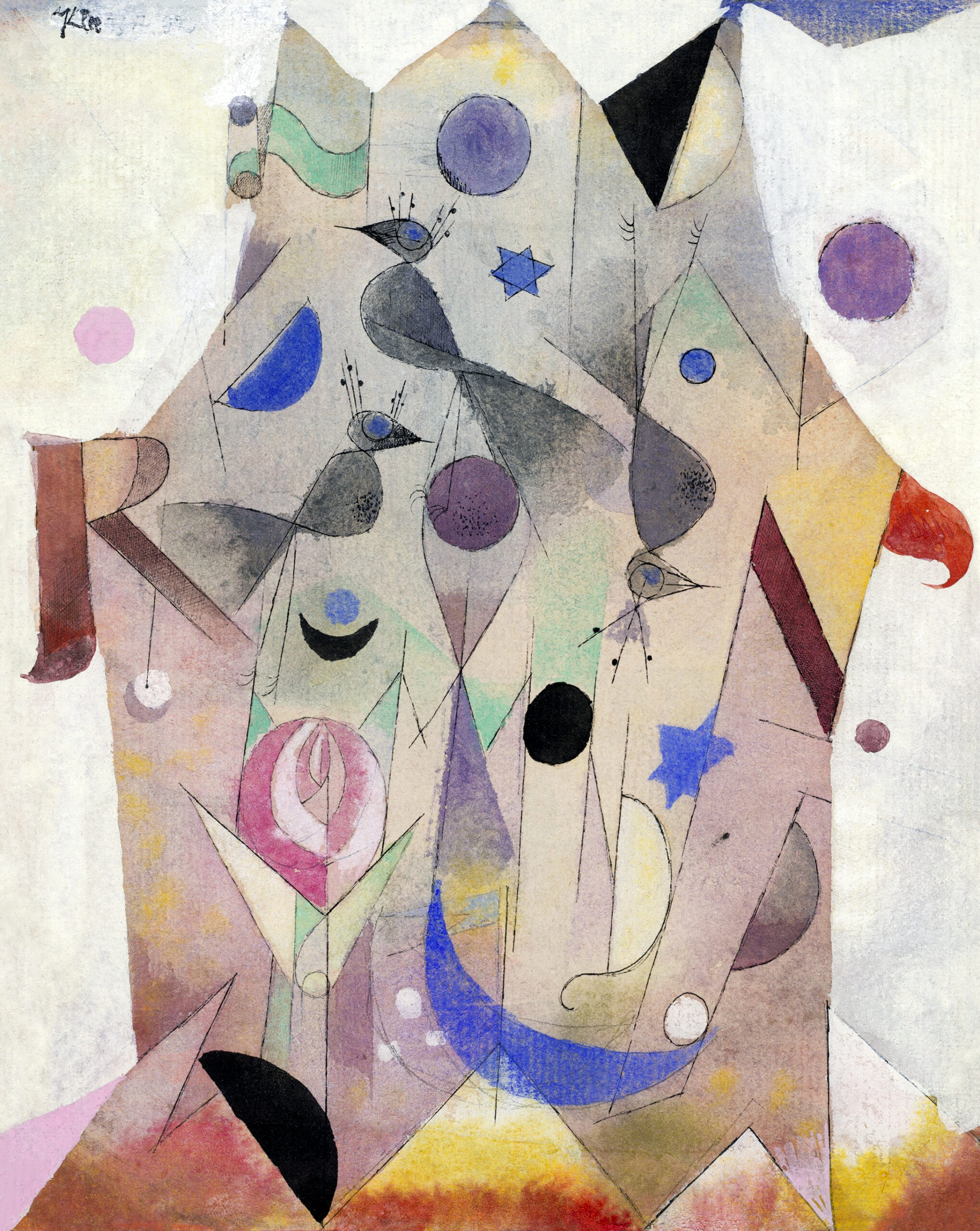
Persian Nightingales (1917) by Paul Klee. Original portrait painting from The Art Institute of Chicago.
Questions to Ask Children
Describe what you see.
What materials do you think Klee used?
Can you see two letters?
The R and the N stand for Rose and Nightingale. Can you spot the rose and the Nightingales in the painting?
How does this painting make you feel?
How do you think the painter felt when he painted it?
Watch this animation of one of Klee’s paintings.
Questions to Ask Children
How do you feel watching the animation?
What kind of world has Klee/the animator created?
If you could animate one of the paintings above, how would you bring it to life? What would you make it do?
In this video, Klee’s paintings are shown alongside music.
Questions to Ask Children
How does the music change the way you look at the paintings?
Do you think Klee would have liked this video (remember Klee made his paintings at a time when there were very few films).
A collection of imagery and sources designed to encourage children to consider what role a plinth may play in creating or displaying artwork.
Please note that this page contains links to external websites and has videos from external websites embedded. At the time of creating, AccessArt checked all links to ensure content is appropriate for teachers to access. However external websites and videos are updated and that is beyond our control.
Please let us know if you find a 404 link, or if you feel content is no longer appropriate.
We strongly recommend as part of good teaching practice that teachers watch all videos and visit all websites before sharing with a class. On occasion there may be elements of a video you would prefer not to show to your class and it is the teacher’s responsibility to ensure content is appropriate. Many thanks.
*If you are having issues viewing videos it may be due to your schools firewall or your cookie selection. Please check with your IT department.*
This resource is free to access and is not a part of AccessArt membership.
What Is A Plinth?
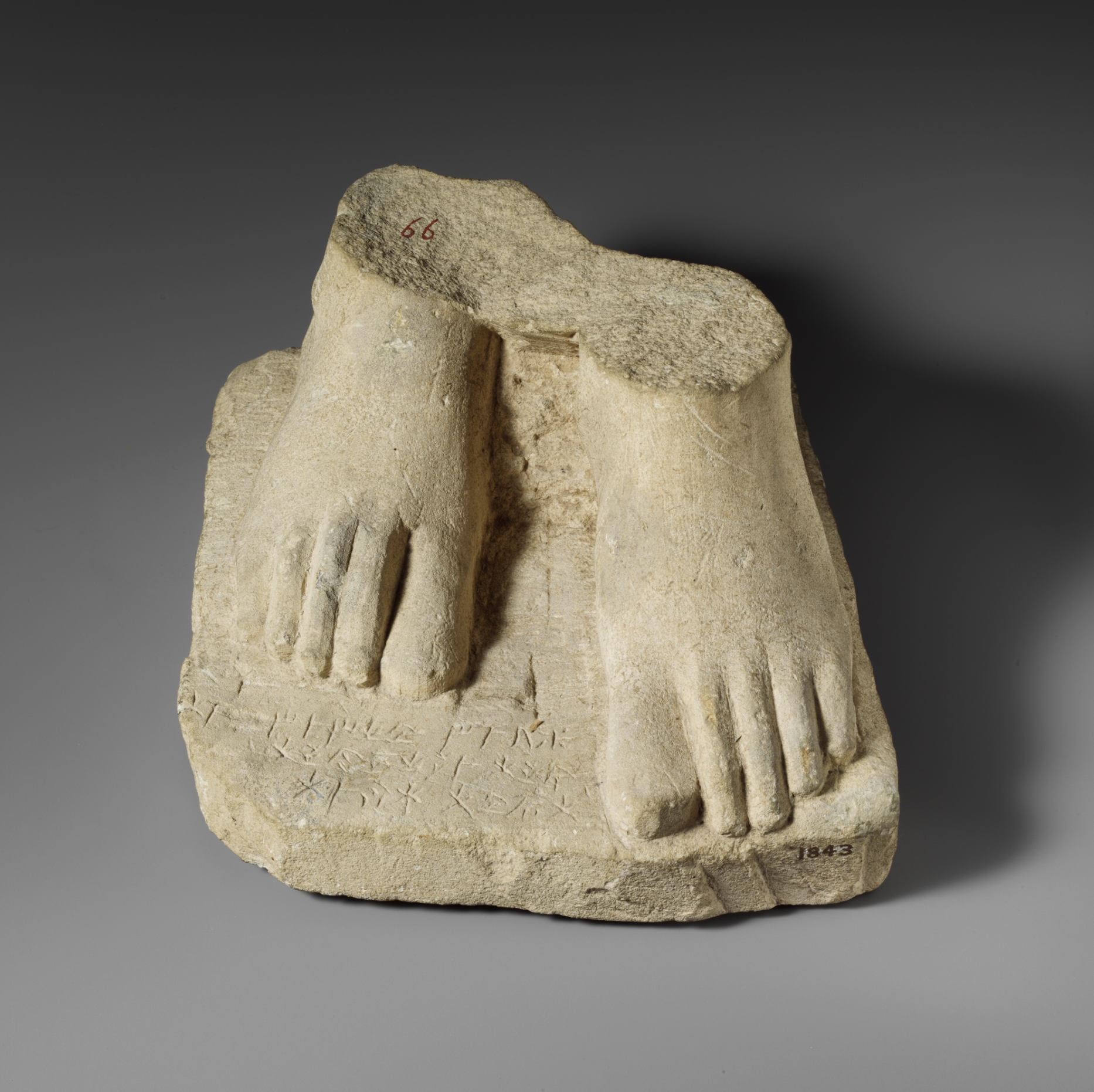
“Limestone plinth with the feet of a male statuette” Licensed under CC0 1.0
In the traditional sculptural sense, plinths are usually heavy boxes or bases made from stone, wood or metal, which raise a sculpture above the ground.
Plinths sometimes protect the sculpture from the elements, such as a sculpture raised out of the way of puddles of rain in the street.
More often, the role of a plinth is to give the sculpture some kind of status. By raising the sculpture to a certain level, the sculptor can decide how the viewer interacts with the artwork.
Plinths also help create a separation between the ordinary everyday world around us and the art “object”.
Seeing an object on a plinth might encourage us to view that object as an artwork – as something special.
Questions to Ask Children
Have you seen any sculpture on a plinth in and around the place where you live?
Why do you think those sculptures are on plinths? How does the way the sculpture is displayed affect how you think about the sculpture?
Imagine two peas. One is on the kitchen floor, but an identical pea is on a plinth in a gallery. How does it change how you think about the pea?
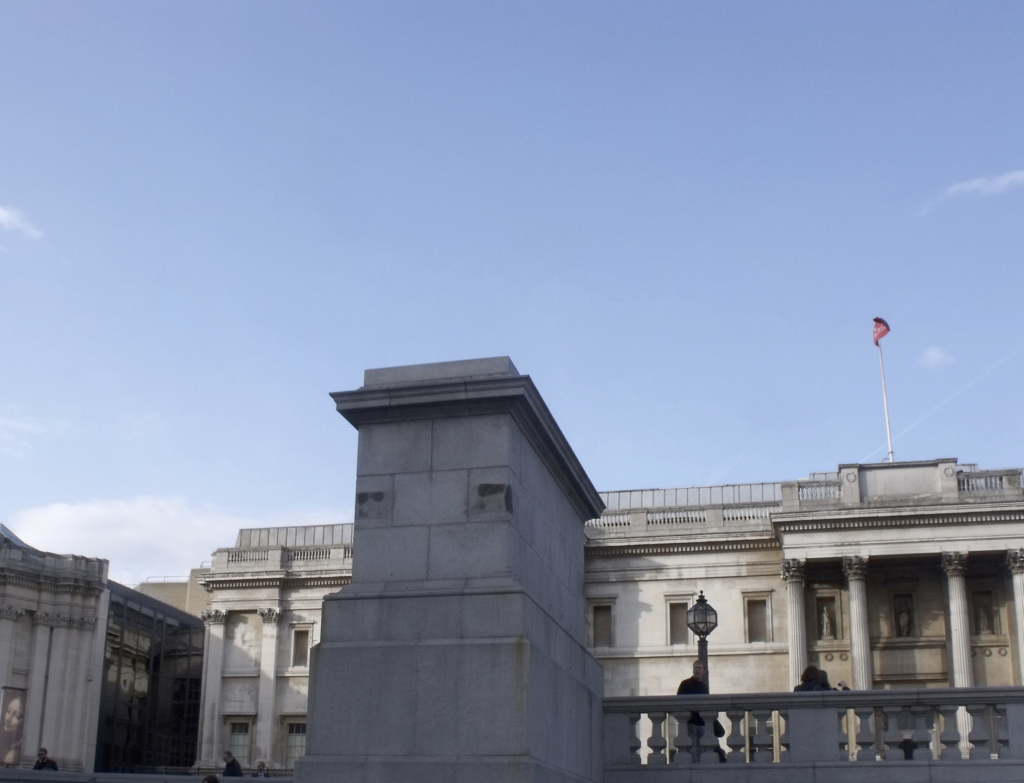
The Fourth Plinth
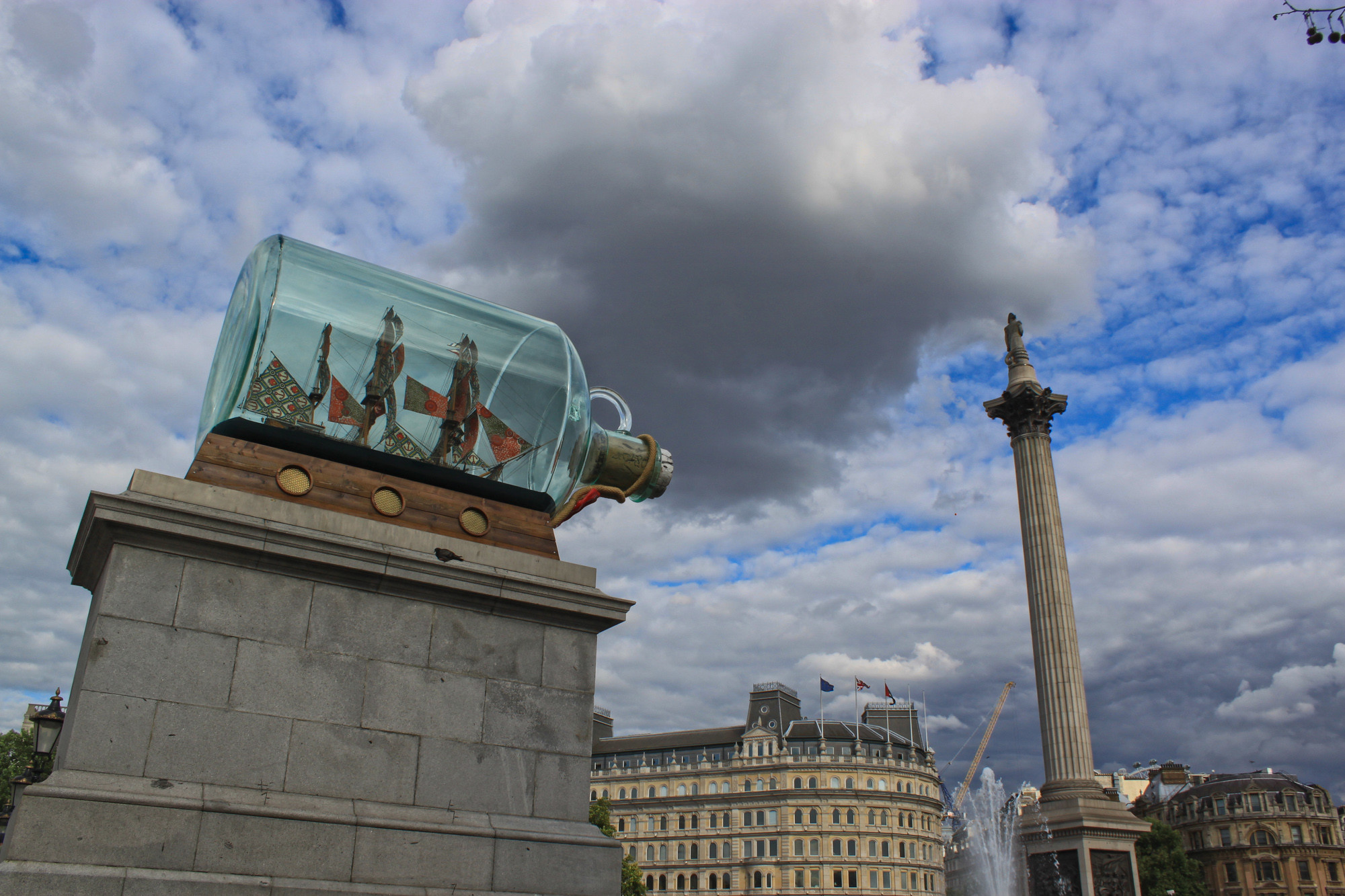
Photo of “Nelson’s Ship in a Bottle,” by Yinka Shonibare, Fourth Plinth, Trafalgar Square, London by Andy Hay
What is The Fourth Plinth?
The Fourth Plinth is considered to be one of the world’s largest ongoing public art commissions. Its main aim is to bring contemporary art to the public and to encourage debate about what art is.
The “fourth plinth” was originally intended to hold a sculpture of a horse belonging to William IV, but the sculpture was never displayed due to lack of money. For over 150 years the plinth remained empty, until in 1998, the Royal Society for the Encouragement of Arts, Manufactures and Commerce (RSA) commissioned three contemporary sculptures to be displayed temporarily on the plinth. The legacy of those three sculptures was a rolling programme called the Fourth Plinth.
“One and Other” by Antony Gormley, Image by Feggy Art
Whilst Antony Gormley usually makes sculpture out of more traditional materials like steel, he was commissioned as part of the Fourth Plinth to produce a rather different kind of art.
Instead of working in traditional materials, Gormley used the plinth as a focus for creating an artwork which “became a portrait of the UK, now”. For 100 days in 2009, 24 hours a day, Gormley and the team coordinated members of the public to take stage on the plinth for an hour at a time. They could do whatever they liked, using the plinth to give their expression a literal and metaphorical platform.
Through “One & Other”, Gormley hoped that by giving the public free will to express their hopes and fears for what might be, a “portrait of the nation” would be revealed.
Questions to Ask Children
How would you use your time if you were given an hour on the plinth?
The Fourth Plinth Challenge
Can you find a “plinth” at school and coordinate a similar project?
How would children and teachers “apply” for a slot on your plinth?
Who would decide who gets a slot and what would your criteria be?
A collection of imagery and sources designed to introduce children to different types of sculpture.
Please note that this page contains links to external websites and has videos from external websites embedded. At the time of creating, AccessArt checked all links to ensure content is appropriate for teachers to access. However external websites and videos are updated and that is beyond our control.
Please let us know if you find a 404 link, or if you feel content is no longer appropriate.
We strongly recommend as part of good teaching practice that teachers watch all videos and visit all websites before sharing with a class. On occasion there may be elements of a video you would prefer not to show to your class and it is the teacher’s responsibility to ensure content is appropriate. Many thanks.
*If you are having issues viewing videos it may be due to your schools firewall or your cookie selection. Please check with your IT department.*
This resource is free to access and is not a part of AccessArt membership.
What is Sculpture?
Interactive Cloud Sculpture by Caitlind r.c. Brown & Wayne Garrett
“Interactive Cloud Sculpture” made of 6000 lightbulbs by Canadian artists Caitlind r.c. Brown & Wayne Garrett
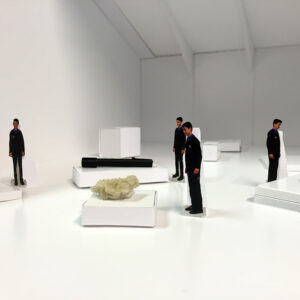
Describe what you see. Think about the gallery space as well as the sculpture itself.
How would it feel to be in that space, interacting with the sculpture?
What do you think the artists are trying to say through the artwork?
Why do you think two sculptors collaborated on this piece?
How does it make you feel? What does it make you think?
Floating Piers by Christo and Jeanne-Claude
Floating Piers by Christo and Jeanne-Claude, Italy, 2016
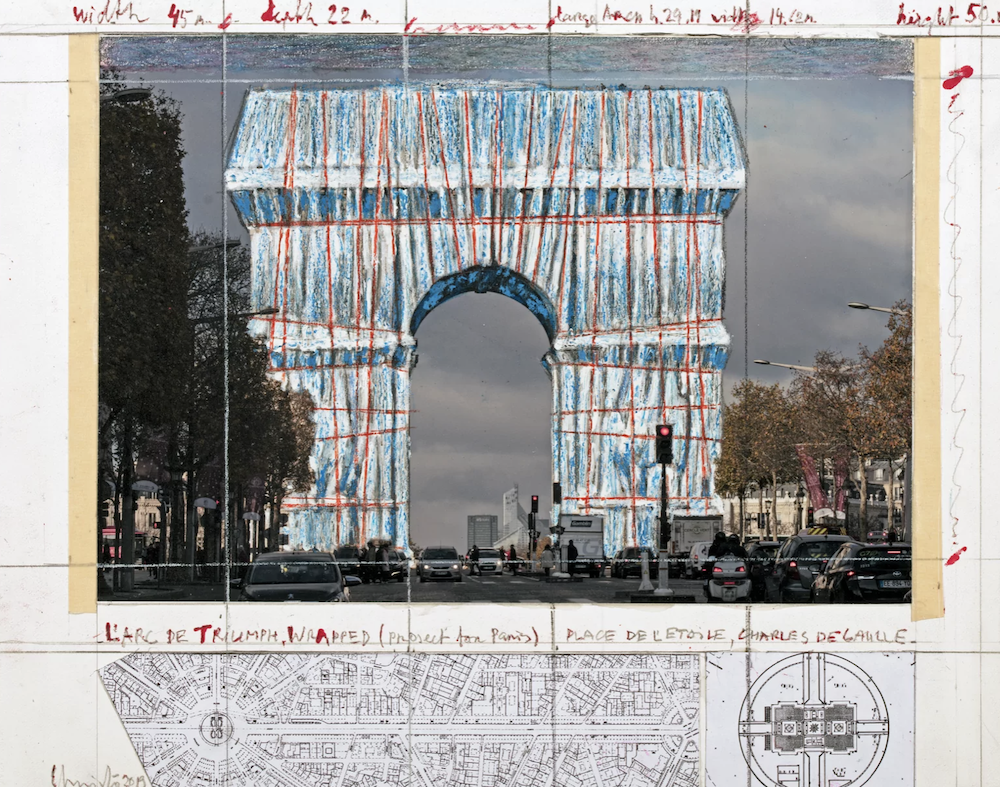
L’Arc De Triomphe Wrapped by Christo and Jeane-Claude, Paris, 1961
Christo and Jeanne-Claude are artists who have become known for wrapping large objects/buildings/environments.
Christo started out wrapping objects like chairs and books, interested in how the wrapping changed the meaning. More recently the large projects, which can take years of planning, are often made just for the purpose of enabling us to look at the world in new ways.
Christo says: “We make beautiful things, unbelievably useless, totally unnecessary.”
How long do you have to look at the sculpture before it has an affect on you? If you saw a still image of the sculpture would you feel the same way?
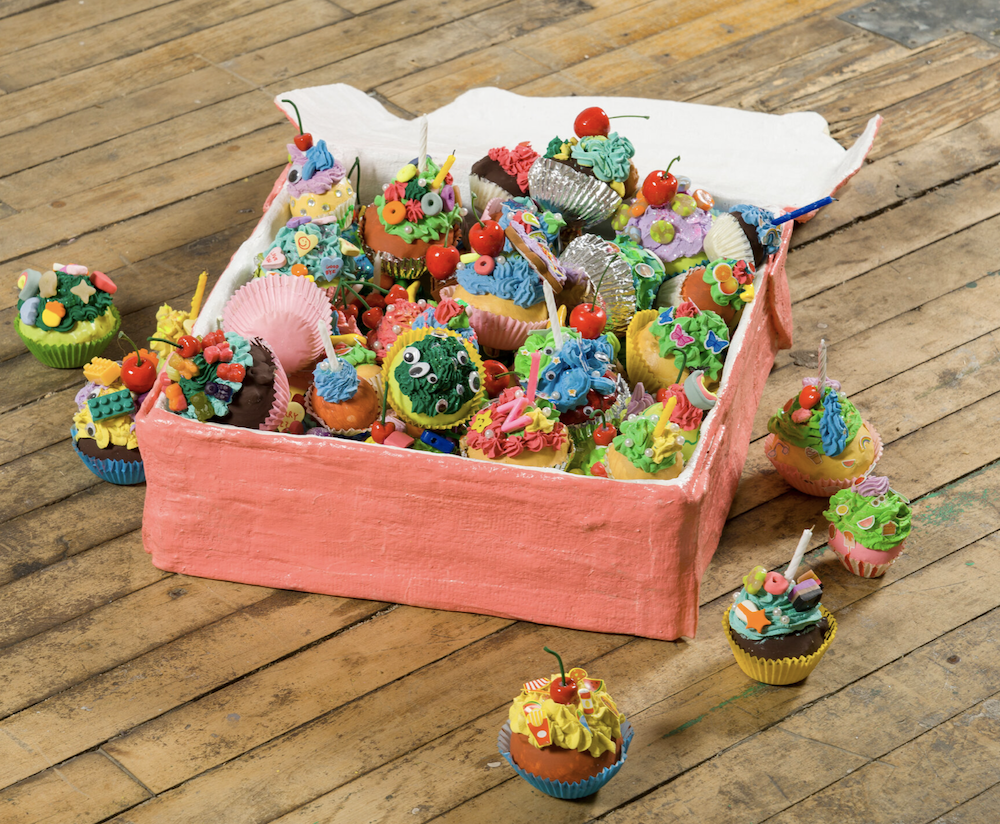
Food Sculptures by Nicole Dyer
Food Sculptures by Nicole Dyer
Nicole Dyer makes sculptures inspired by food. See more of their work here “Talking Points:Nicole Dyer“.
Questions to Ask Children
Describe what you see.
How do the sculptures make you feel?
How do you think the artist made the sculptures?
Faith Bebbington
Sculptures by Faith Bebbington
Faith Bebbington is best known for her sustainable practise; her large sculptures utilise lots of waste materials, with her biggest sculpture to date re-using over 2500 deconstructed plastic milk bottles!
A collection of imagery and sources designed to stimulate conversation around the idea of sculpture used to help us remember.
Please note that this page contains links to external websites and has videos from external websites embedded. At the time of creating, AccessArt checked all links to ensure content is appropriate for teachers to access. However external websites and videos are updated and that is beyond our control.
Please let us know if you find a 404 link, or if you feel content is no longer appropriate.
We strongly recommend as part of good teaching practice that teachers watch all videos and visit all websites before sharing with a class. On occasion there may be elements of a video you would prefer not to show to your class and it is the teacher’s responsibility to ensure content is appropriate. Many thanks.
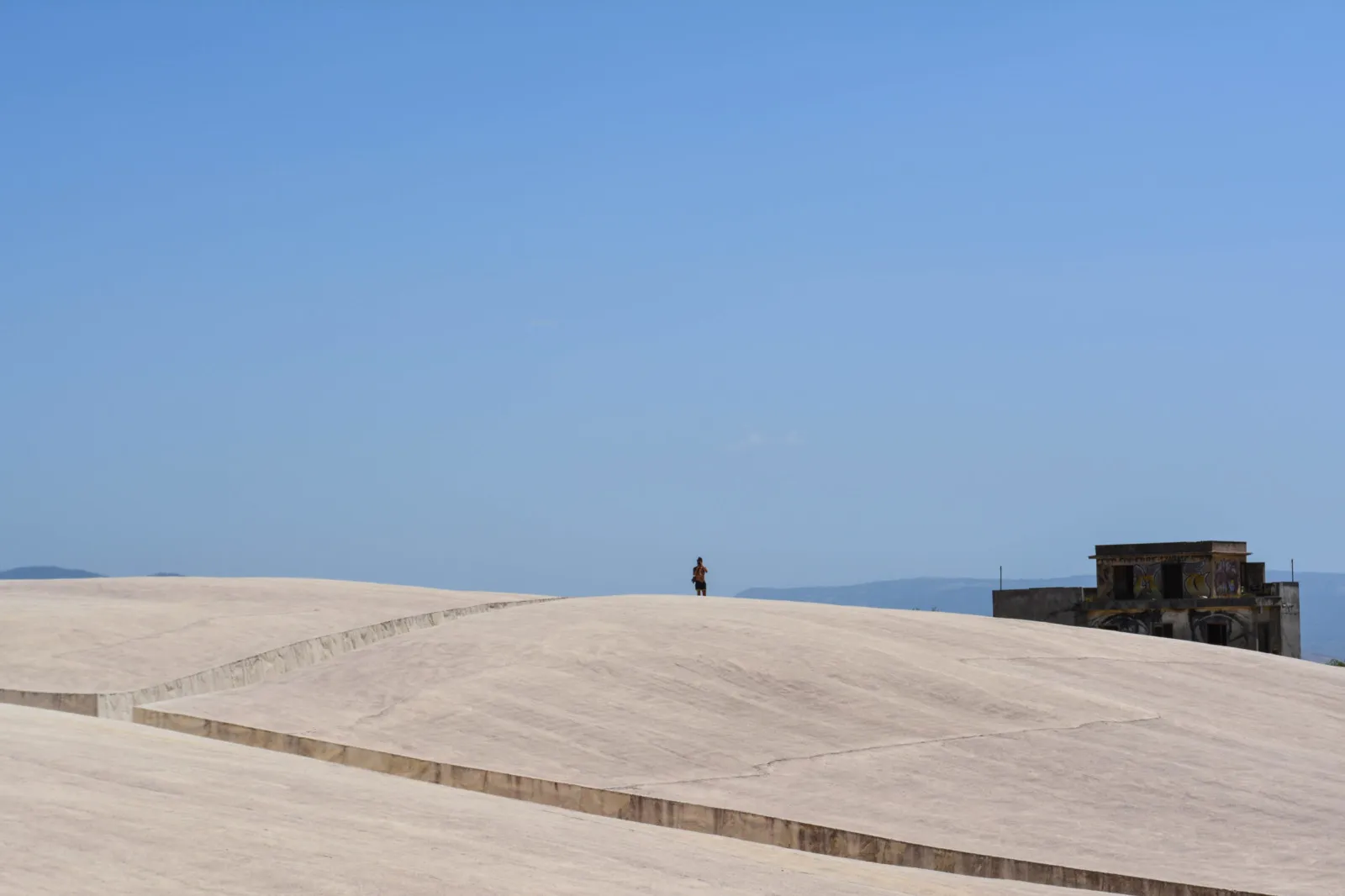
Cretto di Burri by Italian Sculptor Alberto Burri
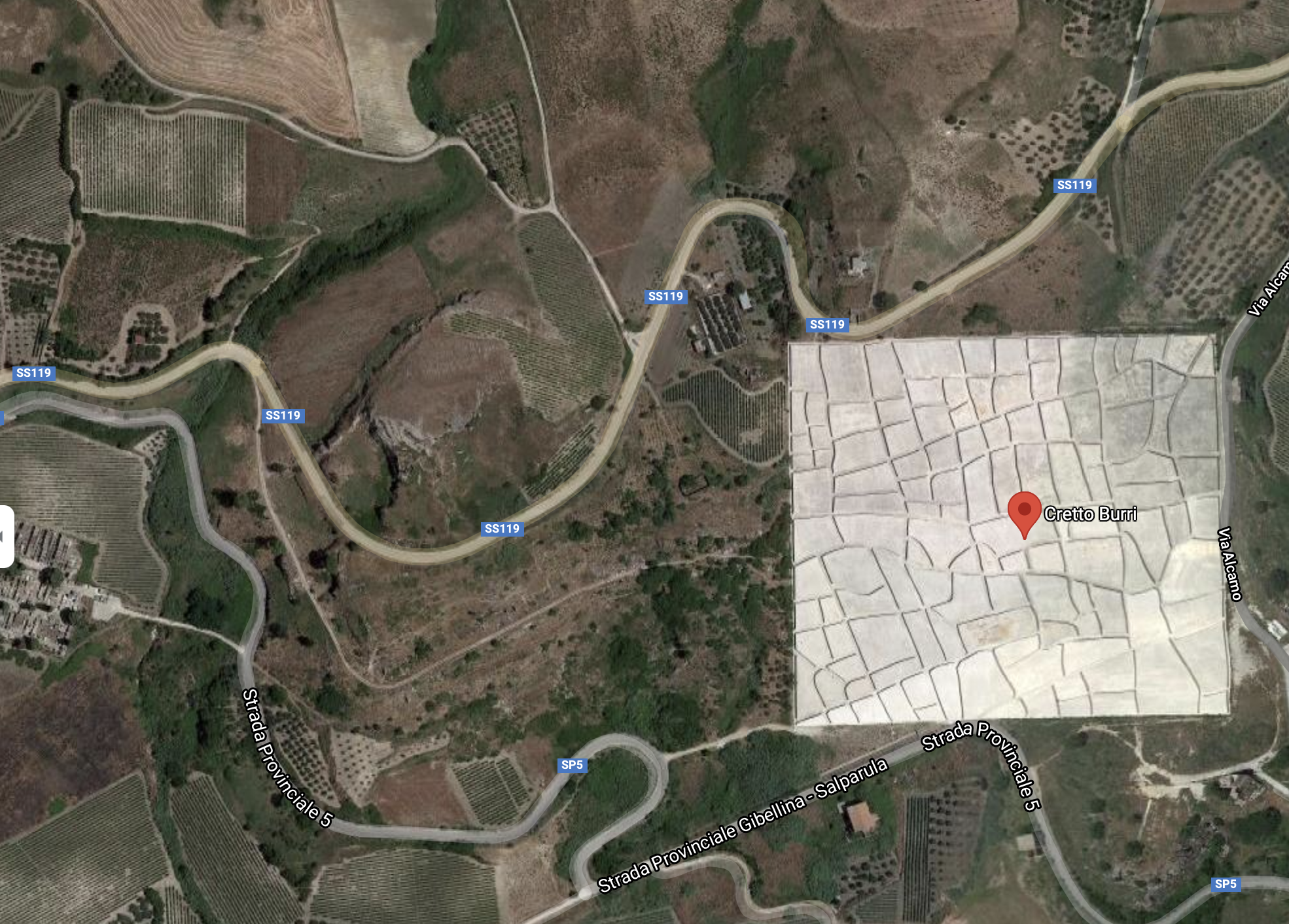
Alberto Burri – Cretto di Burri (Crack of Burri), 1984–2015, concrete, 1.50 x 350 x 280 m (4.9 x 1,150 x 920 ft), Gibellina, Sicily, Italy, photo: CC BY-NC-SA 2.0 by Luca Di Ciaccio
The Cretto di Burri alias Crack of Burri is a landscape artwork by Italian visual artist, painter, sculptor, and physician Alberto Burri
Located in Sicily, Italy, the project began in 1984, only to stall in 1989 when funds ran out. It was finally completed 30 years later in 2015.
This piece of land art sculpture, made from cast concrete, commemorated the destruction of the city of Gibellina in 1968 by the Belice earthquake.
The quake destroyed the landscape and left thousands of families homeless.
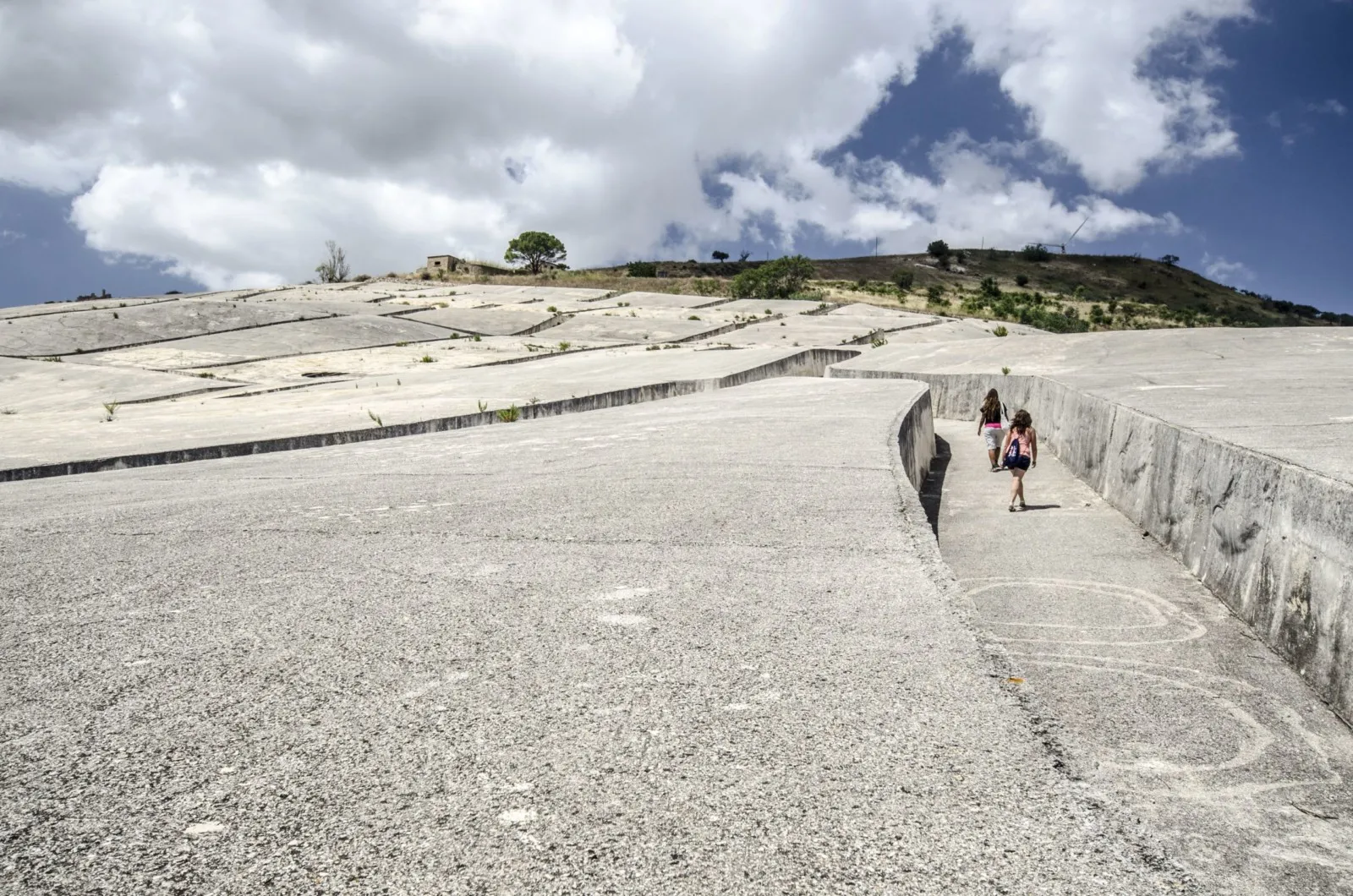
Alberto Burri – Cretto di Burri (Crack of Burri), 1984–2015, concrete, 1.50 x 350 x 280 m (4.9 x 1,150 x 920 ft), Gibellina, Sicily, Italy, photo: CC BY-NC-ND 2.0 by Michele Cannone
Alberto Burri was an artist involved in the creation of a new town, 20 km to the west of the destroyed town. This article describes how the mayor was so impressed with Burri that he invited him to make a piece of art to commemorate the catastrophic event. At first Burri wasn’t sure, but after he visited the destroyed area he said:
I almost felt like crying and immediately the idea came to me: here, here I feel that I could do something. I would do this: we compact the rubble that is so much a problem for everyone, we arm it well, and with the concrete, we make an immense white crack, so that it remains a perennial memory of this event.
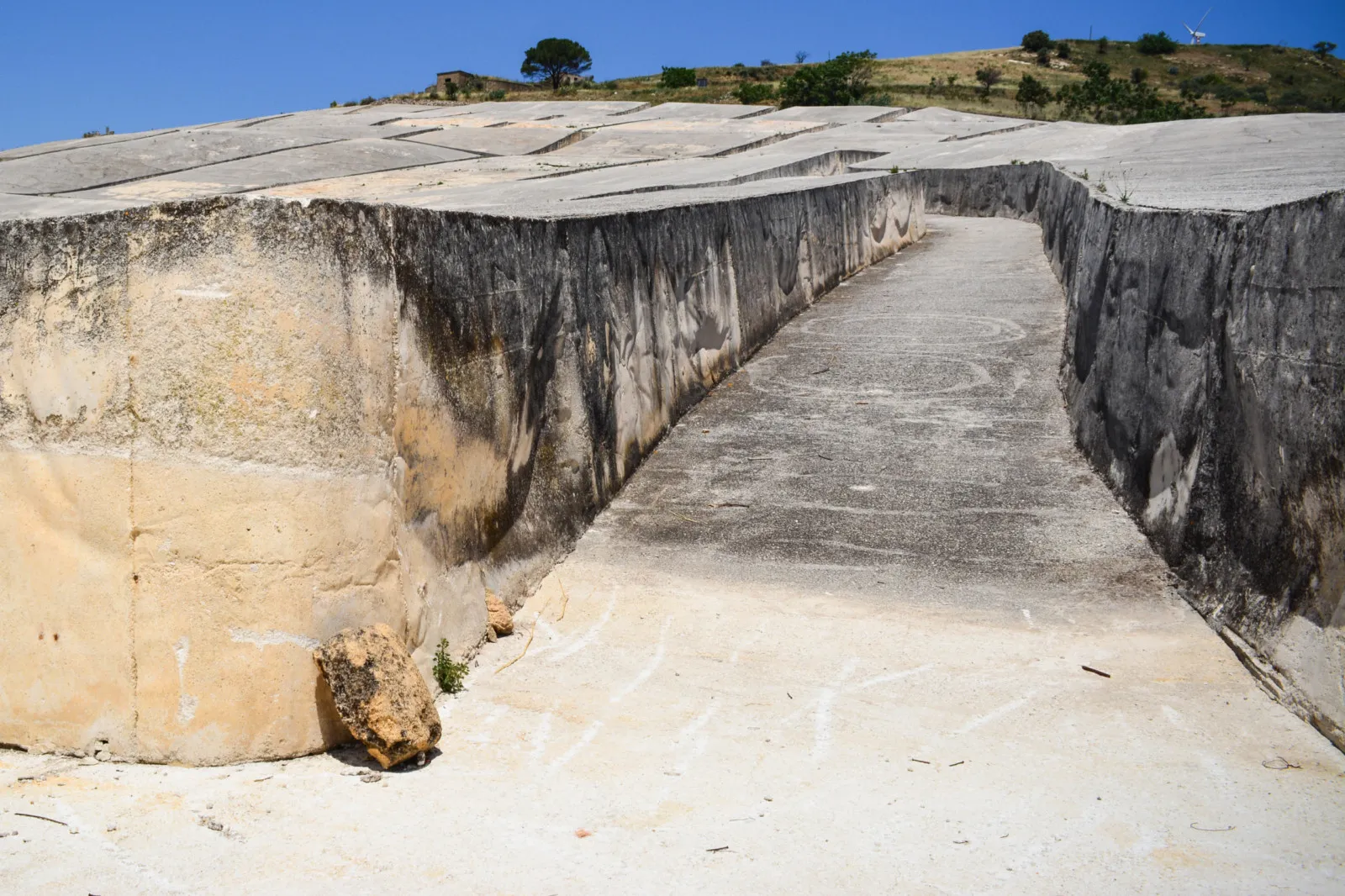
Burri and his workers collected the rubble and redistributed it, casting it into huge cement blocks to recreate the old streets.
“The cracked white concrete of this monument memorializes and conceptualizes the ordeal and suffering of the Belice earthquake, with the slits marking not just the literal streets and corridors of the old town but also the violence done to the land, people, as well as profoundly to the cultural memory of the site.” https://publicdelivery.org/cretto-di-burri/
Alberto Burri – Cretto di Burri (Crack of Burri), 1984–2015, concrete, 1.50 x 350 x 280 m (4.9 x 1,150 x 920 ft), Gibellina, Sicily, Italy, photo: CC BY-NC-SA 2.0 by Luca Di Ciaccio
Questions to Ask Children
Describe what you see.
Which words would you use to describe the whole piece?
Can you imagine walking through the structure? Flying over it? What would it smell like? Feel like?
What do you think the artist is trying to say with this artwork?
How does it make you feel?
What is the environmental impact of the piece?
Talking Points: Inspired by Birds
A collection of imagery and sources designed to encourage children to consider how artists are inspired by birds.
Please note that this page contains links to external websites and has videos from external websites embedded. At the time of creating, AccessArt checked all links to ensure content is appropriate for teachers to access. However external websites and videos are updated and that is beyond our control.
Please let us know if you find a 404 link, or if you feel content is no longer appropriate.
We strongly recommend as part of good teaching practice that teachers watch all videos and visit all websites before sharing with a class. On occasion there may be elements of a video you would prefer not to show to your class and it is the teacher’s responsibility to ensure content is appropriate. Many thanks.
*If you are having issues viewing videos it may be due to your schools firewall or your cookie selection. Please check with your IT department.*
This resource is free to access and is not a part of AccessArt membership.
Ernst Haekel
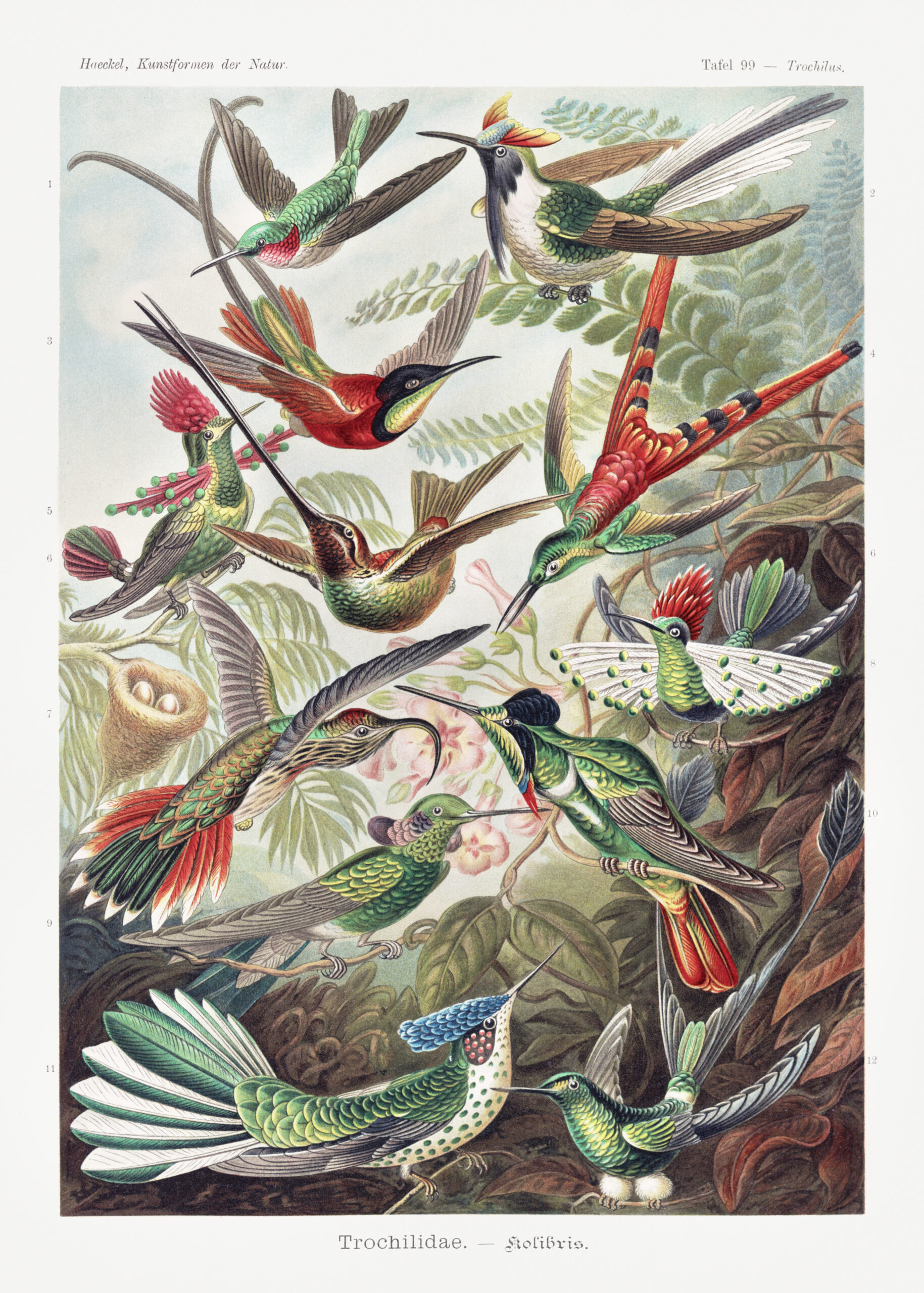
Trochilidae–Kolibris from Kunstformen der Natur (1904) by Ernst Haeckel. Original from Library of Congress. Ernst Haekel was a was a German zoologist, naturalist, eugenicist, philosopher, physician, professor, marine biologist and artist. Wiki
Questions to Ask Children
Describe what you see.
Look at the artwork as a whole – which words would you use to describe the whole piece?
Tell me about the details you like.
What do you think the artist is trying to say with this artwork?
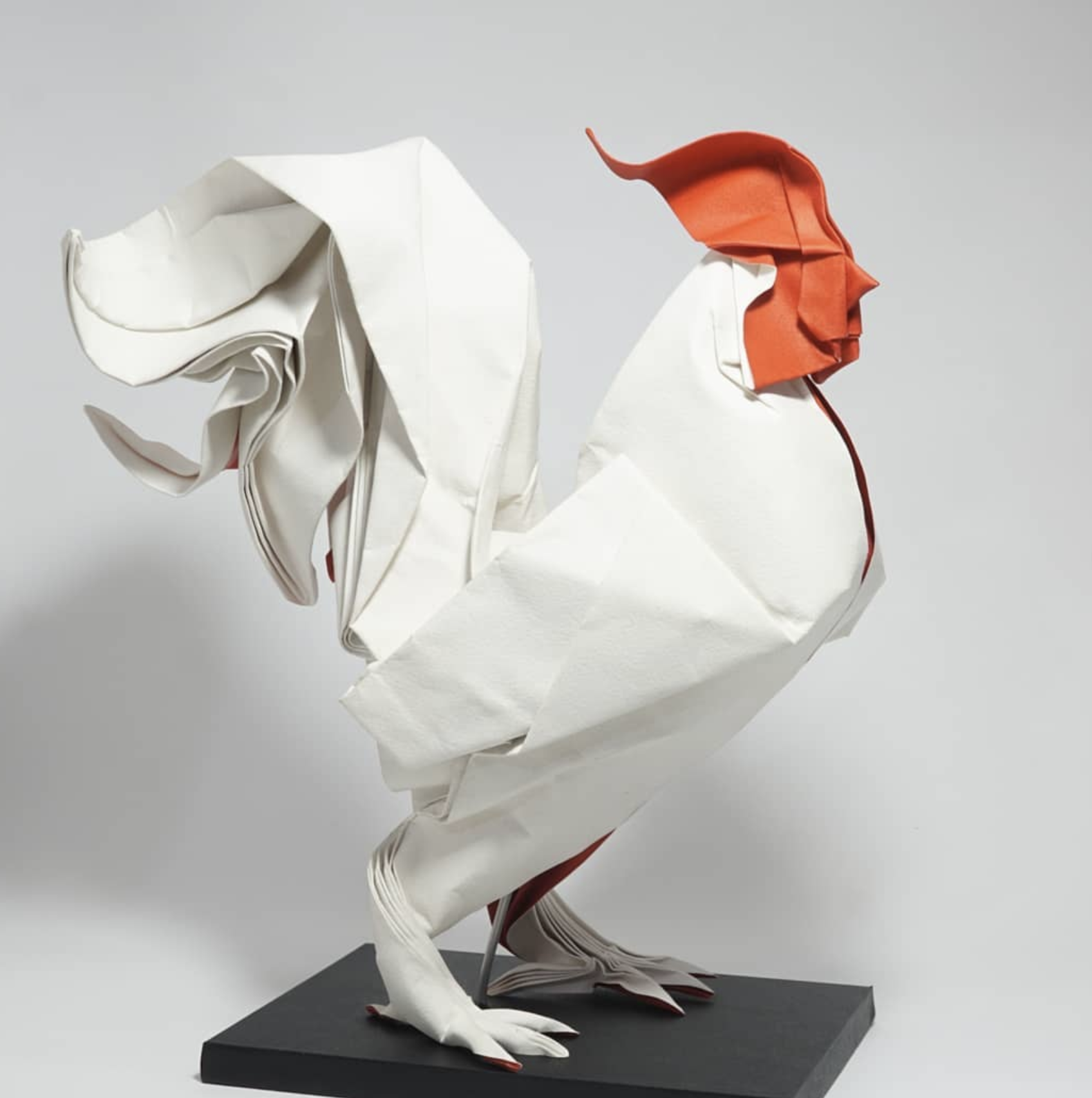
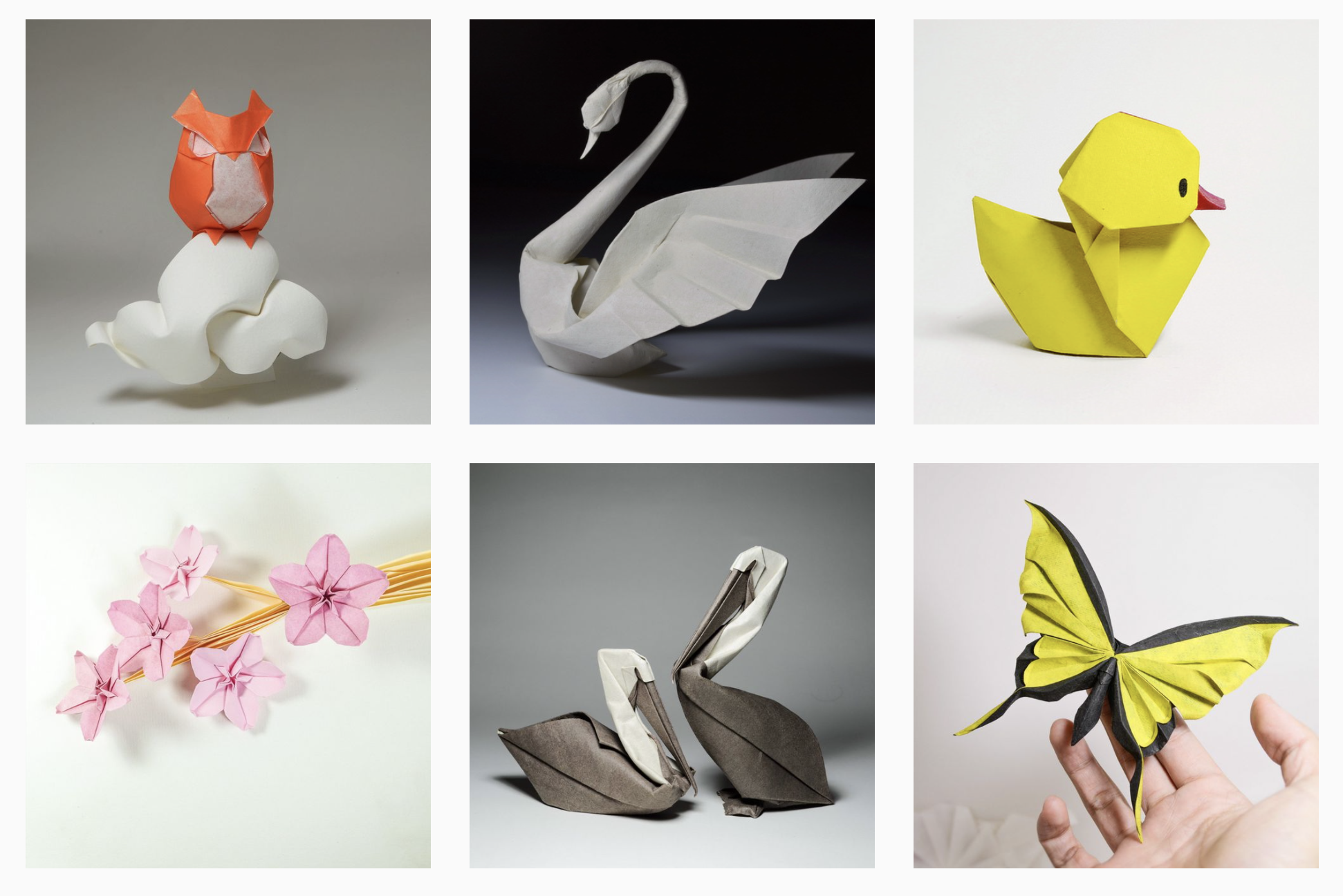
What do you think the sculptures by Hoang are made out of ?
How do you think he made them?
How do you think he decides how much detail to include or leave out?
How do they make you feel?
What do you think the artist is trying to say with this artwork?
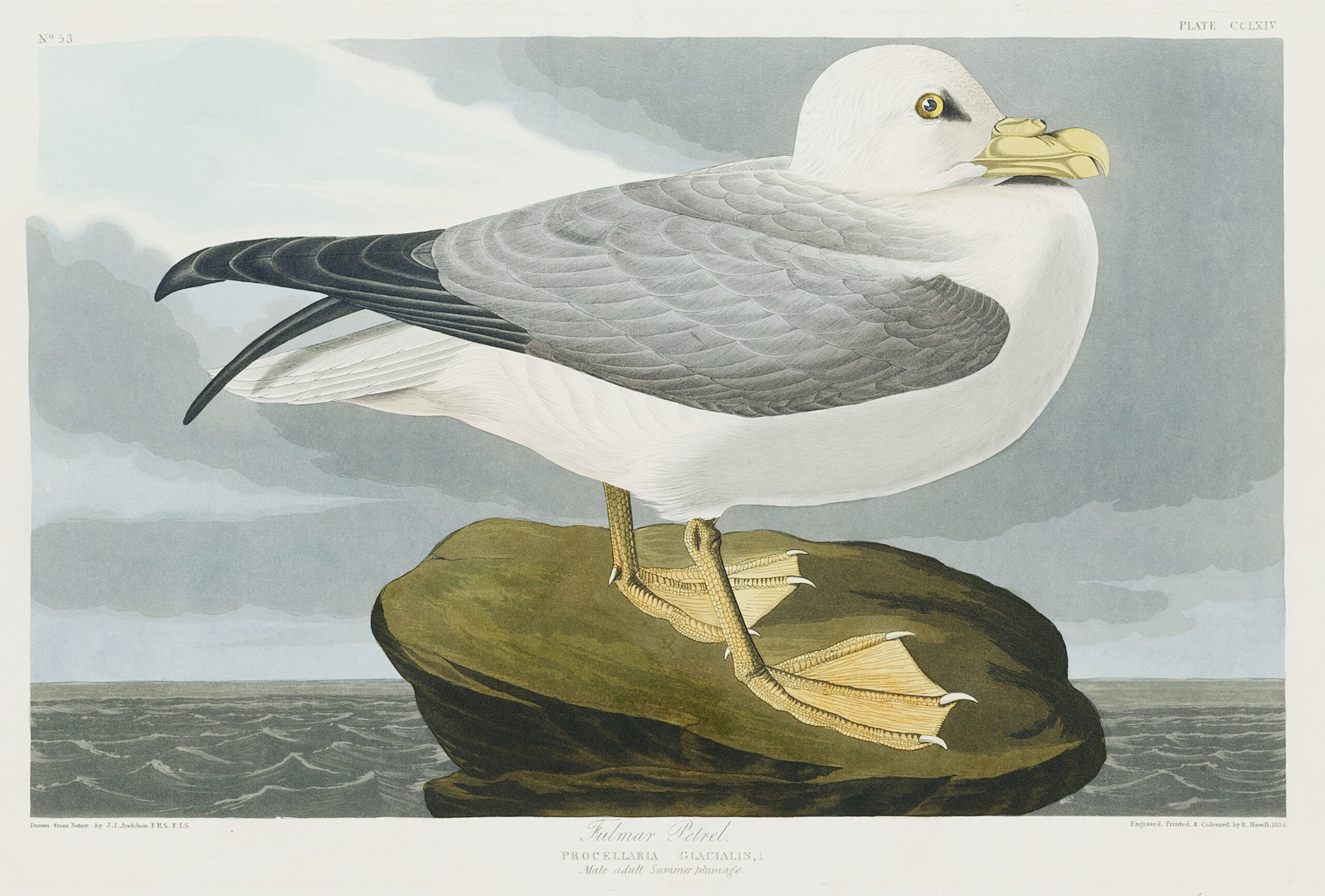
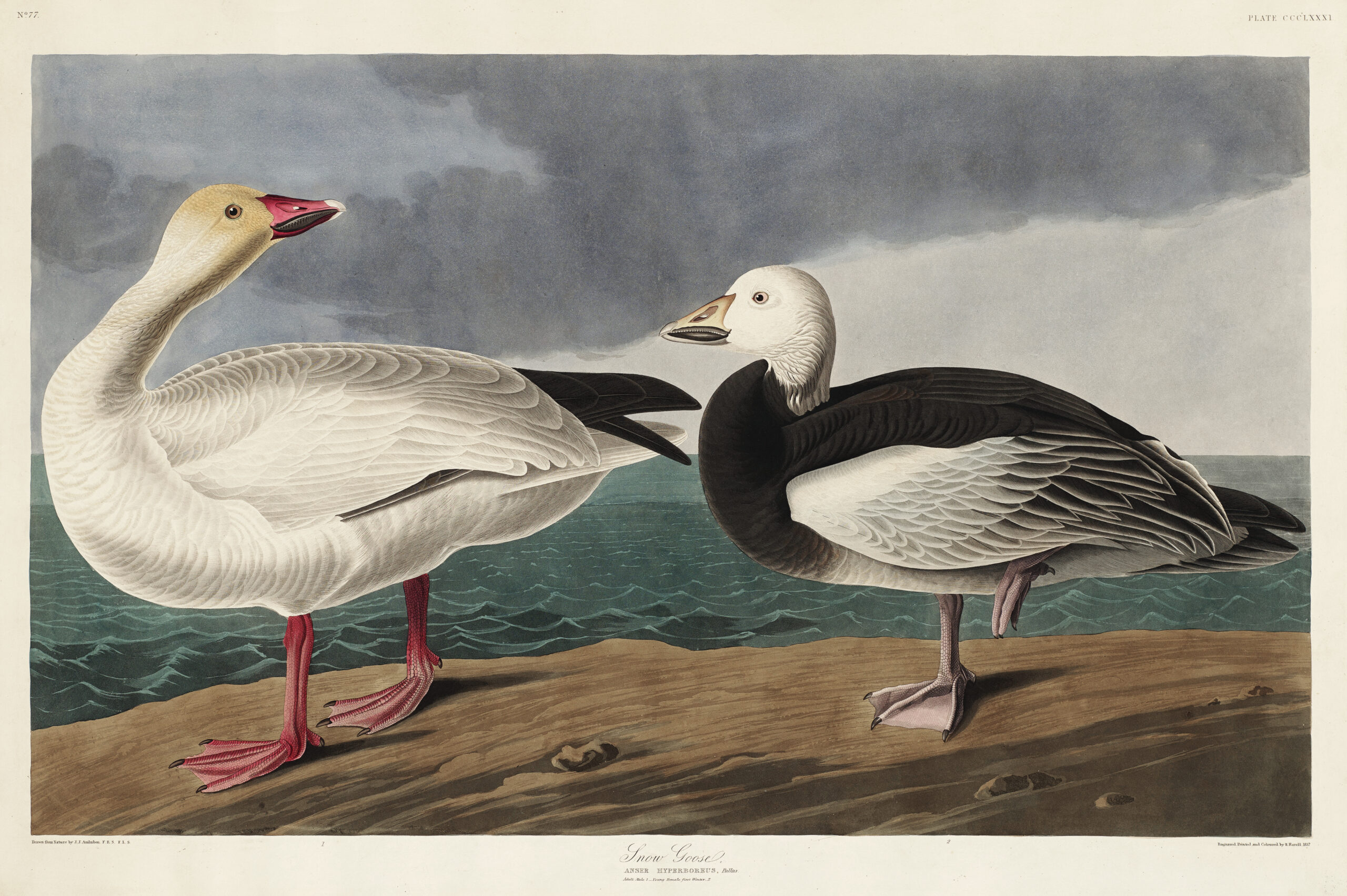
John James Audubon
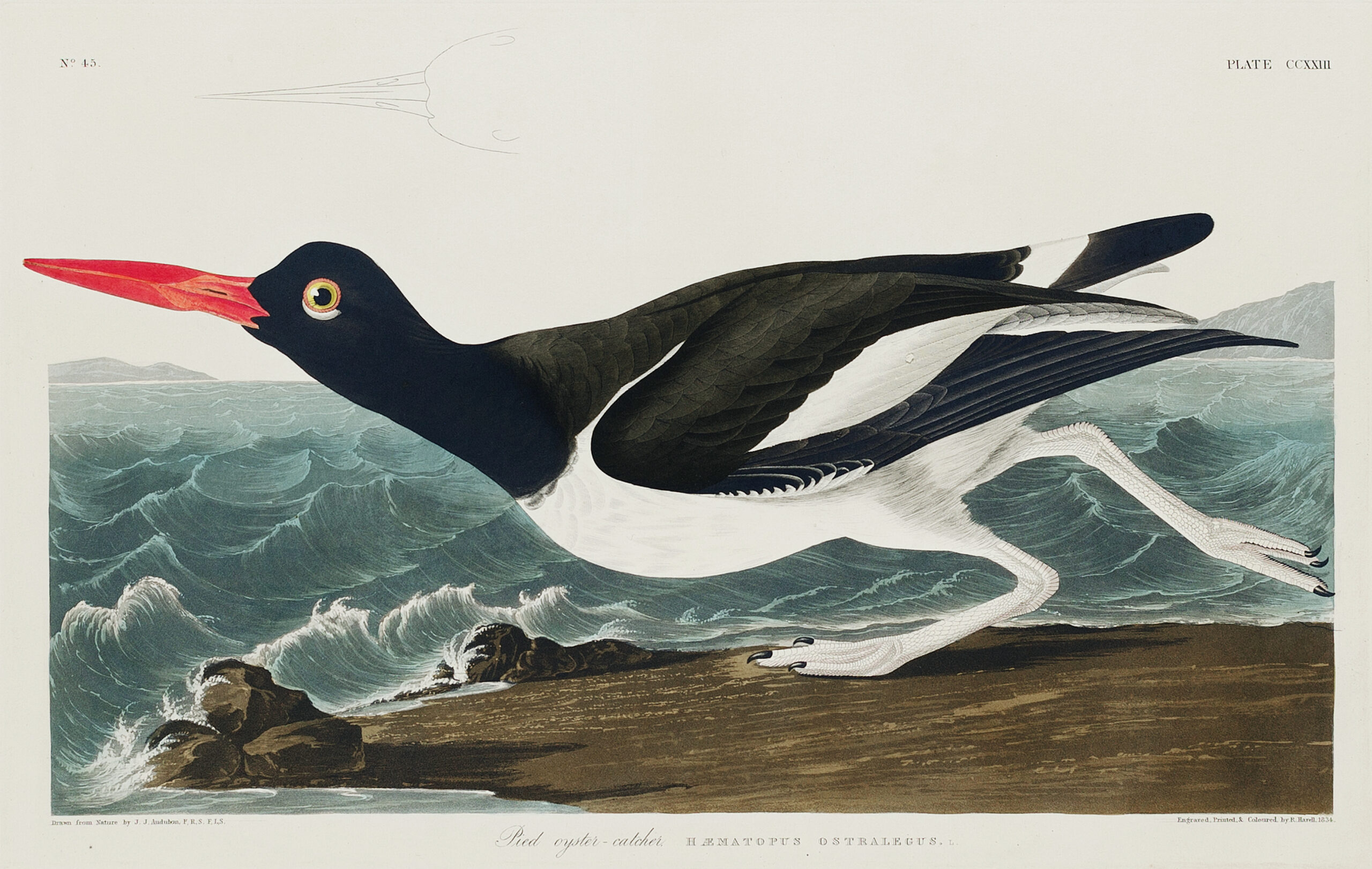
John James Audubon was an American self-trained artist, naturalist, and ornithologist. His combined interests in art and ornithology turned into a plan to make a complete pictorial record of all the bird species of North America. Wiki
Pied oyster-catcher from Birds of America (1827) by John James Audubon, etched by William Home Lizars. Original from University of Pittsburg.
Fulmar Petrel from Birds of America (1827) by John James Audubon, etched by William Home Lizars. Original from University of Pittsburg.
Snow Goose from Birds of America (1827) by John James Audubon, etched by William Home Lizars. Original from University of Pittsburg.
Questions to Ask Children
Describe what you see.
Look at the artwork as a whole – which words would you use to describe the whole piece?
Tell me about the details you like.
What materials has the artist used?
What do you think the artist is trying to say with this artwork?
Can you describe the nature/personality of the bird? Why do you think that? How has the artist made you think that?
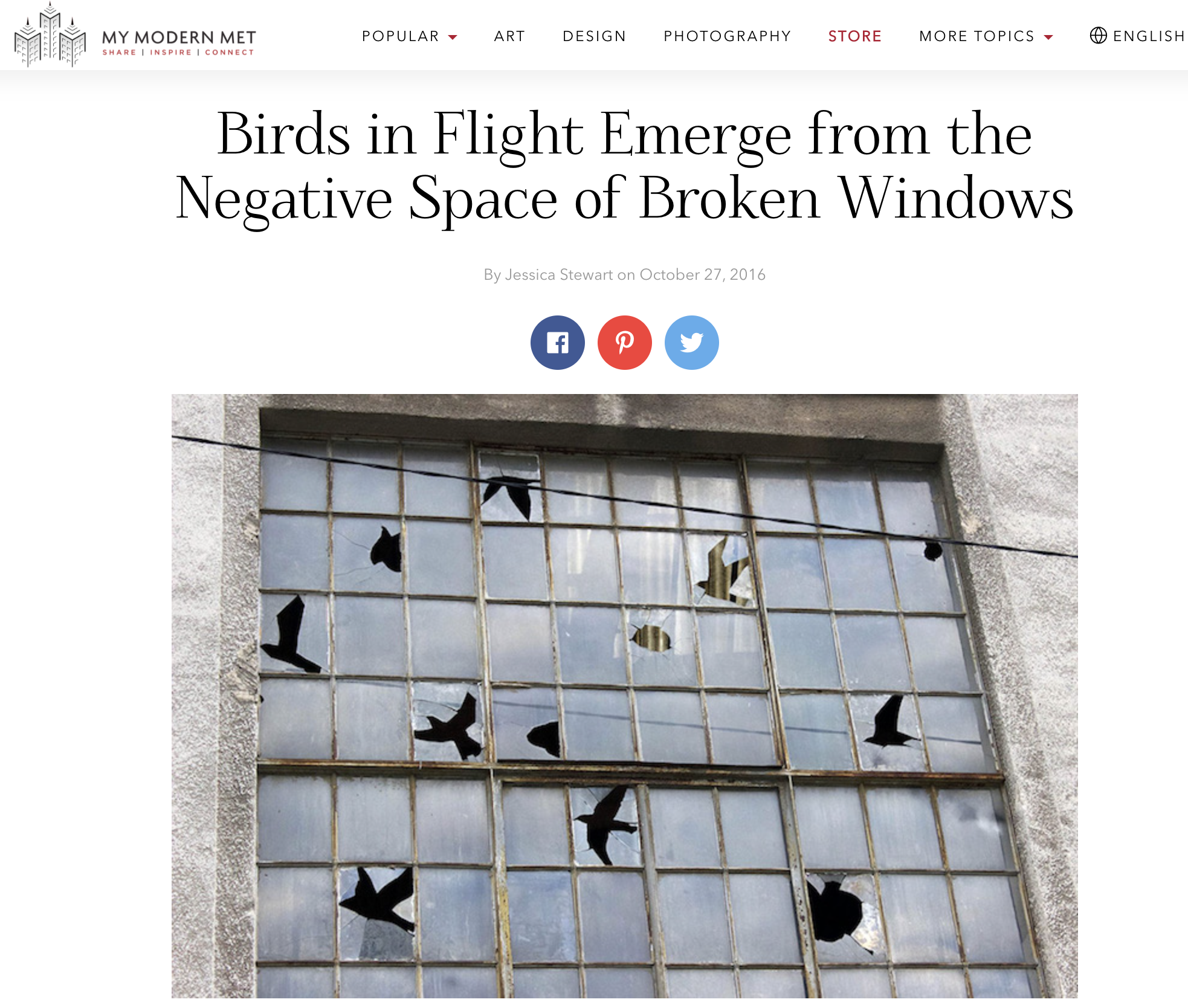
Pejac
Camoflage by Pejac. Silvestre Santiago, better known as Pejac, is a Spanish painter and street artist. He was born in 1977 in Santander, Cantabria, Spain. He studied Fine Arts in Salamanca and then Barcelona. In 2001, Santiago continued his studies in Italy at the Accademia di Belle Arti di Milano. Today the artist lives in Santander.
Inspired by the work of Belgium Surrealist Rene Magritte, Pejac plays with the idea of negative space in this installation piece. Explore images of the piece via the My Modern Met article
Questions to Ask Children
What do you see?
What has the artist done in this piece?
How does this piece of art make you feel?
What do you think the artist is trying to say?
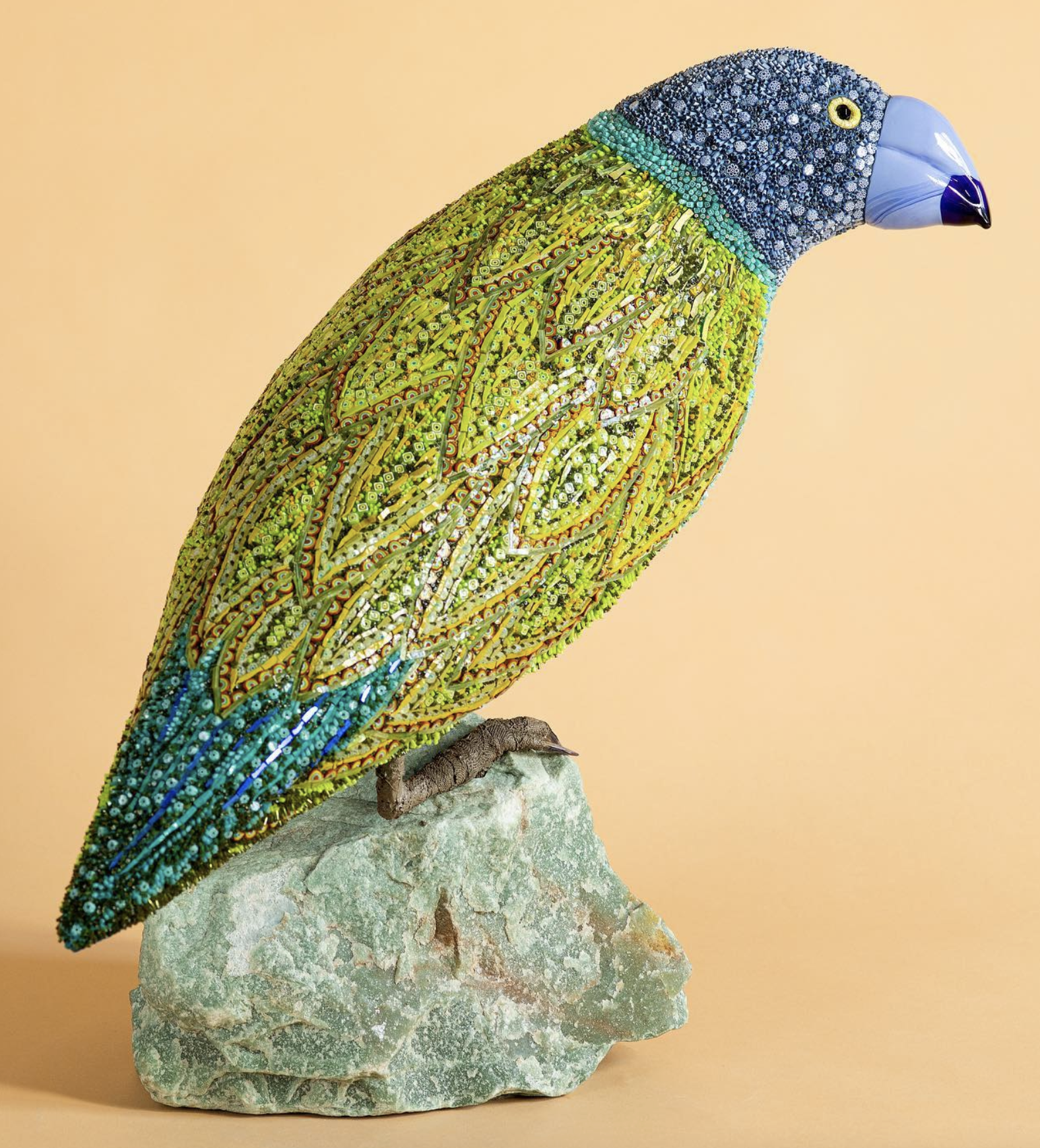
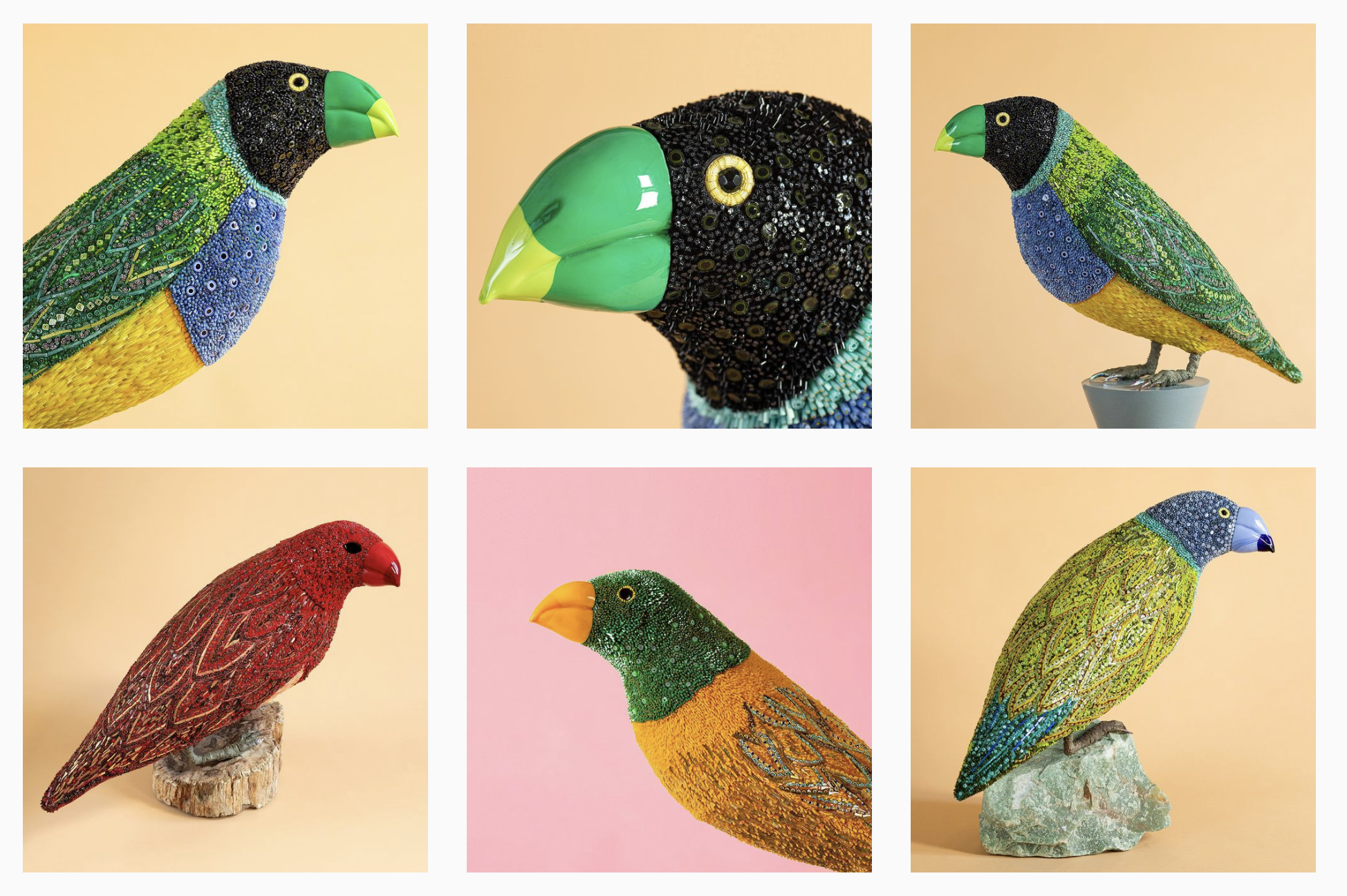
Dusciana Bravura
Dusciana Bravura is an Italian Sculptor and Interior Designer.
Dusciana makes beautiful birds out of beads. Explore her website to see more of her work.
Questions to Ask Children
What words would you use to describe these sculptures?