Equivalent Age/Year Groups Across Countries

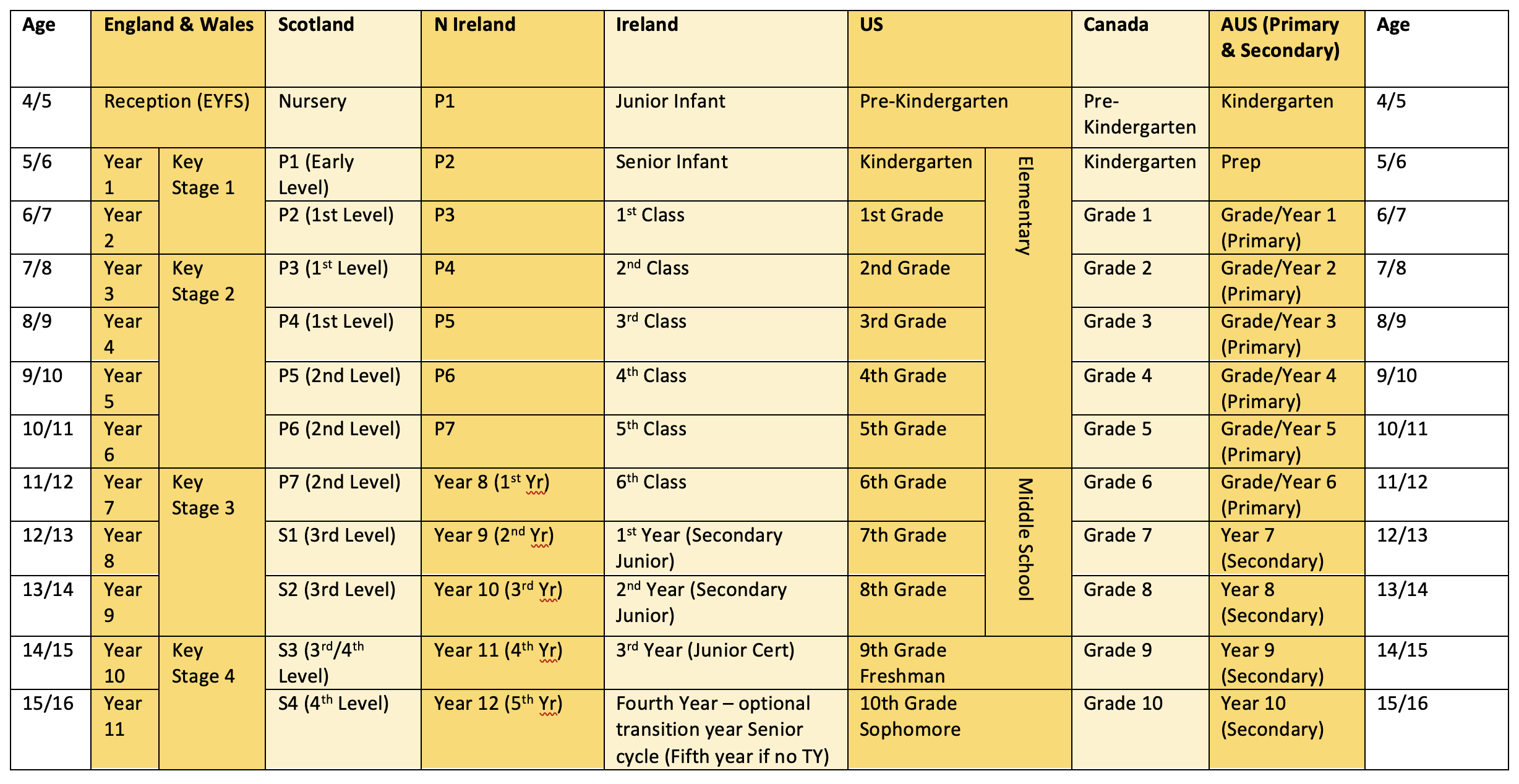
AccessArt is a UK based charity. Although our primary users are based in England and used within the English school system, we do have users from across the UK and overseas. It is important to us to ensure that the information and ideas within AccessArt are accessible to as many people as possible. Here you can find a table to help teachers around the UK and overseas to find the equivalent levels within their education systems.


age and education equivalents across countries


This is a sample of a resource created by UK Charity AccessArt. We have over 1500 resources to help develop and inspire your creative thinking, practice and teaching.

AccessArt welcomes artists, educators, teachers and parents both in the UK and overseas.

We believe everyone has the right to be creative and by working together and sharing ideas we can enable everyone to reach their creative potential.


CPD Recording: Managing a Creative Classroom

You May Also Like…

session Recording: Adapting AccessArt

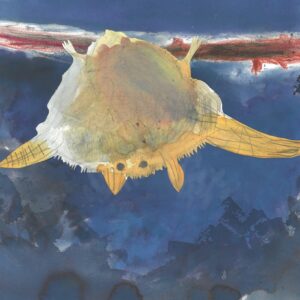
Bat by Year 3 Charlotte Puddephatt

Adapting AccessArt

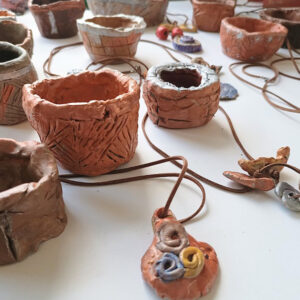
Clay Pots by Charlotte Puddephatt


Adapting AccessArt: Woodland Creatures

You May Also Like

Session Recording: Adapting AccessArt

Bat by Year 3 Charlotte Puddephatt

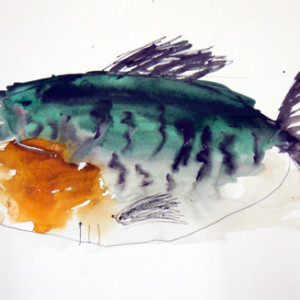
Drawing Fish with Pen, Pencil and Watercolour

Watercolour and graphite

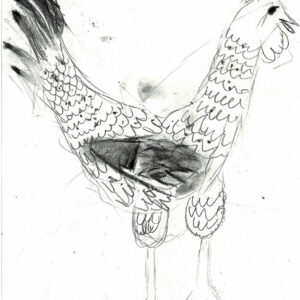
the geometry of chickens

Year 3 Sheffield High School


AccessArt Core Value No 1: Growth is Driven by Ideas, Opportunities and Reflection

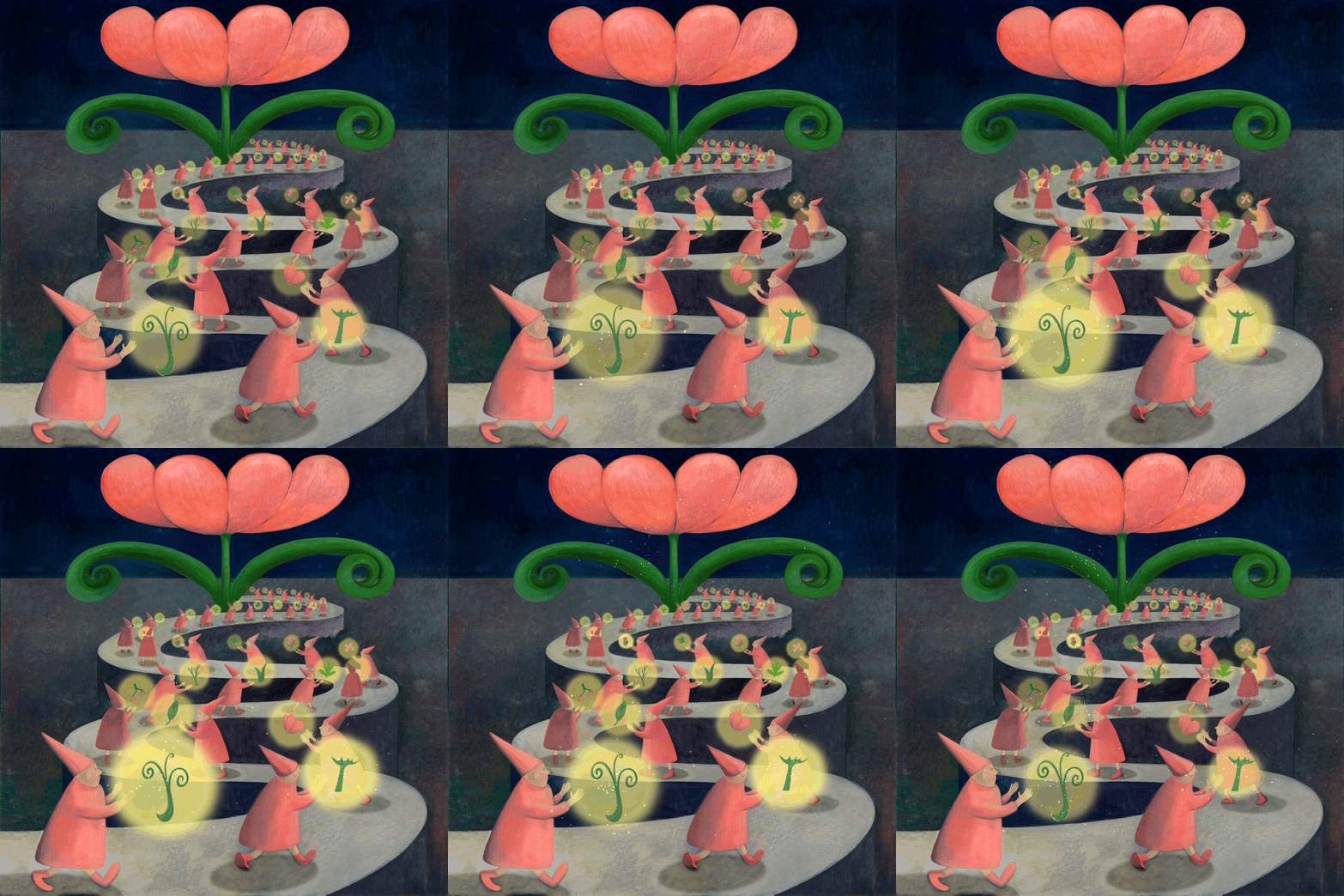
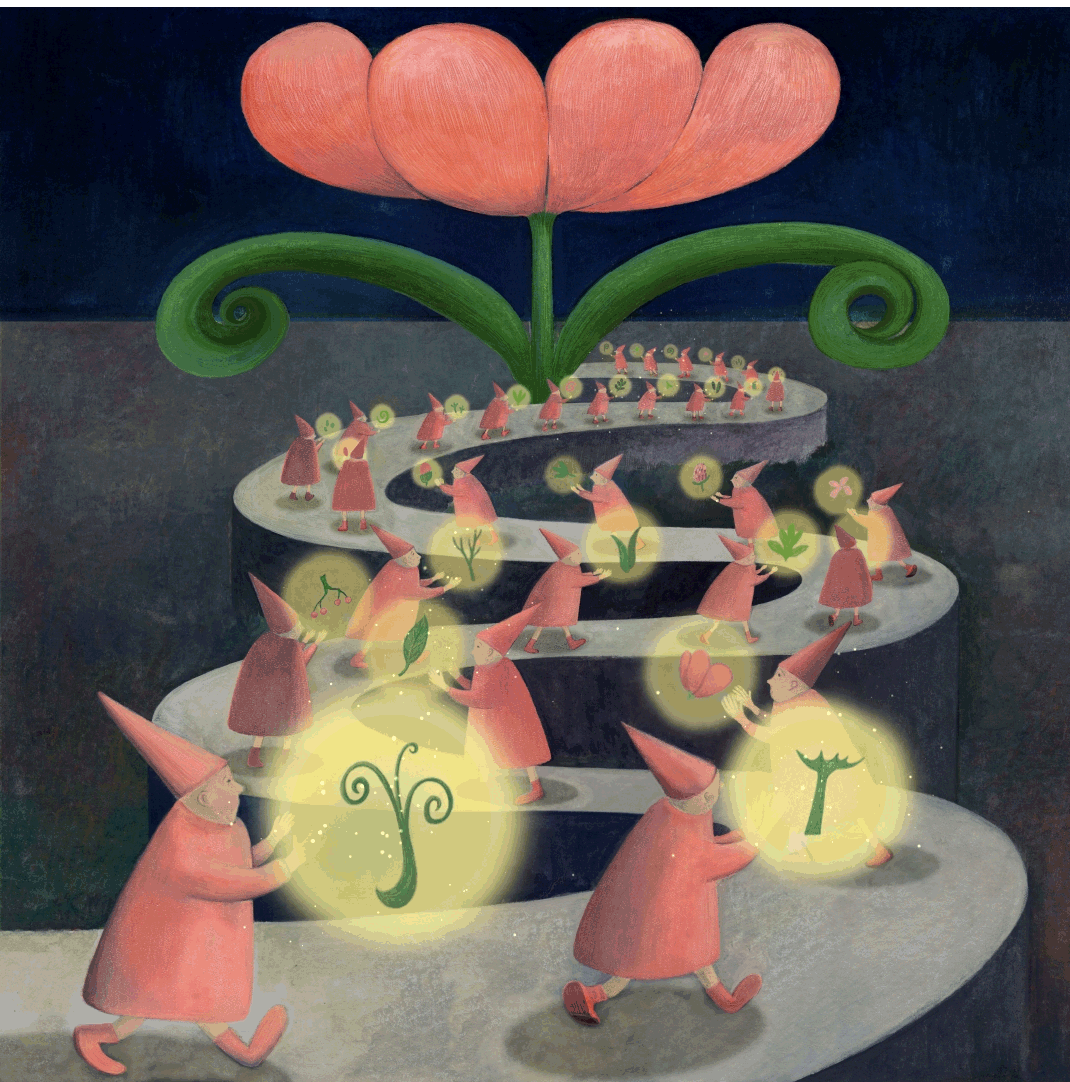
AccessArt Core Value #1 “Growth is driven by ideas, opportunities and reflection” illustrated by Yu-Ching Chiu.


AccessArt Core Value 1: Growth is driven by Ideas, Opportunity and Reflection by Yu-Ching Chiu

Yu-Ching is an illustrator, designer and artist educator working in Cambridge. Yu-Ching graduated from Cambridge School of Art with an MA degree in Illustration and Book Arts. She is passionate about visual storytelling and enjoys working with a mixture of digital and analogue methods.

When Yu-Ching applied to illustrate our first core value we were instantly drawn to her calming and contemplative visual language. We loved how she combines mixed media; creating works on paper and moving it through to the digital realm to add extra touches to her painterly style.

The theme of Yu-Ching’s work often touches upon state of mind, which she uses to create narratives that resonate with her audience. She spoke about how, as people, we respond to transformation – the type of transformation that we don’t always expect or understand – and how we can take these experiences, both accidental and purposeful, and use them to grow. This really resonated with our core value ‘growth is driven by ideas, opportunities and reflection’ as we felt that it touched upon the idea of growth coming to us in different ways and how we can identify, reflect and respond with a new found freedom and clarity.

We love the outcome of Yu-Ching’s commission, sharing a tale of how the thoughts and actions of individuals can work towards achieving something amazing for all.

AccessArt Value #1

Growth is driven by ideas, opportunities and reflection.

What kind of growth makes us feel stimulated and fulfilled? As individuals, what drives us to keep creating? As communities, what makes us fair, inclusive and forward-thinking?

Society is saturated with measures of growth, and as individuals we often feel the pressure to prove, map and compare our own growth in all kinds of ways. But what other kinds of growth are there that sit outside a wrapper of numbers, and that don’t rely on the assumption that a bigger number means more success?

For AccessArt, growth has been both defined and driven by ideas. Our aim is to help enable high quality visual arts teaching and learning, and we feel that can only happen through a creation, curation and sharing of ideas relating to aspects of creative making and understanding. Ideas excite us, and giving form to those ideas so that others can access them excites us even more.

Having an ear to the ground and being agile enough to both identify and act upon needs and opportunities is the next driver of AccessArt’s work. Where we see a need experienced by pupils, teachers, educators and artists, we enjoy identifying a creative solution.

Finally, through reflection: of what worked, what didn’t work, what is happening on the horizon, and what can we help steer, AccessArt is able to refine our vision of what we need to do next.

Through all these modes: ideas, opportunity and reflection, our position of sitting slightly outside and around (fill space) the users we serve helps us act with freedom and clarity, and enables us to work hard to create a product which is both relevant to and accessible by as many people as possible.

Explore our other Core Values here.


8 Values That Have Helped Shape AccessArt 

<< Back to: All You Need To Know

Plinth People Inspired by “Children’s Games” by Pieter Bruegel the Elder by Charlotte Puddephatt

AccessArt’s organisational values are important at every level. Their meaning is enriched by context: they guide how we work as a team, shape the work we deliver, and influence our relationships with users. These values not only reflect how AccessArt aims to exist in the world, but also express how creativity can best be nurtured. We hope these values resonate with you, the user, and inspire how you enable creativity in yourself and those around you.

To share and celebrate our ethos, we will be commissioning 8 artists to illustrate our values.

Please share how our core values resonate with you #AccessArtCoreValues.

Beliefs
Yu-Ching Chiu AccessArt Core Value No 1

AccessArt Value #1: Growth is Driven by Ideas, Opportunities, and Reflection

Illustrated by Yu-Ching Chiu

What kind of growth makes us feel stimulated and fulfilled? As individuals, what drives us to keep creating? As communities, what makes us fair, inclusive, and forward-thinking? Find out more
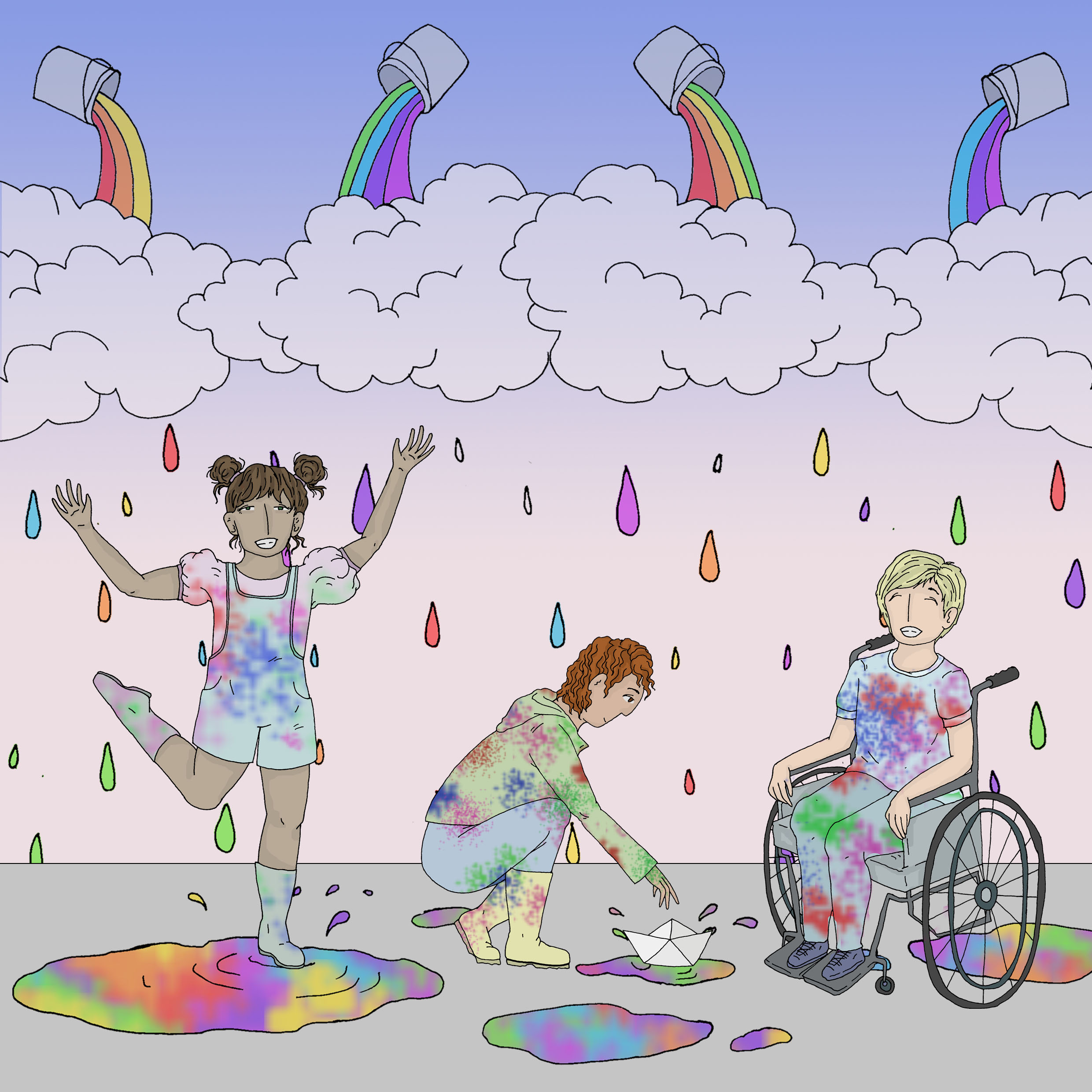
Core Value 2 "Enthusiasm is Infectious" by Lizzie Lovejoy

AccessArt Value #2: Enthusiasm is Infectious and We Can all Play a Role in Fuelling or Stalling the Creative Potential of Others

Illustrated by Lizzie Lovejoy

What is our individual responsibility to those around us? What do we do to encourage or interrupt positivity? How might we enable a more curious and playful approach? Find out more
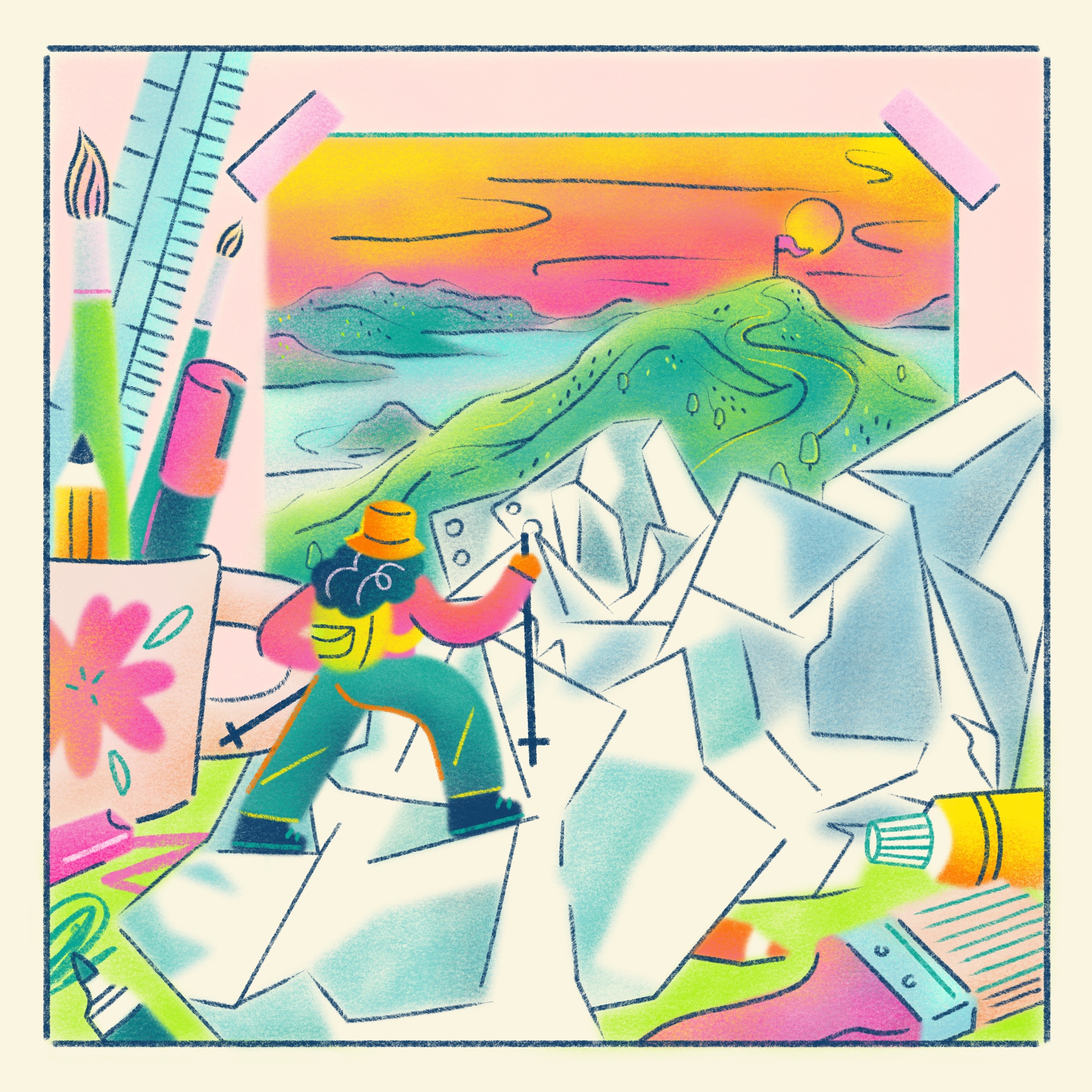
Core Value 3 'Hold Ideas Lightly' by Jagoda Sadowska

AccessArt Value #3: Having the Confidence to Hold Ideas Lightly, Enables us to Create Space for Everyone to Reach their Potential

Illustrated by Jagoda Sadowska

How can we always aim to open out our thinking so that it embraces more possibilities? How can we balance structure and freedom so that we feel safe yet free? Find out more

Actions
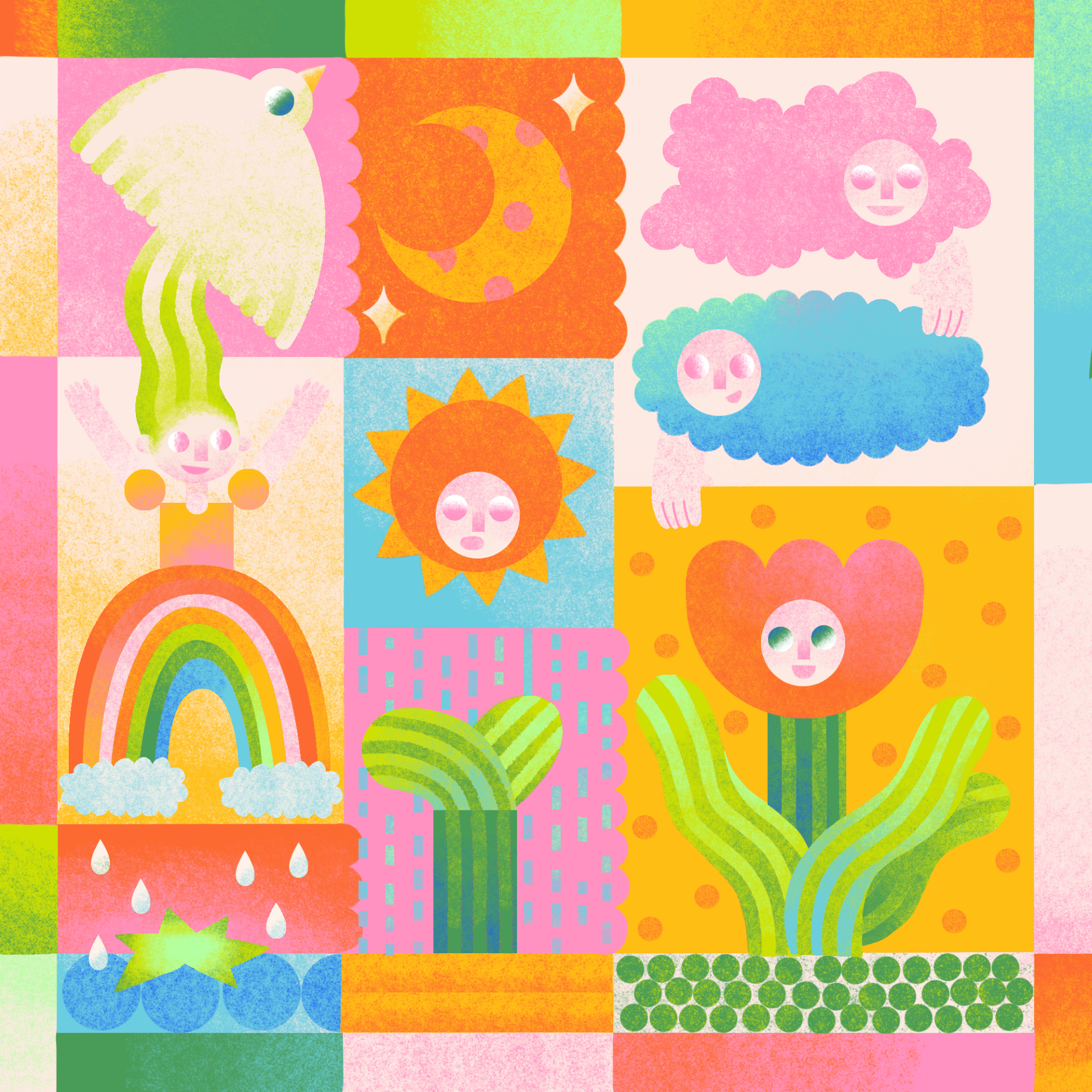
AccessArt Value #4: Through small acts of understanding we can enable big thinking by Rachel Ng

AccessArt Value #4: Through small acts of understanding we can enable big thinking.

Illustrated by Rachel Ng

How can we create small stepping stones of experience which enable us to explore complex ideas and experiences? Find out more 

Coming Soon by Tobi Meuwissen

The intentions behind even the smallest actions are important. Incrementally, these intentional actions create impact.

(Call for commissioning TBC)

How can we be enabled to act with clarity? How can we avoid overwhelm and at the same time empower? How can we see every action as a jewel?

Relationships

Coming Soon by Tobi Meuwissen

We can be our most brave and creative selves when we feel safe and valued. To help others feel valued, we need to be kind.

(Call for commissioning TBC)

How can we cultivate a space in which we feel safe enough to show our true selves? How can we show compassionate understanding that enables individuals to feel understood and enabled?

Coming Soon by Tobi Meuwissen

We all have something to contribute that is of value to others. There is strength in shared experience, which empowers us all.

(Call for commissioning TBC)

How can we learn to recognise what we have to offer to others, perhaps outside our usual sphere of influence? How can we feel supported by others in our community? How can we be energised by encounters with those experiences and ideas outside our comfort zone?

Coming Soon by Tobi Meuwissen

Generosity of spirit can help build a bigger, more diverse and inclusive world, bringing more opportunities and greater understanding for all.

(Call for commissioning TBC)

How can we hold ourselves less tightly, so that we feel able to share and embrace the experience of others? How might we feel safe, strong and empowered whilst being small in a very large crowd?
Adapting AccessArt: Telling Stories

You May Also Like

Session Recording: Adapting AccessArt

Bat by Year 3 Charlotte Puddephatt

3 panel challenge

Panel borders by Rozi Hathaway

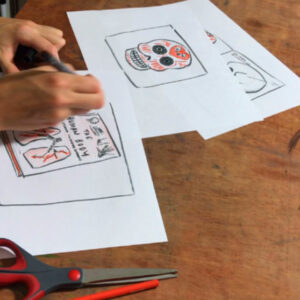
Creating Comics inspired by museum collections

A participant comic


Pathway: An Exploration of Coal Mining, Inspired By Henry Moore

Pathway for Years 4 & 5

Disciplines:
Drawing, Sketchbooks, Construction

Key Concepts:

  • That when we draw, we can use expressive marks to create tonal variety.

  • That we can use both images and words as a starting point to create work.

  • That we can combine drawing and making to make a creative response.

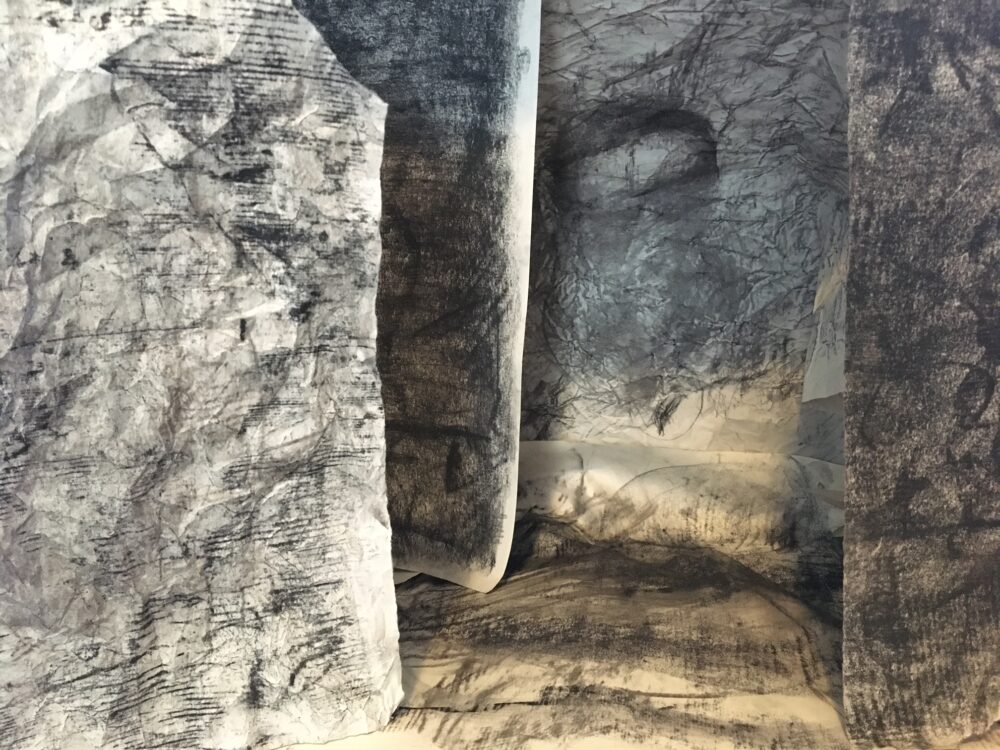
  • That when we photograph 3D work, we can use light and tonal value to capture a sense of space, and we can use the qualities of the material (charcoal) to capture the atmosphere.

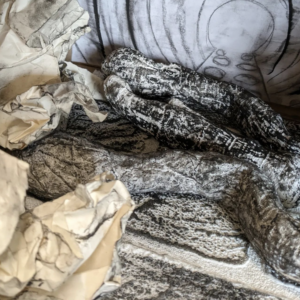
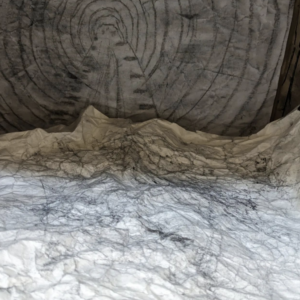
In this pathway, children discover how they can combine drawing and making to capture a sense of enclosed space using charcoal and model making materials.

Children are freed from the constraints of creating representational drawings based on observation – instead they use the qualities of the medium to work in dynamic ways. They will also see how 2d drawing can be combined with 3d making to create a sense of space.

Theme: Coal mining, Relationship of Body to Place, Enclosed Spaces

Medium:
Charcoal, Construction Materials 

Artists: Henry Moore

This pathway will take approximately half a term, based upon a weekly art lesson. 

If you use this resource in your setting, please tag us on social media: #InspiredBy @accessart (facebook, twitter) @accessart.org.uk (instagram) and share the url. Thank you!

This pathway has been made in response to the exhibition Drawing in The Dark, a curation of Henry Moore’s coal mining drawings, inspired by the release of a new book written by art historian (and AccessArt Trustee), Chris Owen.

Creating depth with theatre style flats

Additional Pathway

This pathway is an additional pathway to help you extend, develop or further personalise the AccessArt Primary Art Curriculum.

We suggest this pathway is used to replace a “Working in 3 Dimensions” (Blue) or a “Drawing and Sketchbooks” (Orange) pathway for ages 7 and above.

It could replace the drawing pathway “Gestural Drawing with Charcoal” pathway or making pathway “Set Design“.

You may also like to use the activities in this pathway with a smaller group of children in an after school club or community context.

pose11
ages 5-8
ages 9-11

Teaching Notes

Find the MTP for this pathway here.

Session Recording: Exploring Charcoal


Curriculum Links

History: World War II

Science: Rocks, Electricity, Environmental changes

PSHE: Supports Responsibility to the planet, Collaboration, Peer Discussion.


I Can…

  • I can explore how artists sometimes make art inspired by certain places/experiences

  • I have experimented with the types of marks I can make with charcoal

  • I can use light and dark tonal values to create atmosphere in my work

  • I can construct a model using cardboard and paper, combining drawing and making to make my own creative response

  • I can talk about the work I have made with my classmates, sharing the things I thought were successful and thinking about things I would like to try again

  • I can appreciate the work of my classmates and I can share my response to their work, identifying similarities and differences in our approach and outcomes. 

  • I can take photographs of my work thinking about presentation, focus and lighting. 


Time

This pathway takes 6 weeks, with an hour per week. Shorten or lengthen the suggested pathway according to time and experience. Follow the stages in green for a shorter pathway or less complex journey.


Materials

Medium/large cardboard box, newsprint, charcoal (ideally both willow and compressed), erasers, black and white chalk, rags.

 Construction Materials (see list here )


Pathway: An Exploration of Coal Mining

A PDF of this pathway can be found here.

  • Aims of the Pathway

    In this pathway pupils explore the work of Henry Moore made in response to working in a coal mine. Pupils explore how they can create atmospheric marks using charcoal, and use their own drawings as collage material when constructing a model. 

  • Week 1: Introduce

    Explore Henry Moore Drawing in The Dark

    In 1942 Henry Moore spent one week creating observational drawings down the same coal mine that his father had worked in.

    Use the “Talking Points: Henry Moore Drawing in The Dark” resource to open up discussions about Moore’s coal mining drawings. Invite children to create “Visual Notes” inspired by the work that they see and the discussions that result on loose paper.

  • Week 2: Drawing and Sketchbooks

    Drawing Coal Mines

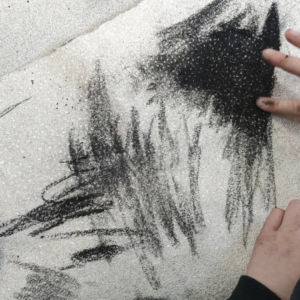
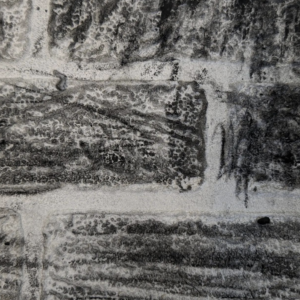
    Use the “Drawing Source Material: Coal Mines” resource to get pupils to create drawings of coal mines using charcoal, focusing on light and dark areas.

    Choose stills from the videos and give children time to capture the environment of the miners. Consider how erasers might help to create lighter areas or highlight structures. Explore “Talking Points: What is Chiaroscuro?” to find out how artists use light and dark to create an atmosphere.

    Work on loose sheets of paper and finish the session by creating a “Backward Sketchbook” from all of the work created in the first two weeks.

  • Choose…

    Choose a Stimulus

    Decide if you would like to use visual prompts or a quote as the stimulus for the coal mine structure…

  • Option 1: Weeks 3 & 4: Inspired by Imagery

    Charcoal Cave

    Adding more sides to the box

    Use and adapt the “Charcoal Cave” resource to create a coal mine.

    Refer back to sketchbook drawings and notes to help capture the sense of place.

    Provide pupils with stills from the films in the “Drawing Source Material” while they build their sets. Encourage children to build their own props.

    Consider the structure of a mine, thinking about the layout and equipment used to ensure the workers were safe. 

  • Or…

  • Option 2: Week 3 & 4: Inspired by Quotes

    Set Design

    "It was a dark and stormy night."

    Use and adapt the “Set Design with Primary Aged Children” resource and give children the opportunity to build a set using quotes from the “Talking Points: Drawing in The Dark” as a starting point.

    Combine this activity with part 1 of the “Charcoal Cave” to explore mark making with charcoal. Use the charcoal drawings to create an impactful space inspired by a quote.

  • Optional:

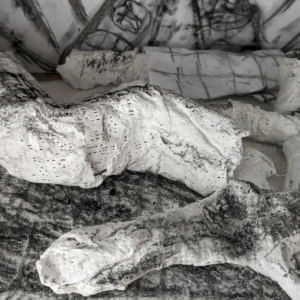
    Add Figurative Drawings

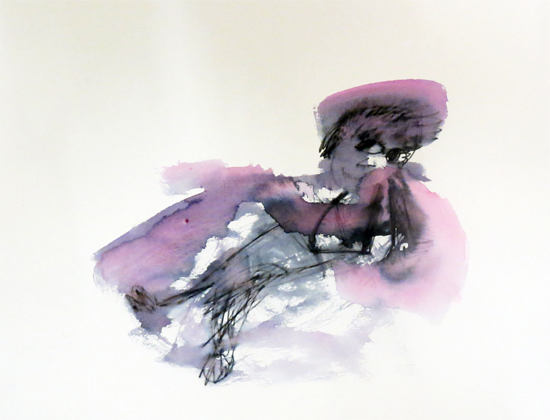
    Use and adapt the “Exaggerating to Communicate” resource. Invite pupils to adopt the poses that miners had to squeeze into, to access smaller areas within the mines. Ask them to draw how it feels.

    Cut out the drawings and add them to the charcoal coal mining sets.

    This one by a mum ;-)

    Or use and adapt the “Drawings with Mass” resource to create a sense of weight in drawings.  

  • Week 5: Photography

    Photograph

    Invite children to take photos of their sets in a dark room, using a torch to highlight areas of their coal mines and to capture the sense of space.

    Drawing by torchlight

    Use and adapt this resource to find out how children can take high quality photographs of “3D Artwork“.

    Ask children to select their favourite images to print and add to sketchbooks.

  • Week 6: Present & Share

    Share, Reflect & Discuss

    Clear a space and present drawings, sketchbooks, models and photographs.

    Walk around the space as if it were a gallery. Enable a conversation about the journey and skills learnt.

    Reflect on the work that has been made by running a class “crit“.

If You Use AccessArt Resources…
You might like to…

Join our Facebook Group

Join the AccessArt Network group on Facebook and ask questions of others using our resources

Join the AccessArt Network group on Facebook and ask questions of others using our resources

Share and Tag

Share photos of work made by tagging us on social media

Share photos of work made by tagging us on social media

You May Also Like…

Pathway: How can i use light & dark to create a sense of space, Inspired by Henry Moore?
For ages 11-14, explore this pathway inspired by Henry Moore's coal mining drawings

For ages 11-14, explore this pathway inspired by Henry Moore’s coal mining drawings

PATHWAY: HENRY MOORE & THE SHELTER DRAWINGS

Explore the Shelter Drawings by Henry Moore with this pathway aimed at Primary ages

Explore the Shelter Drawings by Henry Moore with this pathway aimed at Primary ages

See the Pathway Used in Schools…

Ruth From Carden Primary School, Brighton
Year 6, Ruth at Carden Primary School


CPD Recording: Still Life Pathway


Pathway: How Can I Use Light & Dark To Create A Sense Of Space? (Inspired By The Coal Mining Drawings Of Henry Moore)

Discipline: Drawing, Collage, Set Design

In this pathway, suitable for ages 11 to 14, we explore a series of coal mining drawings made by Henry Moore. Use his work as the basis for conversation in the classroom, and then use the AccessArt resources below to enable a contextual exploration of figurative drawing, mark-making and collage, or scratch model design, inspired by Moore’s work.

This pathway has been made in response to the exhibition Drawing in The Dark, a curation of Henry Moore’s coal mining drawings, inspired by the release of a new book written by art historian (and AccessArt Trustee), Chris Owen.

Theme:
Mining

Medium:
Paper, Charcoal, Cardboard

Artist:
Henry Moore

If you use this resource in your setting, please tag us on social media: #InspiredBy @accessart (facebook, twitter) @accessart.org.uk (instagram) and share the url. Thank you!

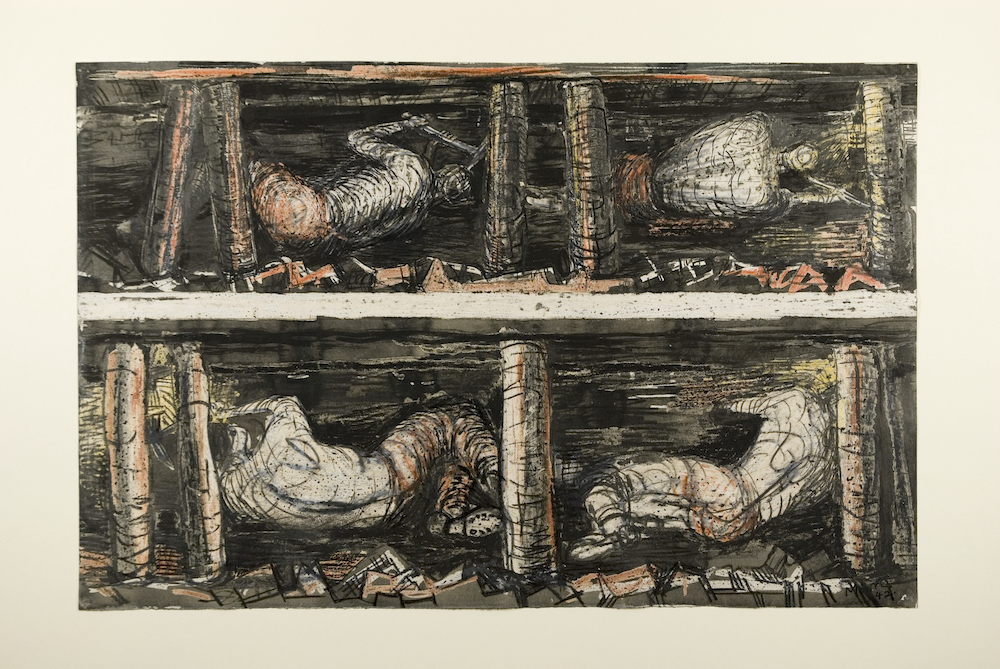
Four Studies of Miners at the Coalface, 1942, drawing. (HMF 2000a). Photo Michael Phipps. Reproduced by permission of The Henry Moore Foundation copy

Four Studies of Miners at the Coalface, 1942, drawing. (HMF 2000a). Photo Michael Phipps. Reproduced by permission of The Henry Moore Foundation copy

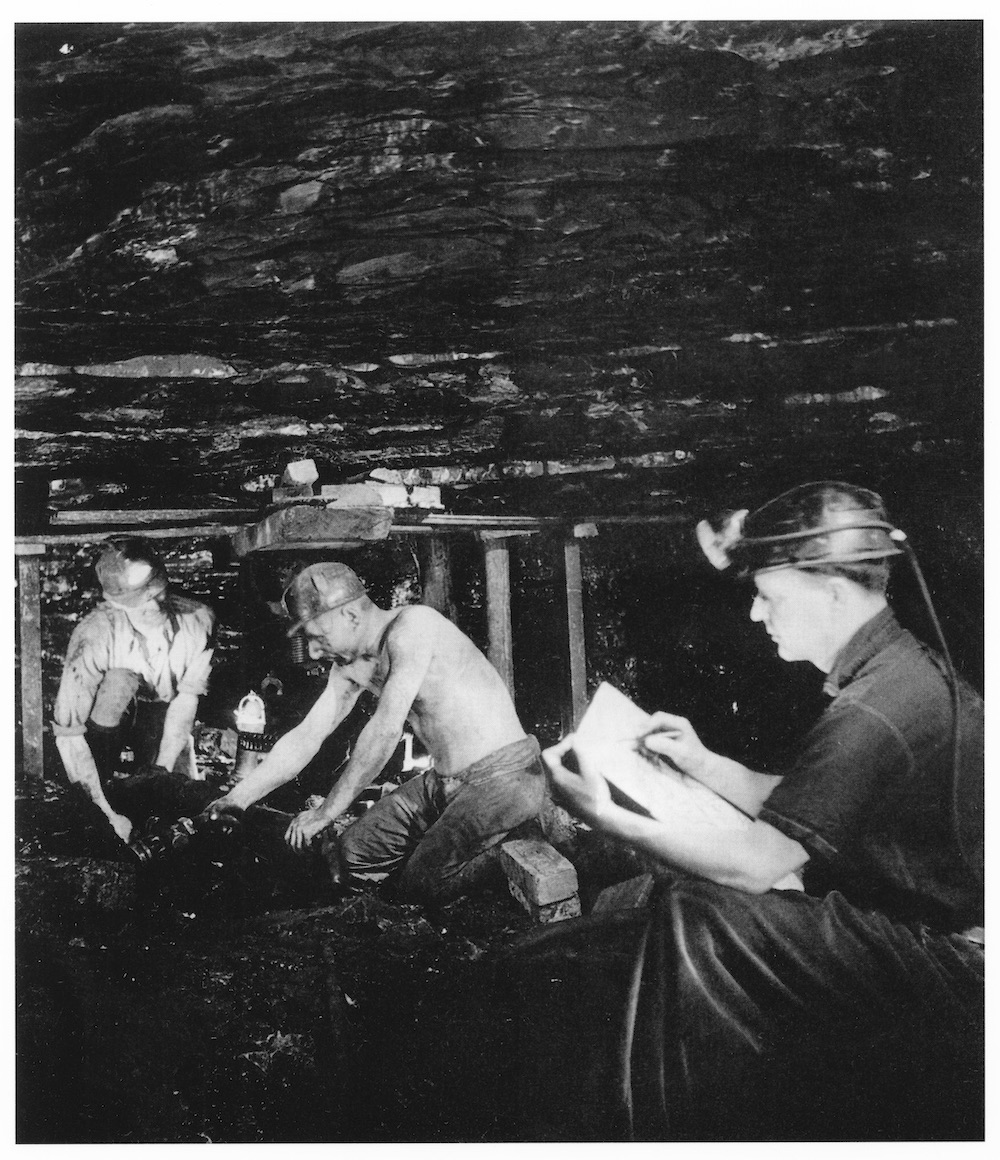
1942 Henry Moore sketching two miners at Wheldale Colliery Henry Moore Foundation archive 7 x 8'' black and white print

1942 Henry Moore sketching two miners at Wheldale Colliery Henry Moore Foundation archive 7 x 8” black and white print. Photo: Reuben Saidman

ages 11-14

Explore an Artist…

Talking Points: Henry Moore

Explore “Talking Points: Henry Moore” to introduce the artist and his ‘Pit Project’ to students. Use the questions to prompt discussion about the processes used by Moore and the work he created.

Invite students to make some “Visual Notes” as they watch the video.

A Brief History of Coal Mining

Watch some videos depicting the day-to-day life of a coal miner at “Drawing source Material: Coal Mining“.

Pause the films on interesting compositions and invite students to draw in sketchbooks. Take inspiration from the “Show Me What You See” resource to guide the session.

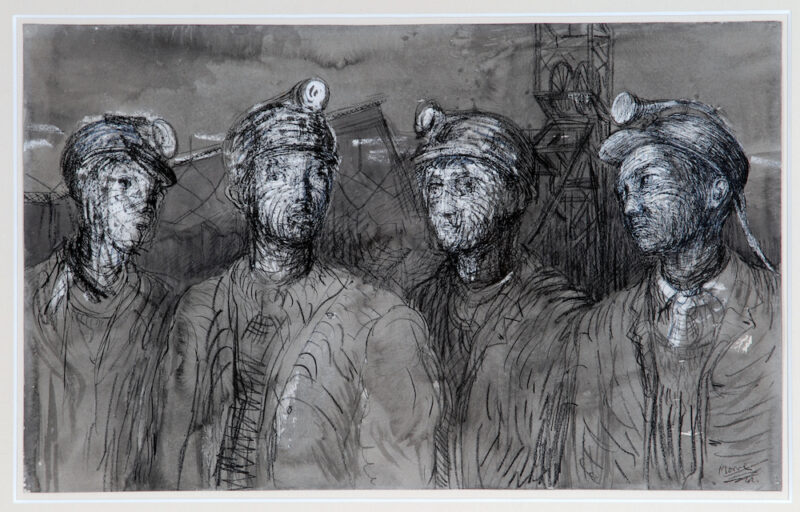
Pit Boys at Pit Head 1942 by Henry Moore, Wakefield Permanent Art Collection Image Courtesy of The Hepworth Wakefield LR copy

Pit Boys at Pit Head 1942 by Henry Moore, Wakefield Permanent Art Collection Image Courtesy of The Hepworth Wakefield LR copy

Miranda's pages

Figurative Drawing

Henry Moore created drawings of coal miners as they worked. You may want students to create some figurative drawings of classmates in sketchbooks.

A photographer once captured images of Moore drawing the miners as they worked. Use the “Drawing Someone Drawing Something” resource to emulate this idea.

Focus on drawing faces using the “Portrait Club” resource as inspiration for a classroom set up.


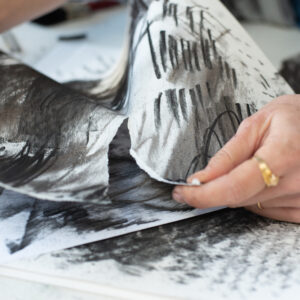
Ripping Paper by Laura McKendry

Mark-Making and Collage

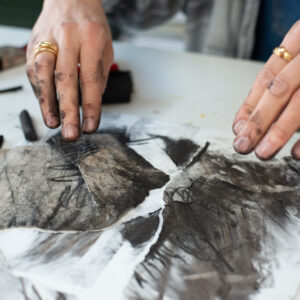
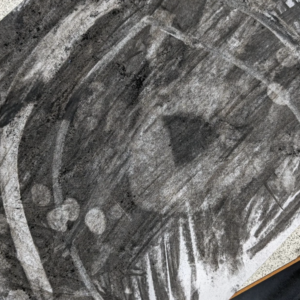
In this resource, artist Laura McKendry demonstrates different ways to make expressive marks using charcoal, in order to create a collage of a coal mine scene.

Use the “Expressive Charcoal Collage: Coal Mines” to encourage students to explore ways of working expressively and abstractly using charcoal, and explore different mark-making processes to portray the enclosed space of a coal mine.


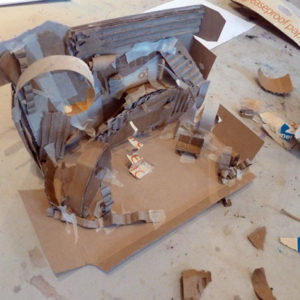
Eloise's 'scratch model'

Set Design

Use and adapt “Introducing Set Designing – Exercise to Respond to Text” to create scratch set designs inspired by texts about Henry Moore’s coal mining experience.

Refer to “Talking Points: Henry Moore” to find texts to inspire the creation of scratch models.


Ofsted Deep Dive

You Might Also Like…

How We Use AccessArt

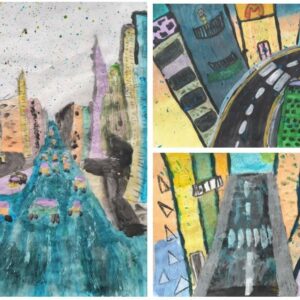
Experimenting with painting urban landscapes

Mind the Gap Between the National Curriculum in Art for Primary Schools & Ofsted

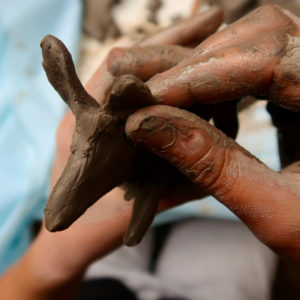
Moulding clay with wet fingers

Being an Artist Teacher

Stephanie-Cubbin-Classroom-wall-2


AccessArt Response to the Ofsted Curriculum Review for Art & Design 2023


CPD Recording: Sketchbook Share

You May Also Like…

see all sketchbook resources

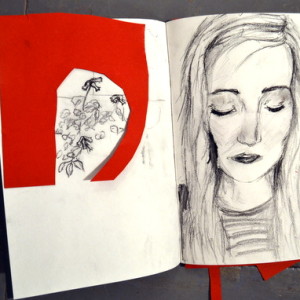
Sketchbook Work by Yu-Ching Chiu

The Sketchbook journey

What I Ate In a Day Sketchbook by Tobi Meuwissen

Sketchbook pedagogy

secondary colours on sketchbook page


Returning to Our Bodies – Poised Between The Slip and The Grub


Cloth, Paint, Print: Inspired by Natural Objects

You May Also Like

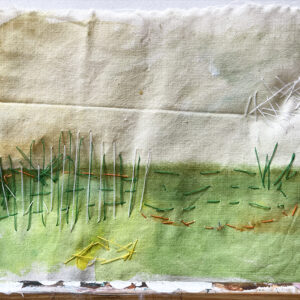
Making Painted & Sewn Landscapes

Painted and sewn cloth

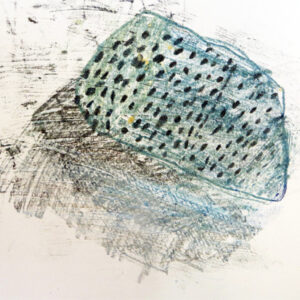
Monoprinting with Oil Pastel and Carbon Copy Paper

Carbon and oil pastel mono print


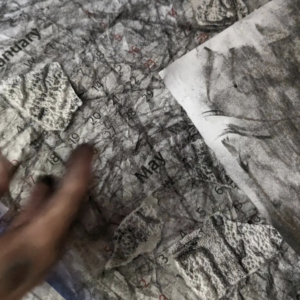
Expressive Charcoal Collage: Coal Mines

See This Resource Used in Schools…

Ruth From Carden Primary School, Brighton

You May Also Like

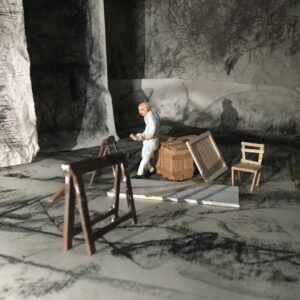
charcoal cave

Rachel T charcoal cave adding scale figure

introduction to charcoal

Charcoal Mixed With Water by Lancelot Richardson

Pathway: An Exploration of Coal Mining, Inspired By Henry Moore

pose11


An Introduction to Sculpture

You Might Also Like…

Talking Points: Wassily Kandinsky

Improvisation 35 (1914) painting in high resolution by Wassily Kandinsky

Inspired by Miro – Collage, Automatic Drawing, & Sculpture

miro

Design Through Making

Finished Group Sculptures Inspired by Nnena Kalu by Lorna Greenwood


Thinking about Art Education? Think again

You Might Also Like…

why we need to allow art to be a unique subject

art as unique subject

What does success look like?

Johannes Vermeer’s The Lacemaker (ca.1669–1671)

Visual Arts Pedagogy


CPD Recording: Screenprinting Hack

You May Also Like…

Pathway: Working with Shape and Colour

This is featured in the 'Working with Shape and Colour' pathway

This is featured in the ‘Working with Shape and Colour’ pathway

Pathway: print and activism

This is featured in the 'Print and Activism' pathway

This is featured in the ‘Print and Activism’ pathway

All printmaking resources

Screenprinted Pattern by Yu-Ching Chiu


CPD Recording: Making Birds Pathway


AccessArt and 2023