Gathering Marks and Tearing Paper to Appreciate Prints by Goya, Turner and Cornelius at the Fitzwilliam Museum, Cambridge

This post shares how Paula Briggs and Sheila Ceccarelli from AccessArt and Kate Noble from the Fitzwilliam Museum, Cambridge, enabled teachers to enter into the intricacies of prints made by Turner, Goya and Cornelius in a Temporary Exhibition at the Fitzwilliam Museum in summer 2016:  1816: Prints by Turner, Goya and Cornelius.

Browsing the Print Collection


Introduction by Kate Noble

Careful Study of a Single Print


The Fitzwilliam has a large collection of prints in the collection which are displayed in Temporary Exhibitions.

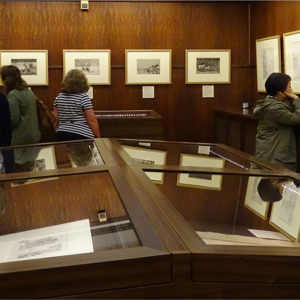
We spent some time in the temporary exhibition 1816: Prints by Turner, Goya and Cornelius. The prints we looked at were on a smaller scale and contained a lot of detail and so we looked very closely at the different marks the artists had made, focusing on areas of light and dark.


Exercise One: Making a Study Sheet of Marks, Rhythms and Lines 

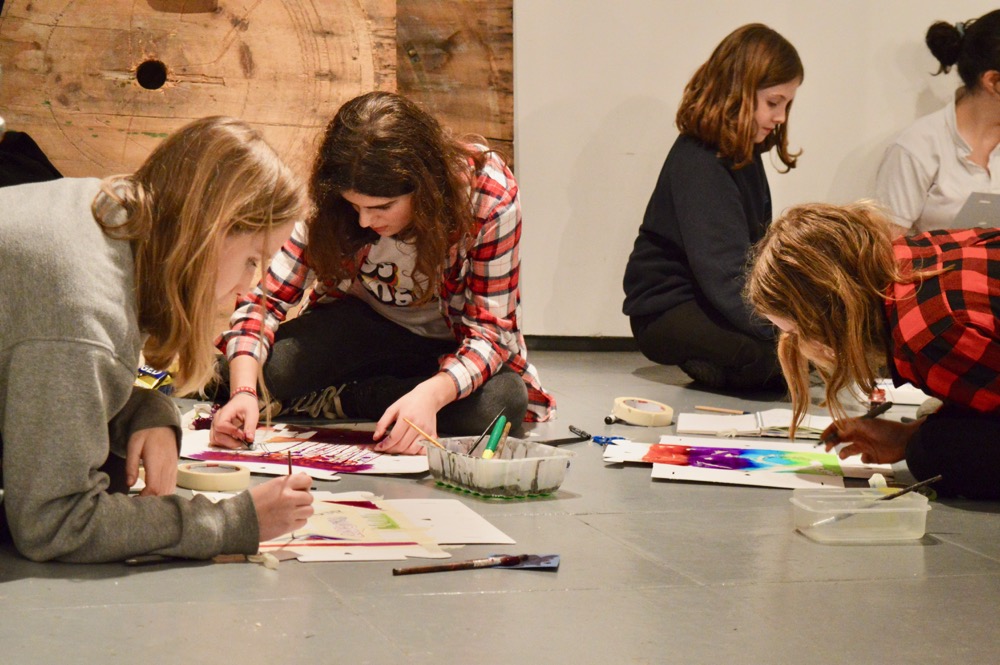
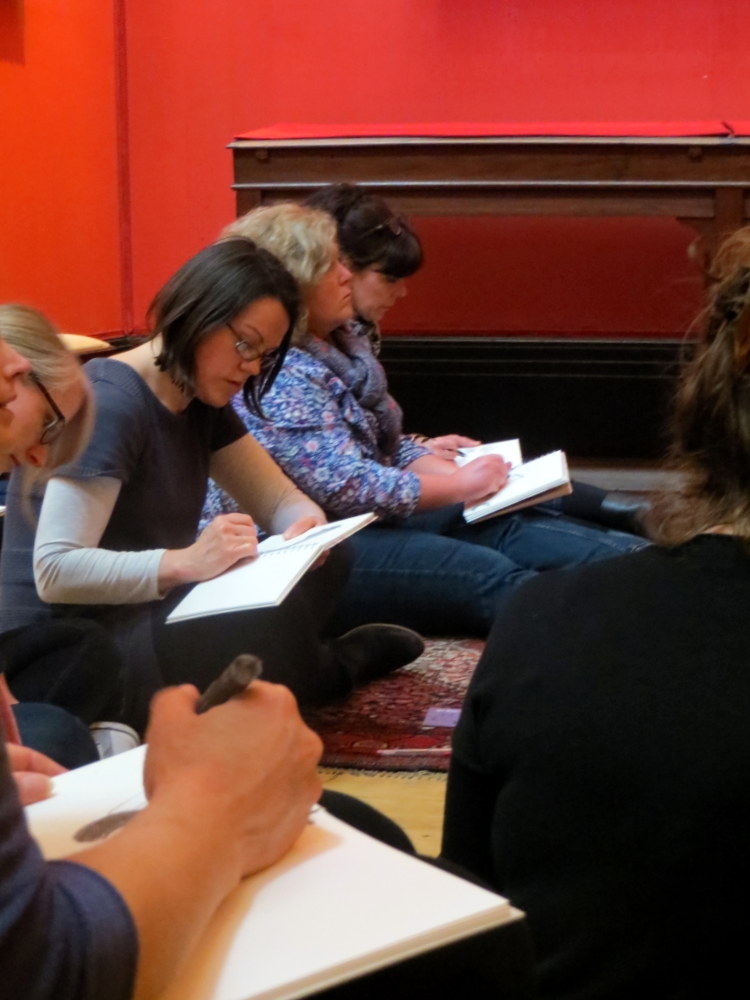
Teachers were asked to carefully inspect the prints and zoom in to examine the marks in front of them in close detail. They were asked to find small patches of marks and, with a pencil imitate, or replicate, the marks on the paper.

Exploring Mark Making from within the Print


Mark Making Study Sheet


Mark Making Study Sheet


Excerise Two: Looking, Tearing and Placing to Explore Composition

Teachers were encouraged to look at the prints in front of them and look for masses or shapes within the composition. Then, tearing paper, in a physical and intuitive way, to replicate these shapes and place them on a clean sheet.

Collaging Gestural Shapes


Collaging Gestural Shapes


Collaging Gestural Shapes


Exercise Three: Using Carbon Paper to Draw Over the Collaged Composition

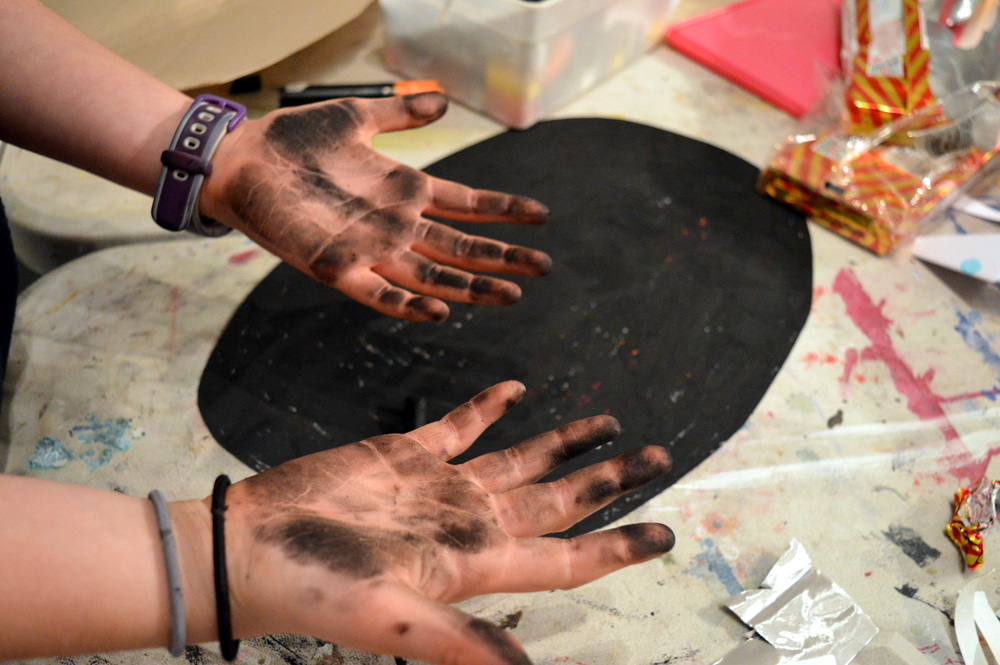
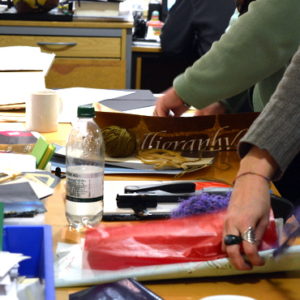
Carbon paper is a fabulous medium for replicating the effect of monoprinting but in a very clean and easy way; perfect for a gallery situation.

Here, teachers used carbon paper to draw over their collaged compositions and make a final response to their chosen prints.

Using Carbon Copy Paper to Add Marks


Using Carbon Copy Paper to Add Marks


Using Carbon Copy Paper to Add Marks


MonoPrint Lines over Sugar Paper


Creative Response to x
Creative Response to Cornelius


Print by Cornelius
Berry Pomeroy Castle Etching (attributed to Henry Dawe, 1790-1848) and mezzotint (J.M.W Turner, 1775–1851), printed in brown ink, P.9901-R


Creative Response to Cornelius 1816
Creative Response Berry Pomeroy Castle


Creative Response to Cornelius print 1816
Die Erscheinung am Rabenstein. Faust und Mephistopheles auf schwarzen Pferden daher brausend. (The execution at the Raven Stone. Faust and Mephistopheles racing away on black horses.) Ferdinand Ruscheweyh (1785-1846), after drawings by Peter Cornelius (1783-1867) Bilder zu Goethe’s Faust, plate 10. Drawn 1811, engraved 1814. Engraving with etching P.45-1998.10


Goya print 1816
Ligereza y atrevimiento de Juanito Apiñani en la de Madrid (The agility and audacity of Juanito Apiñani in [the ring at] Madrid), plate 20 from Tauromaquia Francisco José de Goya (1746-1828) Etching, drypoint, burin and burnished aquatint P.64-1937


Creative Response to x
Creative Response to Goya


The Source of the Arveron by Joseph Mallord William Turner 1775–1851
The Source of the Arveyron in the Valley of Chamonix, Savoy Etching (attributed to Henry Dawe, 1790-1848) and mezzotint (J.M.W Turner, 1775–1851), printed in brown ink, P.9903-R


Creative Response to The Source of the Arveron by Joseph Mallord William Turner 1775–1851
Creative Response to The Source of the Arveron


Warm Up Exercise Developed Through MonoPrint back in the Studio
Warm Up Exercise Developed through MonoPrint back in the Studio


Many thanks to the teachers who participated in this InSET training session for sharing their process with AccessArt and the Fitzwilliam Museum, Cambridge.

Photographs by Paula Briggs.

UK Charity AccessArt created this resource in collaboration with the Fitzwilliam Museum, Cambridge.

AccessArt has over 850 resources to help develop and inspire your creative thinking, practice and teaching.

AccessArt welcomes artists, educators, teachers and parents both in the UK and overseas.

We believe everyone has the right to be creative and by working together and sharing ideas we can enable everyone to reach their creative potential.
Related Posts

Teachers Explore ‘Line and Shape’ at the Fitzwilliam Museum, Cambridge with AccessArt

See all the blog posts from AccessArt's InSET in collaboration with the Fitzwilliam Museum. Find top Museum Education practice with practical, hands on learning in Fine Art disciplines including: drawing, printmaking, sketchbooks, collage and sculpture. See all the blog posts from AccessArt’s InSET in collaboration with the Fitzwilliam Museum. Find top Museum Education practice with practical, hands on learning in Fine Art disciplines including: drawing, printmaking, sketchbooks, collage and sculpture.

Monoprinting with Oil Pastel and Carbon Copy Paper

Join Paula Briggs to see how children enjoy the element of surprise when monoprints made with carbon paper paper are revealed. Join Paula Briggs to see how children enjoy the element of surprise when monoprints made with carbon paper paper are revealed.

Using Sketchbooks to Inform Larger Work

See how teenagers make large, torn collages on A1 paper with Sheila Ceccarelli See how teenagers make large, torn collages on A1 paper with Sheila Ceccarelli


Using Drawing to Get Closer to 18th Century Portraits at the Fitzwilliam Museum, Cambridge

You May Also Like…

Teachers Explore ‘Line and Shape’ at the Fitzwilliam Museum, Cambridge with AccessArt

fitz-making-18

Drawing and Making Flowers

Turning drawings into flowers using mixed media

Drawing and Making: Drawing to Feed Making – Making to Feed Drawing

Drawing and Making: processes feeding each other


Making Sketchbooks at the Fitzwilliam Museum, Cambridge

Related Posts

Teachers Explore ‘Line and Shape’ at the Fitzwilliam Museum, Cambridge with AccessArt

See all the blog posts from AccessArt's InSET in collaboration with the Fitzwilliam Museum. Find top Museum Education practice with practical, hands on learning in Fine Art disciplines including: drawing, printmaking, sketchbooks, collage and sculpture. See all the blog posts from AccessArt’s InSET in collaboration with the Fitzwilliam Museum. Find top Museum Education practice with practical, hands on learning in Fine Art disciplines including: drawing, printmaking, sketchbooks, collage and sculpture.

Making Sketchbooks: An Introduction

Simple Approaches to Making Sketchbooks by Paula Briggs Simple Approaches to Making Sketchbooks by Paula Briggs

Artist Aurora Cacciapuoti Introduces Japanese Bookbinding

Artist Aurora Cacciapuoti demonstrates, step by step, how to bind a sketchbook Artist Aurora Cacciapuoti demonstrates, step by step, how to bind a sketchbook


Making Giant Withie Lanterns


Collage and Construction


Teenagers Write A Letter, A Postcard, A Poem or A Narrative in Invented Text


Lights | Camera | Action | we all love glow-in-the-dark tape! By Sara Dudman


Collagraph, Collage and Stitch: Make a Image of Your Home on Fabric


The August Creative Challenge Gallery – Week Four


Steampunk Robots: A Kitbash Sculpture Unit

You May Also Like…

Visual Arts Planning Collections: Toys, puppets, dolls

Puppet showing the hands

Rook – Transforming Materials

Drawing feathers

modelling monsters

Drawing feathers


Draw your Home: Collage, Stitch and Fabric Crayons


Our River – Year Five Pupils Build a Communal Drawing in Four Steps


Inspired by Christo: Mixed Media Drawings


Making Large Scale, Screenprinted, Collaged, Co-Created Campaign Posters!

You May Also Like…

Make, Build, Create: Sculpture Projects for Children by Paula Briggs

Published by Black Dog Books

Published by Black Dog Books

#WHATDIDMYCHILDMAKE

AccessArt hands making


Year Three Pupils Explore Stencils, Composition and Expressive Mark Making with Oil Pastels

You May Also Like…

Pathway: working with shape and colour

This is featured in the 'Working with Shape and Colour' pathway

This is featured in the ‘Working with Shape and Colour’ pathway

Talking Points: Henri Matisse Cut Outs

Henri Matisse Cut Outs https://vimeo.com/97130137

Talking Points: Romare Bearden

Romare Bearden


Making Collographs with Andy Mckenzie: Week Two


Monoprinting Inspired by Goya, Turner and Cornelius in the Education Room at the Fitzwilliam Museum, Cambridge

Related Posts

Teachers Explore ‘Line and Shape’ at the Fitzwilliam Museum, Cambridge with AccessArt

See all the blog posts from AccessArt's InSET in collaboration with the Fitzwilliam Museum. Find top Museum Education practice with practical, hands on learning in Fine Art disciplines including: drawing, printmaking, sketchbooks, collage and sculpture. See all the blog posts from AccessArt’s InSET in collaboration with the Fitzwilliam Museum. Find top Museum Education practice with practical, hands on learning in Fine Art disciplines including: drawing, printmaking, sketchbooks, collage and sculpture.

Designing Wallpaper!

Children used photocopies of their own drawings as inspiration to have a go at designing wallpaper with Paula Briggs. Children used photocopies of their own drawings as inspiration to have a go at designing wallpaper with Paula Briggs.

Making Big Monotypes with Sheila Ceccarelli

Sheila Ceccarelli shares how she gave teenagers the opportunity to explore expressive mark making and monoprinting on a large scale. Sheila Ceccarelli shares how she gave teenagers the opportunity to explore expressive mark making and monoprinting on a large scale.


Making Collographs with Andy Mckenzie: Week One


Teachers Make Mark Making Tools and ‘Battle it Out’ with Ink on a Spring InSET Day


Is choice at the heart of art? By Joanna Grace