2026 – Time for a New Relationship?

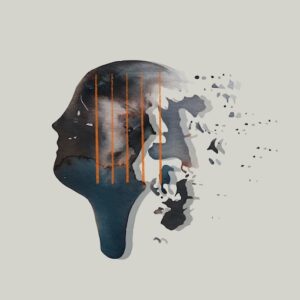
photomontage of wheat field and water

What can art educators learn from non-extractive practices?

As we welcome in a new year, starting a new term and imagining new ways of being, perhaps we can, as art educators, turn also towards new ways of understanding our relationship with our sense of creative purpose.

It would, of course, be ideal to start the new year with a sense of optimism and energy—and for many, that will be the case—and if so, all good. But we do need to recognise that for many people, both educators and those we educate, we ended the year with a feeling of overwhelm and perhaps even exhaustion.

If we were lucky, it was great to be able to step off our productivity-driven, daily grind. Returning (and again, lucky us to have something to return to) has made me think about how we might begin to look in on this driven culture from a slightly different angle, especially in the light of learning to re-see what the visual arts can offer us, to help us be happier, healthier, more connected human beings. How can we learn to move forward, incrementally, in a way which is more sustainable, to both ourselves (as cyclical beings) and the planet? How can we help lay the groundwork so that the children and young people we teach and care for can imagine a more sustainable approach to their own lives?

The notion of non-extraction comes from a critical understanding of extractive economies, as applied to industry, the environment or colonialism. Any mechanism, organisational structure, or way of being which takes more out than it puts back in (intentionally or otherwise), leaving the source or those in its path depleted, might be seen as extractive. Non-extractive practices on the other hand, attempt to preserve, value, and enhance, helping to sustain energy, resources and ways of being.

As we go about our work as art educators and artists, perhaps 2026 can be the year we examine our current attitude to extractive and non-extractive practices as they relate to teaching, learning and the visual arts. Let’s think expansively and become aware of where we might be guilty of perpetuating the myth that extractive processes are the only way. Once we become aware, we can then start to use our creativity to make small (or large) changes to our day-to-day practices, which enable the ecosystems in which we operate to function with kindness, energy and sustainability.

AccessArt will be returning to these themes of course, but for now, a few gentle questions to help us start examining our attitudes to extractive / non-extractive practices as teacher, learner and artist. Some of these questions are deliberately tangled to encourage divergent thinking. They are not intended to be used as tools with which to punish ourselves. Instead, enjoy them as challenges to explore. New approaches – new energy.

Physical

  • Where do the materials you use come from? How do you navigate the balance between providing enough materials to aid exploration without encouraging waste? How do the things you make exist in the world? What is material value? How much do you talk about these issues with other makers/learners?

Cultural

  • How do you relate to the images and ideas you come across from other cultures? How much do you understand and respect the starting points/legacy which created these works? What does “borrowing” look like for you? Does it feel ok?

  • How much do you impose on others? Are there ways you could create space for the cultural experiences of those you work with to be seen and heard?

Creative Process

  • Is our creativity endless? Is it cyclical? What does creative rest look like? How do we value intention? Do we need to measure? What does respect to ourselves as creative beings look like?


Enjoy the new year. Gently does it.

Paula Briggs, January 2026


This is a sample of a resource created by UK Charity AccessArt. We have over 1500 resources to help develop and inspire your creative thinking, practice and teaching.

AccessArt welcomes artists, educators, teachers and parents both in the UK and overseas.

We believe everyone has the right to be creative and by working together and sharing ideas we can enable everyone to reach their creative potential.


Art in Times of Ill Health

You May Also Like…

AccessArt treehouse

AccessArt Treehouse Logo

AccessArt Wellbeing Resources

Tying the Drawing Together by Rowan

Which Artists: Merlin Evans

Visualising Mental Health By Merlin Evans


Dreaming With Watercolour

You May Also Like…

let me inspire you by emma burleigh

Colourful mixed media painting by Emma Burleigh

Globe paintings

Globe Paintings with Stephanie Cubbin

introduction to watercolour

Creating a watercolour wash

See all send resources

Benton Dene School by Clare Boreham


How Do We Adapt our Art Teaching to Include Children with Specific Educational Needs?


“Acts of Kindness” Workshop


Collage: Deconstructing, Reconstructing and Abstracting

What We Like About This Resource…

“I really like how this playful resource helps us to make a creative response inspired by a stimulus, ensuring that the stimulus is only an entry point into an outcome that will look totally different. Exploring the themes of colour, texture and composition through the lens of different artists also helps us see how we can interpret (and re-interpret) colours and materials in a meaningful way. Viewfinders and collage are also great tools for those who experience ‘fear of the white page’ and will allow learners to make conscious creative decisions as they go.” – Tobi, AccessArt

You May Also Like

Adapting AccessArt: Colour and Composition

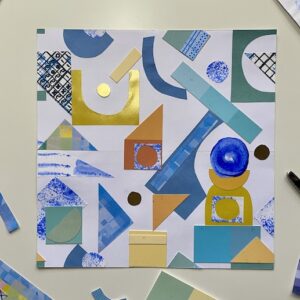
Shape and Composition by Yu-Ching Chiu

Cut Paper Collage Still Life

Still Life Collage by Charlotte Puddephatt

Cooking with collage

Food Collage by Tobi Meuwissen


Adapting AccessArt: Stories and Faces

You May Also Like…

Making Physical or Digital Layered Portraits

Finished layered portrait by Mike Barrett

Pathway: Exploring Identity

Portrait Club Sketch by Jake Spicer

Quentin Blake’s Drawings as Inspiration: Exaggerating to communicate

pose3

Session Recording: Creating School Exhibitions & Displays

Brindishe Manor, Lewisham

Finger Palette Portraits

Charcoal Portrait

elastic band sketchbook

An elastic band sketchbook


Playing With Perspective

You May Also Like…

Other Resources by Joe Gamble

Joe Gamble

Adapting AccessArt: Colour and Composition

Colour and Compositions by Yu-Ching Chiu

Thoughtful Mark making

Diverse mark making


Cooking With Collage

You May Also Like…

Redesigning food Packaging

Close up of Final Packaging by Tobi Meuwissen

What i ate in a day

Blind and Non-Dominant Drawings of Food by Tobi Meuwissen

Paint Your corner Shop

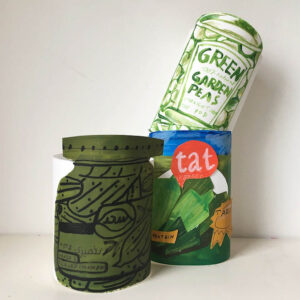
Final 3D Tins And Jars By Tobi Meuwissen

Creating Repeat Patterns

The finished Square Pattern By Rachel Parker


What I Ate in a Day

You May Also Like

Drawing Prompt Cards

AccessArt Drawing for Mindfulness Prompt Cards

Watercolour Washes Inspired by the Tapestries of Henry Moore

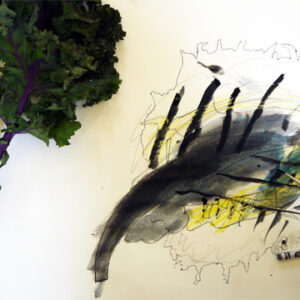
Curly kale watercolour study, by Kelly aged 7

Paint Your corner Shop

Final 3D Tins And Jars By Tobi Meuwissen


Adapting AccessArt: From 2D to 3D

You May Also Like

Manipulating Paper: Turning 2D into 3D

13

Making Prompt cards

AccessArt Making Prompt Cards Saatchi Learning Workshop By Lala Thorpe

playful making pathway

Medals by Jan Miller

ASTRONAUT PAPER BODY CASTS

Figures on wall - Astronaut body casts with Gillian Adair McFarland

Turkish map fold

Theresa Easton Turkish Map Fold

Adapting AccessArt: Playful Making Inspired by Nnena Kalu

Finished Group Sculptures Inspired by Nnena Kalu by Lorna Greenwood


Magic Caring Box


Adapting AccessArt: Playful Making Inspired by Nnena Kalu

You May Also Like

Roots to shoots

WhatsApp Image 2021-03-03 at 10.46.22

Prompt cards for making

AccessArt Making Prompt Cards Saatchi Learning Workshop By Lala Thorpe

coat-hanger shells

A shell inspired sculpture.


Adapting AccessArt: Making Birds Pathway for Pupils With Special Educational Needs

You May Also Like…

Pathway: Making Birds

Making birds from card, paper and wire

Flying Minpin Birds

Minpin Birds

Visual Arts Planning: Birds

Drawing Birds with Oil Pastels and Washes


Deconstructing to Help You See

You May Also Like

ten minutes, five times a week

Diverse mark making

the drawing journey

Continuous Line Drawing Of A Shell By Zoe Coughlan

all drawing resources

Observational drawing of a shell


The Blood Bag Project

What We Like About This Resource….

This project combines art and science in innovative and creative ways. It engages children with simple and more complex sewing skills, both hand and machine. The fact that a local artist collaborated on this project, bringing her own set of skills and experience is so valuable for any extended art project, and the children were able to connect with the sensitivity of the subject matter and to empathise with it’s message.

You May Also Like

Autumn Floor Textiles

Final Autumn Floor Textiles Made Using Rubbing by Tobi Meuwissen

Cloth, Paint, Print: Inspired by Natural Objects

Embroidered Leaf by Tobi Meuwissen

Making Painted & Sewn Landscapes

Painted and sewn cloth

which artists: merlin evans

Visualising Mental Health By Merlin Evans


Which Artist: Leigh Bowser


Escaping Wars and Waves – Encounters with Syrian Refugees

What We Like About This Resource…

This resource really demonstrates how art can successfully bring awareness to important humanitarian issues, promote inclusivity and can give a platform to those who otherwise wouldn’t be heard. The links between text, photos and drawings are really strong and demonstrate the creative process used by Olivier from start to finish. I really like the inclusion of suggestions for students within the post, which encourage students to learn more about their community and to understand the experience of being displaced. This is turn will hopefully inspire the next generation to be part of an inclusive and empathetic society.‘ – Tobi, AccessArt


Analogue Drawing

What We Like About This Resource…

“This activity highlights how visual communication can be used to convey emotion. When artwork is relatable in a human and emotive way it can be really powerful. Learning how to translate feeling into mark-making is a really important skill and can help children break down the essence of a range of their own emotions, and communicate it to others. Explore colour and a range of materials to enrich this experience.” – Tobi, AccessArt.

Drawing With Your Feet

What We Like About This Resource

“I love this resource because I can picture the energy in the classroom whilst students enjoy the process of mark-making using their feet. Creating drawings with parts of the body other than hands can be really freeing; students will hopefully look at their drawings in a less critical way, with the emphasis of the activity being more about the process than the outcome. It might be a nice addition to use a viewfinder to zoom in on areas where the marks collide in interesting ways” – Tobi, AccessArt.