Modelling The Head in Clay – by Melissa Pierce Murray

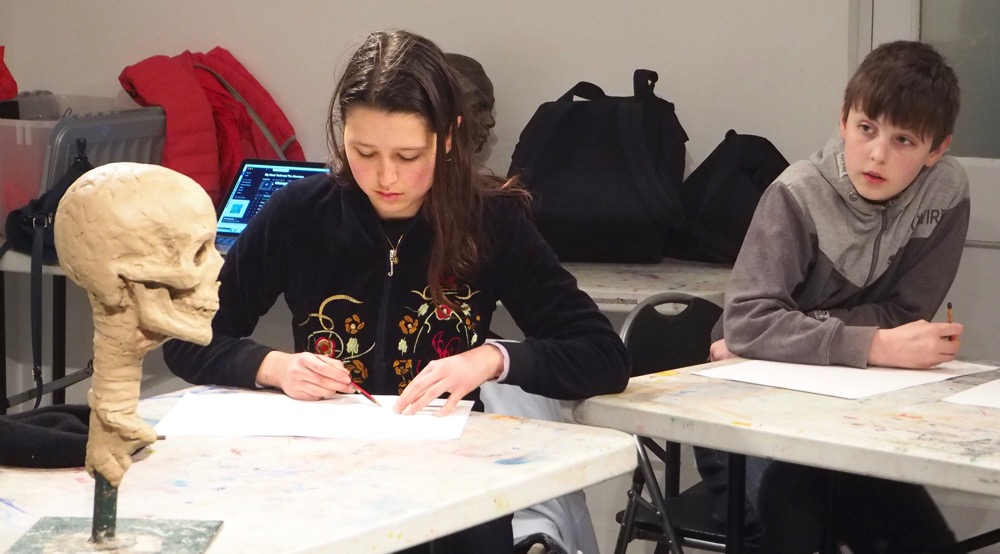
Artist Melissa Pierce Murray led a series of workshops for AccessArt’s Experimental Drawing Class  in which the teenagers modelled a head in clay. There are four resources in this series, beginning with constructing an armature and making preparatory drawings, then studying the bone structure of the skull before moving on to features.

The work was done over 8 sessions of 75 minutes each, but could be adapted to two or three longer sessions. The workshops took place at over a term at Cambridge ArtWorks.

Part One – Armature

Teenagers construct simple armatures out of cardboard and build a form for their clay heads out of paper and clay. <a href="" class="shortcode button    "xlarge" style="background-color: "#78608e";color: "#ffffff";">Read More</a> Teenagers construct simple armatures out of cardboard and build a form for their clay heads out of paper and clay. Read More

Part Two – Preparations

This post looks at two preparations for making a clay head: drawing to help us learn to see the form in the round, and taking measurements from life.<a href="" class="shortcode button    "xlarge" style="background-color: "#78608e";color: "#ffffff";">Read More</a> This post looks at two preparations for making a clay head: drawing to help us learn to see the form in the round, and taking measurements from life.Read More

Part Three – Skull

In this post we concentrate on developing the shape of the cranium and forehead, the structure of the eye sockets, cheekbones, jaws and teeth.Referring to anatomical drawings or to a model of a skull will help students begin to see this bony underpinning to the skin and muscles of the head. <a href="" class="shortcode button    "xlarge" style="background-color: "#78608e";color: "#ffffff";">Read More</a> In this post we concentrate on developing the shape of the cranium and forehead, the structure of the eye sockets, cheekbones, jaws and teeth.Referring to anatomical drawings or to a model of a skull will help students begin to see this bony underpinning to the skin and muscles of the head. Read More

Part Four – Features

We look at how to form the features: eyes, ears, mouth. We look at ways to finish and embellish the form using hair, clothing or inventing horns. In the class we talked about how the muscles attach to the bones, and how the skin smoothes over the surfaces. <a href="" class="shortcode button    "xlarge" style="background-color: "#78608e";color: "#ffffff";">Read More</a> We look at how to form the features: eyes, ears, mouth. We look at ways to finish and embellish the form using hair, clothing or inventing horns. In the class we talked about how the muscles attach to the bones, and how the skin smoothes over the surfaces. Read More


This is a sample of a resource created by UK Charity AccessArt. We have over 1500 resources to help develop and inspire your creative thinking, practice and teaching.

AccessArt welcomes artists, educators, teachers and parents both in the UK and overseas.

We believe everyone has the right to be creative and by working together and sharing ideas we can enable everyone to reach their creative potential.


Collaborative Design: Making Dungarees!


Screen Printing T Shirts for the How To Be A Creative Producer Project


Modelling the Head in Clay Part 4 – Features


Modelling the Head in Clay Part 3 – Skull


Modelling the Head in Clay Part 2 – Preparations


Modelling the Head in Clay Part 1 – Armature


Animating with a Green Screen


Pimp That Snack! Large Scale Food Sculptures


Messages From Creative Adults: Focussing on Art as a Career


Project 13


Painting a Bluebell Forest in Cyan, Magenta and Process Yellow on a Large Scale

Be Inspired to Inspire

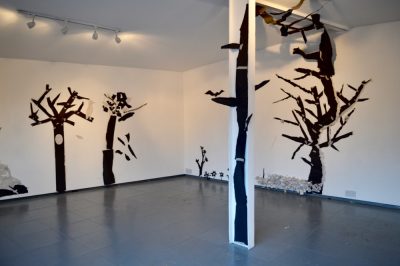
Students take on the challenge of transforming the studio into their own bluebell forest.

Teenagers take on the challenge of transforming a studio into their own bluebell forest.

See how a group of young artists create an enchanted installation.

Exploring Primary Colours and Progressing from Powder Paint to Gouache and Acrylic

Mastering colour mixing

Mastering colour mixing

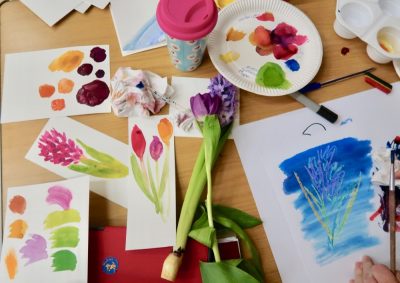
This resource is based on methods shared during an AccessArt InSET session for primary school teachers at New Hall School, Chelmsford, to ultimately enable their pupils to develop colour skills. Teachers explored using their intuition and experience to mix primary colours, creating coloured swatches that matched the colours of spring flowers, whilst comparing painting mediums.


Withy Butterflies


Inspired by Edgar Degas: Printmaking, Drawing & Sculpture at the Fitzwilliam Museum Cambridge with AccessArt


Making Sculpture Inspired by Degas


How to Make Beautiful, Liquid Drawings Inspired by Degas


Midi Art


Making Monotypes Inspired by Degas


Sculpture from Sculpture


An Exploration of Artwork by Shepard Fairey